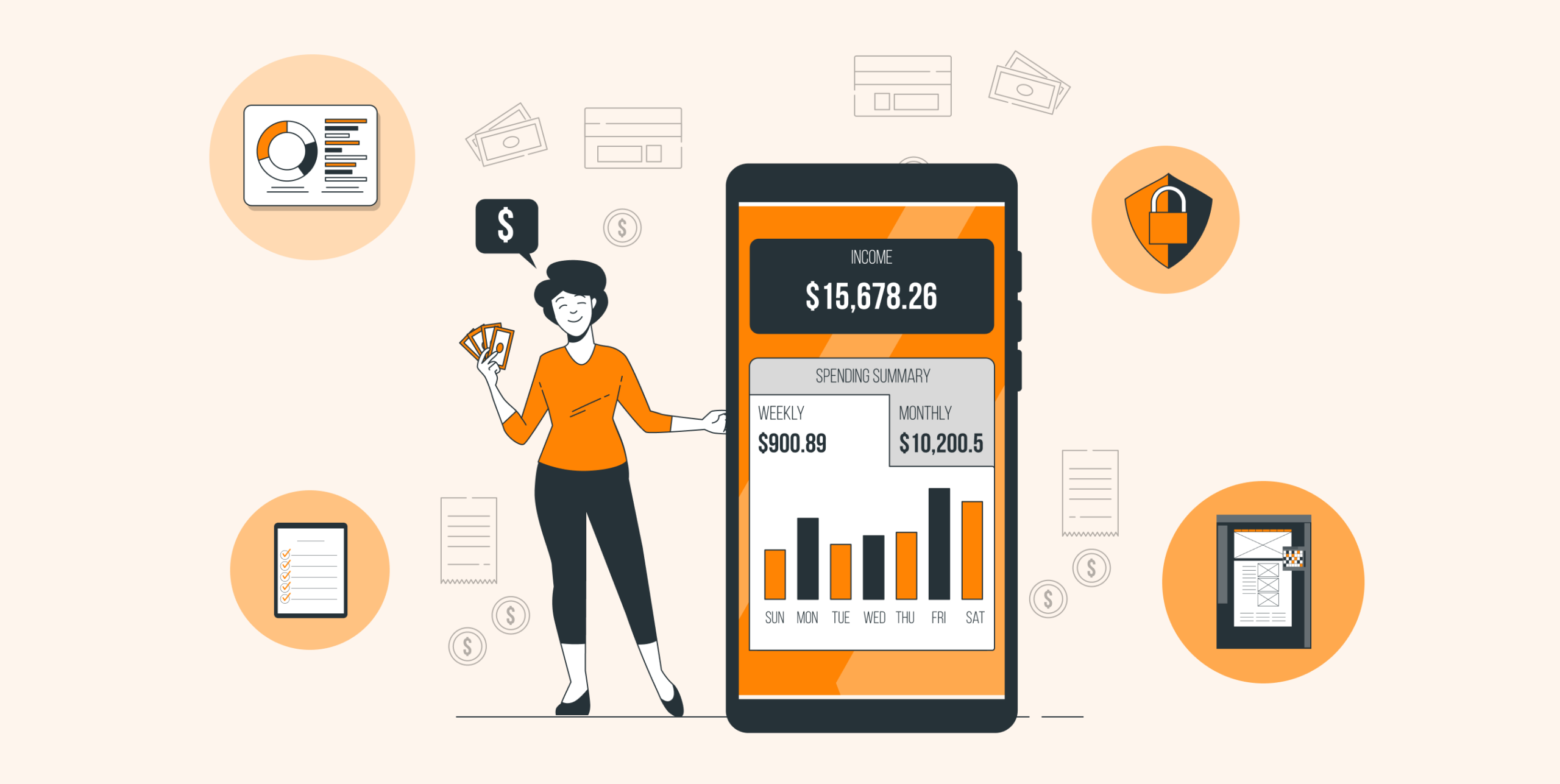
In recent years, financial services have evolved quickly. Customers today demand quicker transactions, safe online access, and visual financial understanding- all with a touch of a button. These expectations cannot be fulfilled with the help of traditional systems. At this juncture, fintech software development becomes important.
Fintech software development can enable businesses to provide effective, trustworthy, and scalable financial experiences out of digital payments and lending platforms, investment tools, and financial dashboards.
This blog discusses the nature of custom fintech app development , the main features that need to be included in the modern platform, the underlying technology stack, and the estimated costs that businesses should consider.
FinTech Software Development: an Overview
Fintech software development is the development of financial service technology-based custom fintech solutions. These are solutions that are aimed at dealing with financial data, transactions, compliance requirements, and user interactions in an efficient and secure manner.
Fintech platforms have a greater standard of accuracy, reliability, and security, compared to general software. Even minor mistakes can have an effect on trust, finances and compliance. This necessitates proper planning, good architecture and appropriate development strategy.
FinTech Solutions Businesses Are Building Today
Fintech custom software development is of various types, based on the objectives of business and the needs of customers. Common examples include:
Essential Characteristics of Contemporary FinTech Software
Features determine the level of reliability, security, and ease of use of a fintech product. These characteristics not only enhance functionality, but also increase trust among the users.
Data Protection and User Authentication
Any fintech application is based on security. Intense authentication protocols make sure that account and sensitive information is only accessed by authorized users. This entails a safe system of login and data protection measures that avoid unauthorized access and data leakage.
An effective fintech platform secures the information of users at all levels; beginning with the log-in to the final transaction.
Transaction Management and Processing
The core element of custom financial software development is the possibility to make transactions without any complications and errors. This involves processing payments, transfers, refunds and transaction history timely and error free.
Consistency, transparency, and trust of the businesses and end users are provided by the reliability of transaction management.
Easy to Use Interface and Experience Design
Even the strongest fintech platform can collapse in case it isn’t easy to operate. A neat interface, straightforward navigation, and easy workflow assist the user in using the system to accomplish financial tasks without confusion.
Effective design minimizes mistakes, enhances interactivity, and customer satisfaction in all the financial touchpoints.
Regulatory Readiness and Compliance
Financial software should be in line with the industry regulations and regional laws. Compliance-ready development is a way of ensuring that the platform is developed keeping regulatory requirements at its fingertips.
This minimizes risk, prevents expensive adjustments in the future and assists companies to conduct business in controlled markets with confidence.
Live Information, Reports, and Intelligence
Real-time financial data also provides access to financial information so that users and businesses can make informed decisions. Dashboards, reports, and transaction tracking can give an insight into performance, expenditure, and trends.
These are insights that go further than mere functionality and assists business to expand strategically.
Third-Party Integrations and API Connectivity
Fintech services usually have to integrate with third-party services, including banks and payment gateways, identity providers and reporting systems. The continuous flow of data and systems running well is guaranteed by seamless integration.
Technology Stack Used in FinTech Software Development
The technology layer defines the present and future capabilities of a fintech platform to perform well and how it can be scaled. Selection of appropriate technologies guarantees rapidity, stability as well as long term flexibility.
Frontend Technologies for FinTech Applications
The user interface is the interface that users deal directly with. The current frontend technologies are used to build responsive, high-speed, and visually compatible interfaces between devices.
A powerful frontend will guarantee a good navigation and display of financial data.
Backend Technologies Powering FinTech Platforms
Business logic, transactions, user management, and system operations are done by the backend. It makes sure that the requests are handled in a proper and safe manner.
A stable and consistent backend will be necessary to ensure the performance of the backend even when the transaction volume is high and the load is at its peak.
Database and Data storage solutions
Fintech services work with vast volumes of sensitive financial information. Well organized and safe databases are important to make sure that the data is stored securely and retrieved efficiently.
Reporting and auditing, as well as long-term scalability are also supported by proper data management.
Cloud Infrastructure and Hosting
Fintech infrastructure is enabled by cloud-based infrastructure, which enables these platforms to expand with demand. It helps in high availability, performance stability and disaster recovery.
Cloud hosting also assists business enterprises to respond swiftly to an increase in the number of users and transactions.
Security Monitoring Systems and Tools
Continuous observation aids in identifying deviant activity, system problems or performance discrepancies. The security tools facilitate encryption, access control, and ongoing threat protection.
How Costly is FinTech Software Development?
The cost of development of fintech software depends on a number of factors. It does not have any set price since each platform has its own needs and objectives.
Critical considerations that determine FinTech development cost:
Cost based on Project size and Scope
An entry-level fintech platform or a simple product is usually cheaper in comparison to a full-scale platform with an advanced set of features. Multi-user role, integration and reporting multi-layering systems involve more time in planning and development.
The ability to select the appropriate scope during the initial stages assists in containing expenses.
Continuous Expenses: Maintenance, Updates and Compliance
In addition to the initial development, fintech systems need frequent updates, performance, and security upgrades. The standards of compliance can also vary with time necessitating updates to the systems.
The cost planning process will provide stability of the platform and success in the long term.
Difficulties in FinTech Software Development
The development of fintech software is a complicated and non-standard process that needs experience and precision.
Security vs. User Experience
Security is a major requirement, however, security should not be applied in such a way that makes the platform difficult to use. This has been difficult in developing secure systems that remain easy and user friendly.
Principles of Compliance Management
Financial regulations vary in different regions. The program to be built must adhere to more than just one standard of compliance and therefore, needs to be planned and designed adaptively.
Scaling Without Performance Issues
With the increase in the number of users, fintech platforms are required to support the increased data loads and transaction volumes without degradation. The system should be scalable at the beginning.
The Reason Why Custom FinTech Software Development is Important
Ready made solutions tend to curtail flexibility and growth. Bespoke fintech software is developed based on the targeted business objectives, processes and users.
Advantages of Developing a Private FinTech Product
The Approach that Quixta Uses to Develop its FinTech Software
Fintech development at Quixta starts by making sense of the business behind the idea. Strategy, clarity and long-term vision determine every solution.
Strategy-First Planning
The requirements of the users, goals and platform are clearly stated before development starts. This guarantees that each of the features has a need.
Predictable, Scalable, and Future Availability
Quixta develops fintech platforms that are scalable. Every layer of development is built with security, performance, and flexibility.
Concept-to-Launch End to End Support
Quixta offers support to fintech products throughout all phases, including planning, design, development, testing, and deployment, which provides a seamless delivery and reliability in the long term.
Conclusion
Financial software development is about more than building an application. It is about creating secure, reliable, and scalable financial experiences that users can trust.
By focusing on the right features, choosing a strong technology stack, and planning costs wisely, businesses can build fintech platforms that support growth and long-term success. With a strategy-driven approach and thoughtful execution, fintech software becomes a powerful tool for innovation and impact in the digital financial world.
Frequently Asked Questions
Anand is a founder and operator with over a decade of hands-on experience building and scaling digital products, SaaS platforms, and growth systems for startups and business houses. He leads a multidisciplinary design and development firm – Quixta, working directly with founders and leadership teams on product strategy, engineering, SEO, and go-to-market execution. Anand’s expertise comes from shipping real products, managing live growth experiments, and advising businesses across industries. His writing is informed by first-hand experience, data from active projects, and lessons learned from building and scaling products in competitive markets.

 Skip to content