

Anand Ashok
March 17, 2026

Anand Ashok
March 17, 2026
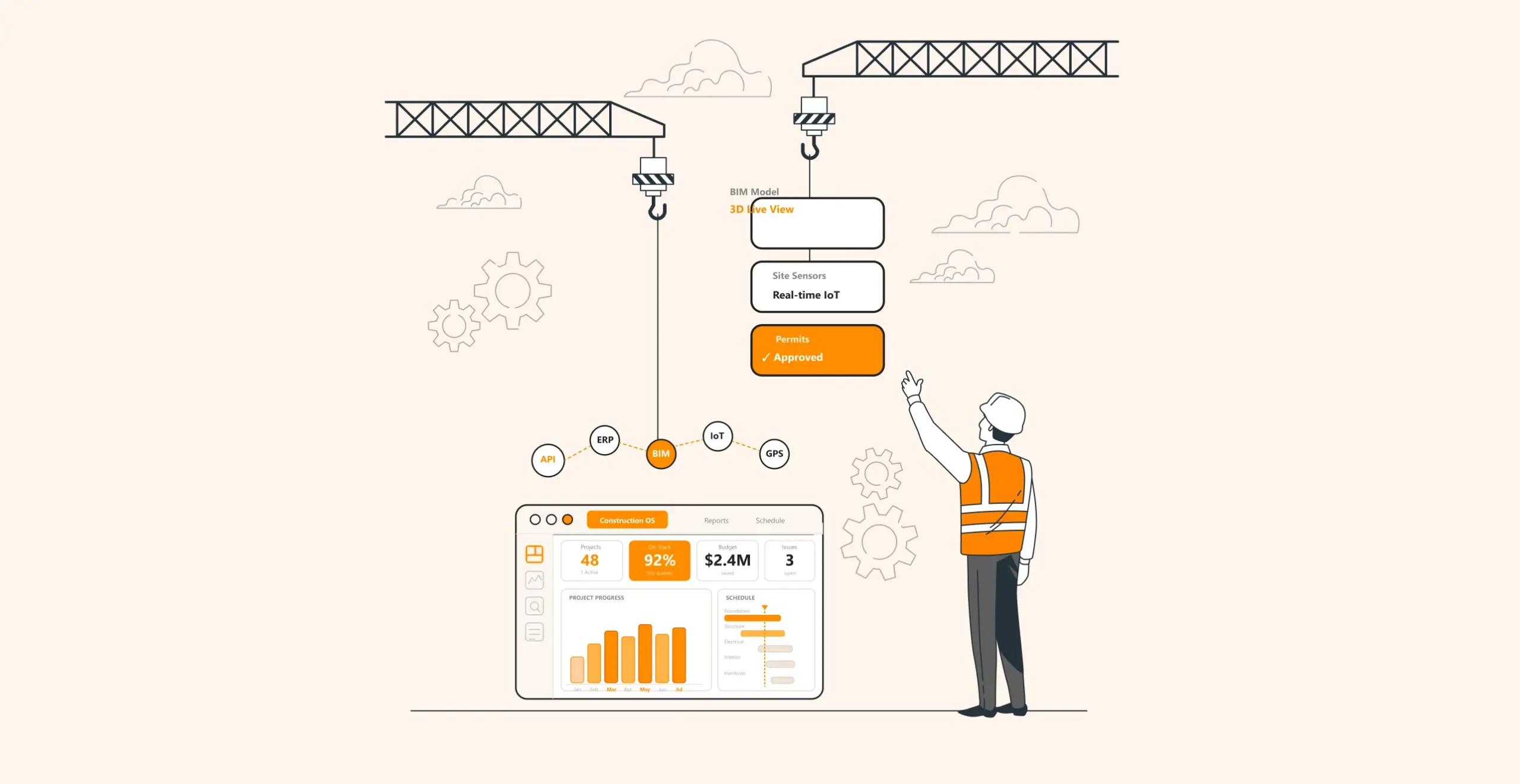
The construction industry has managed its operations on spreadsheets, manual logs, and fragmented tools for decades. But with the growing demand for modernization of the industry, based on larger projects, tighter margins, and real-time visibility, businesses are increasingly relying on construction software development to meet this demand.
Legacy systems and manual processes can no longer sustain the growth in the construction industry. Businesses that fail to see this trend are falling behind. As such, construction software development is a strategic priority for companies that want to modernize their operation by reducing delays, controlling costs, and scaling operations.
The global construction software market is projected to reach $34.2 billion by 2037, growing at a CAGR of 8.9%, as per reports from Research Nester. This proves that more businesses are investing in construction software development to stay competitive. In this guide, we will explore how you can modernize your construction operations through construction software development.
What Is Construction Software Development?
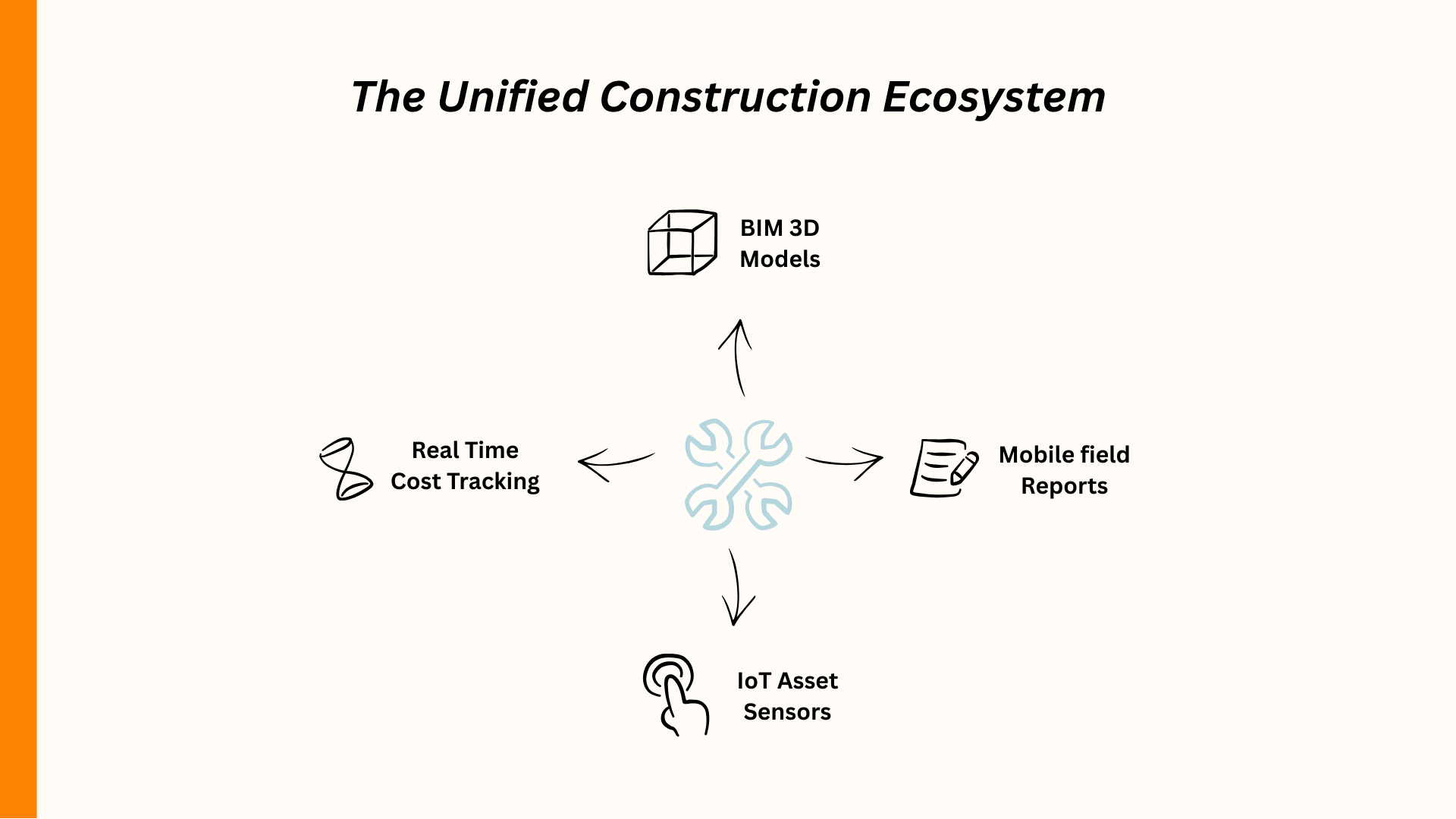
Construction software development is the process of designing, building, and maintaining digital solutions that can handle construction workflows like planning, budgeting, procurement, scheduling, field operations, compliance, and reporting. Unlike generic project management tools, construction software is equipped to handle multi-stakeholder collaboration, equipment and resource tracking, compliance reporting, and third-party integrations. In short, it connects field operations with in-office decision-making.
There are different types of construction software that handle specific parts of the construction operations. These can range from simple project management to advanced analytics. The following are some of the most common types:
- Project Management Software
Manages timelines, tasks, documents, and stakeholder communication.
- Construction ERP Systems
Handles finance, procurement, HR, payroll, and supply chain.
- Field Service & Workforce Apps
Used by on-site teams for reporting, time tracking, inspections, and issue logging.
- BIM Software (Building Information Modeling)
3D modeling and planning tools for architects, engineers, and contractors.
- Equipment & Asset Management Systems
Tracks machinery usage, maintenance schedules, and costs.
- Estimation & Costing Software
Automates cost estimation, bids, and budgeting.
- Safety & Compliance Tools
Handles inspections, incident reporting, and regulatory documentation.
Most construction companies use multiple tools; a custom construction software development connects them into a single ecosystem.
Why Is Construction Software Development Needed?
The construction industry is not like other industries, such as healthcare, edtech, or fintech, where a shift to digital solutions was a natural progression driven by industry demand and customer expectations. With no prominent customer base to demand a change to digital adoption, the construction business continued with its manual processes.
However, in recent times, authorities are demanding safer workplace practices, sustainable operations, and increasing pressure to centralize the fragmented paper trails for better audits. These demands can only be met through construction software development. The following points will explain in detail why this shift is needed and how it can benefit construction companies:
- High dependency on manual workflows and fragmented data
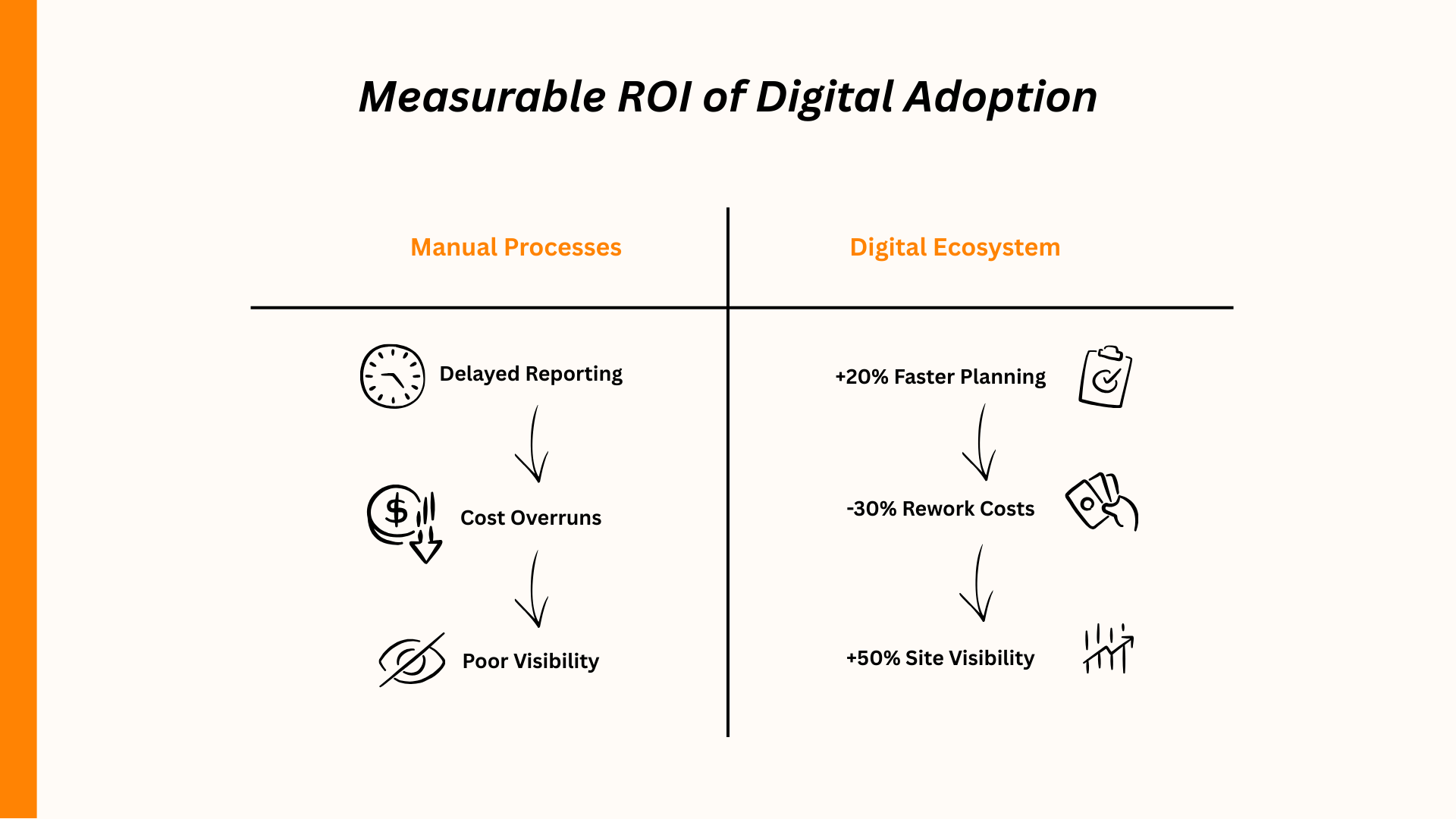
Construction teams still lose massive time and money chasing documents, drawings, and updates across emails, spreadsheets, and paper trails. Centralized construction software eliminates this chaos by creating a unified database that is secured and accessible to all teams.
- Decrease in productivity
According to a report by McKinsey, the global construction productivity has grown only about 1% annually over the last two decades, far behind other industries. Adopting construction software can actually help increase productivity by optimizing operations and workflows.
- Competitive advantage
The construction industry is projected to grow at a massive scale, but firms that can capitalize on this growth with construction digital solutions will only be able to stay competitive.
What Are The Use Cases of Construction Software Development?
Now that you’ve understood why construction software development is important for the industry, let’s explore the most crucial use cases through which construction firms can modernize their operations.
1. Project Planning & Scheduling
Construction software development enables businesses to centralize schedules, task dependencies, and milestones into one system that all stakeholders can access. With this unified system, project managers can assign resources, track progress, and identify delays before they cause any operational risks.
For example, a contractor can use construction software to manage multiple projects by using a scheduling tool to monitor subcontractor timelines, equipment availability, and inspection deadlines in real time. This gives the team instant visibility into the operations.
2. Budget Control & Cost Estimation
Construction companies can automate estimates, track real-time expenses, and compare budgets against actual spending using construction software. This lets companies bid for projects using accurate estimates that are based on historical records and market forecasts.
For instance, a mid-sized construction company bidding on a project can use estimation software to calculate material quantities and labor costs quickly. Once the project starts, they can track purchases, invoices, and order changes, ensuring the budget stays under control.
3. Advanced Data Analytics & Reporting
Field teams generate vital data like site conditions, safety issues, work progress, and equipment usage. Without construction software, all this information would get lost in paperwork or delayed reporting. Mobile construction apps, a type of construction software, allow site supervisors to upload photos, log issues, submit daily reports, and update task statuses directly from the job site.
4. Equipment & Asset Tracking
Construction software integrated with IoT and GPS helps companies monitor equipment usage, location, maintenance schedules, and fuel consumption. This prevents downtime and improves asset utilization.
A construction company operating across multiple sites can track and monitor whether its equipment is sitting idle or being overused. Over time, this significantly reduces operational costs and improves ROI on assets.
5. Procurement & Vendor Management
Procurement in construction involves coordinating materials, suppliers, contracts, and delivery timelines — similar to challenges covered in logistics software development. Construction software platforms streamlines this process, thereby reducing delays caused by late deliveries or mismanaged orders.
How To Build A Custom Construction Software?
Custom construction software gives you the flexibility to scale your business without replacing your digital infrastructure. This requires the software to use some crucial integrations and development stages that make it a reliable digital solution for construction companies. The following are the key stages in custom construction software development:
1. Define Business Goals
Start by identifying your pain points, like manual reporting, poor cost tracking, communication delays, or disconnected systems. Then create a workflow structure that guides your construction software development process. The point of this exercise is to define a concrete business goal and structure that keeps the software development process aligned.
2. Develop Core Features
The construction software must work for multiple users: project managers, site engineers, finance teams, vendors, and clients. Each role has different requirements, so ensure that the development process accounts for each user role’s needs. Moreover, define core features such as scheduling dashboards, document management, mobile reporting, and cost tracking.
3. Create Software Architecture & Integrations
Most construction companies already use tools like ERP systems, accounting software, or BIM platforms. Your custom software should integrate with these instead of replacing everything. This means you have to create a software architecture to allow third-party integrations by building a cloud-based platform, mobile-first solution, or modular system that connects multiple tools through APIs.
4. Design for Usability
Following the integration process, the next crucial step is to design the construction software for usability. Focus on clean interfaces, offline functionality, and minimal data entry steps. The goal of this stage is to design a custom construction software that doesn’t require users to go through a training process.
5. Develop & Test
Start with a minimum viable product (MVP) that solves one or two critical problems, such as reporting or scheduling. Test it on a live project, gather feedback from real users, and refine. This allows you to develop a final product that is agile and fail-proof.
6. Deploy the Software
Plan a structured rollout with training sessions, onboarding guides, and internal champions who push usage on-site. Start with pilot projects, monitor performance, and scale across departments once adoption is strong.
Tech Stack for a Custom Construction Software Development
Developing a custom construction software requires some critical tech stacks that allow it to function and perform effectively under pressure.
- Frontend (React, Angular, Flutter)
The frontend is responsible for dashboards, mobile apps, and user interfaces for both office teams and on-site workers. Modern frameworks like React and Flutter ensure fast, responsive, and mobile-friendly experiences. - Backend (Node.js, .NET, Java)
The backend handles business logic, data processing, integrations, and user authentication. A robust backend ensures the system can manage complex workflows like scheduling, cost tracking, and real-time reporting without performance issues. - Database (PostgreSQL, MongoDB, MySQL)
Construction platforms store large volumes of project data, like documents, budgets, drawings, and logs. Reliable databases ensure secure storage, quick retrieval, and structured reporting across multiple projects and teams. - Cloud & DevOps (AWS, Azure, Google Cloud)
Cloud infrastructure enables real-time access, scalability, and secure data storage across locations. It allows teams on-site and in-office to access the same system while supporting backups, updates, and system performance monitoring. - Integrations & Advanced Tech (APIs, BIM tools, IoT, AI
analytics)
Construction software rarely works in isolation. APIs connect ERP, accounting, and BIM platforms, while IoT enables equipment tracking, and AI helps with forecasting and risk analysis. These integrations turn software into a connected operational system rather than a standalone tool.
How to Choose the Right Construction Software Development Company?
Construction software development is a complex, costly, and time-consuming endeavour that requires carefully planned development stages and collaboration between teams and companies to ensure the final product actually solves the problem it was designed to solve and is aligned with the business goals. However, the most important stage that wasn’t addressed in the previous section is choosing the right software development company.
In this section, we will provide you with important points to consider before choosing the right construction software development company that aligns with your requirements.
1. Proven Experience in the Construction Industry
Look for a development company that has built solutions for contractors, real estate developers, or infrastructure firms. They should understand scheduling dependencies, site reporting, procurement cycles, and compliance requirements. Without domain knowledge, you’ll spend months explaining basics they should already know. Ensure that you ask for case studies or demos of past construction platforms.
2. Strong Tech Integration Capabilities
Construction software must connect with accounting tools, ERP systems, BIM platforms, payroll software, and sometimes IoT devices. The right development partner should be comfortable working with APIs, legacy systems, and third-party integrations.
3. Focus on Usability of Field Teams
Your construction software must be usable for executives and for the field teams. The development company must understand this requirement because it has to create a platform that is accessible to different teams with unique requirements, while designing a unified system. The development company must also design for real-world conditions, which means mobile-first interfaces, offline functionality, and minimal steps for reporting tasks.
4. Scalable Architecture and Long-term Support
Construction companies grow by taking on more projects at multiple locations. Your construction software should be equipped to handle your business growth. Therefore, choose a partner that builds cloud-based, modular systems that can expand with your business. Furthermore, ensure that your development partner offers post-launch support, maintenance plans, and the ability to scale features without any disruption.
5. Clear and Transparent Communication
A good development partner operates with structured timelines, clear deliverables, and transparent pricing. You should know what’s being built, when it will be delivered, and how changes will affect cost and timelines. Avoid vendors that promise everything upfront but lack a defined roadmap.
Conclusion
There is a general idea that the construction industry doesn’t require modern and digital solutions to run its operations. This is an outdated idea that doesn’t hold up to the scrutiny of evolving market standards and expectations. Construction software not only modernizes your operations but also reduces costs, optimizes workflows, provides better insights into teams and equipment, and allows you to run your business with better control.
In this guide, we’ve addressed the nuances of construction software development, its use cases, and how it can impact your construction business. But success depends on building the right solution with the right partner. That’s why Quixta’s construction software development services offer modern solutions that support your construction operations by understanding your unique needs and building software that works with you to grow the business.