Skip to content

Anand Ashok
March 27, 2026


Anand Ashok
March 27, 2026
The real estate business is now more competitive, digital and quicker than ever before. Buyers and tenants want prompt answers, the right information, and communication that runs smoothly at all levels. Meanwhile, developers, brokers and sales staff handle high volumes of enquiries on websites, listing portals, calls, and referrals.
As the real estate industry is evolving rapidly, businesses are under constant pressure to manage operations more efficiently while meeting rising customer expectations. Building tailored software allows real estate businesses to bring all their operations into one streamlined system, designed specifically around how they work. The disconnected nature of tools or generic software results in delays, follow-ups, and a lack of visibility into sales performance.
A custom real estate software solution integrates all these activities into a unified, structured system tailored to the operational model of a real estate business.
What is a Custom Real Estate Software Solution?
A tailored real estate software solution is a platform that is developed to correspond to the business processes of an individual company. It assists in the management of property, handling of leads, site visits, follow-ups, reporting, and in-house coordination within a single system.
Custom solutions like real estate CRM software are built based on actual workflows, unlike ready-made software. This indicates that teams will not have to change their working style to suit the software. Rather, the software assists in how the business already operates, making daily activities smoother and more efficient.
Custom vs Generic Real Estate Software: What’s the Real Difference?
Generic software is the initial choice among many real estate companies as it is faster to deploy. But with operations expanding, constraints are evident. Tailor-made software is more aligned, flexible, and valuable in the long term.
Comparison Table: Custom vs Generic Real Estate Software
| Basis of Comparison | Custom Real Estate Software | Generic Real Estate Software |
| Purpose and Focus | Custom-designed to sell property, rent, list, and make follow-ups with clients. | Proposed to various industries with optional property options. |
| Workflow Fit | Corresponds to the daily working style of agents and developers. | Needs manual workarounds and adjustments. |
| Property and Lead Handling | Deal stages, enquiries, site visits and properties are linked. | Properties are kept in a separate record, although leads are managed. |
| Listing Portal Integration | Can be modified to interface with listing portals. | Limited or fixed integrations. |
| Flexibility and Growth | Expandable with the changing business requirements. | Relies on updates by providers. |
| Setup Cost and Value | Greater initial expenditure, high long-term paybacks. | Less expensive in the short term, yet limiting in the long term. |
| User Experience | Clean interface specialised in real estate activities. | Filled with useless features all the time. |
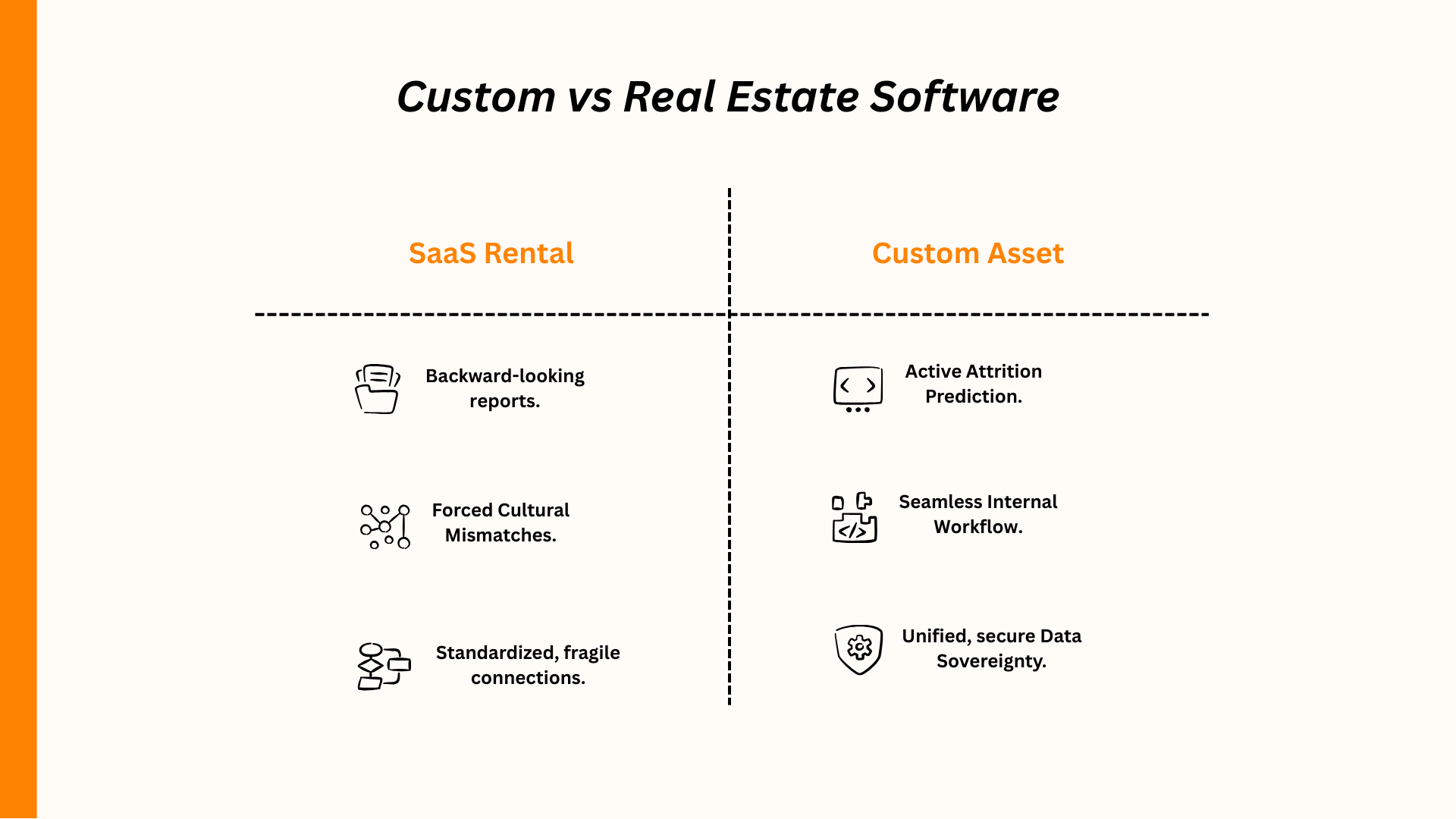
This analogy explains the shift to custom solutions as a way of achieving greater control and effectiveness for many growing businesses.
Planning Before Development
Determining Business Goals and Software Objectives
Business goals should be clearly defined before development starts. There are those businesses that are oriented in the conversion of leads at a faster rate, and others oriented in reporting, coordination of the team or customer experience.
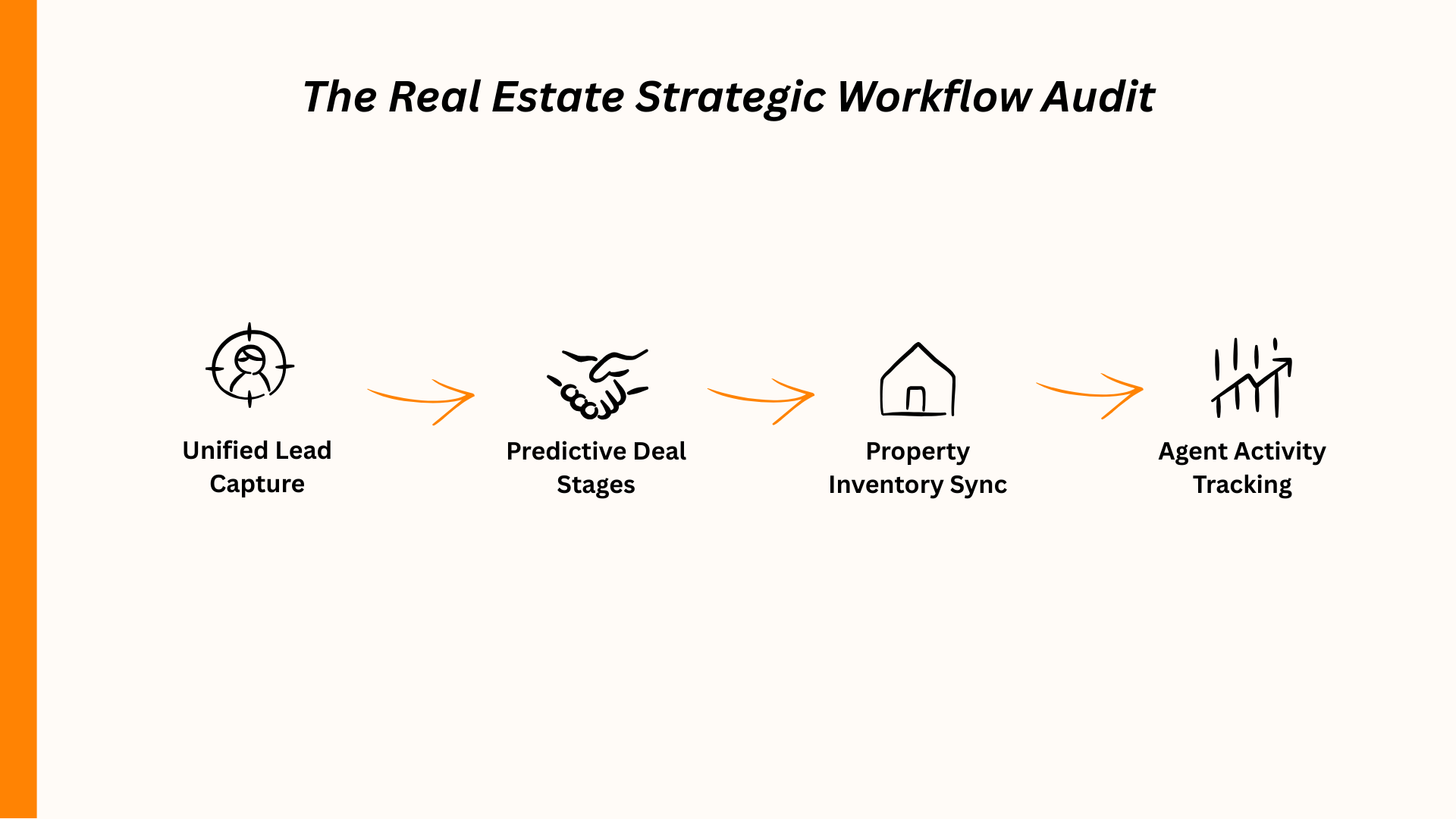
A clarity of goals helps in making sure that the software achieves quantifiable results and does not contain useless functions. This is the planning stage that prepares for a successful build.
Take a look at our guide on real estate listing portal development to get more clarity on what your business goals should be before development begins.
Knowledge of Users and Day-to-Day Processes
Sales agents, managers, and administrators use real estate software in their daily operations. Every role is associated with various needs and duties.
The software may be designed to minimize effort, enhance transparency, and adoption by the organization by learning how teams respond to enquiries, arranging visits to various sites, and finalizing deals.
Determining Core Features Needed
Not all businesses require all features. Early definition of core requirements keeps the system on track, making it effective.
Typical areas of features are:
- Lead capture and tracking is centralized
- Property and inventory control
- Activity logs and follow-up reminders
- Tracking and scheduling of site visits
- Performance and sales reports
Every feature is supposed to be aligned with a business objective.
Designing the Software Experience
Structuring the Software Architecture
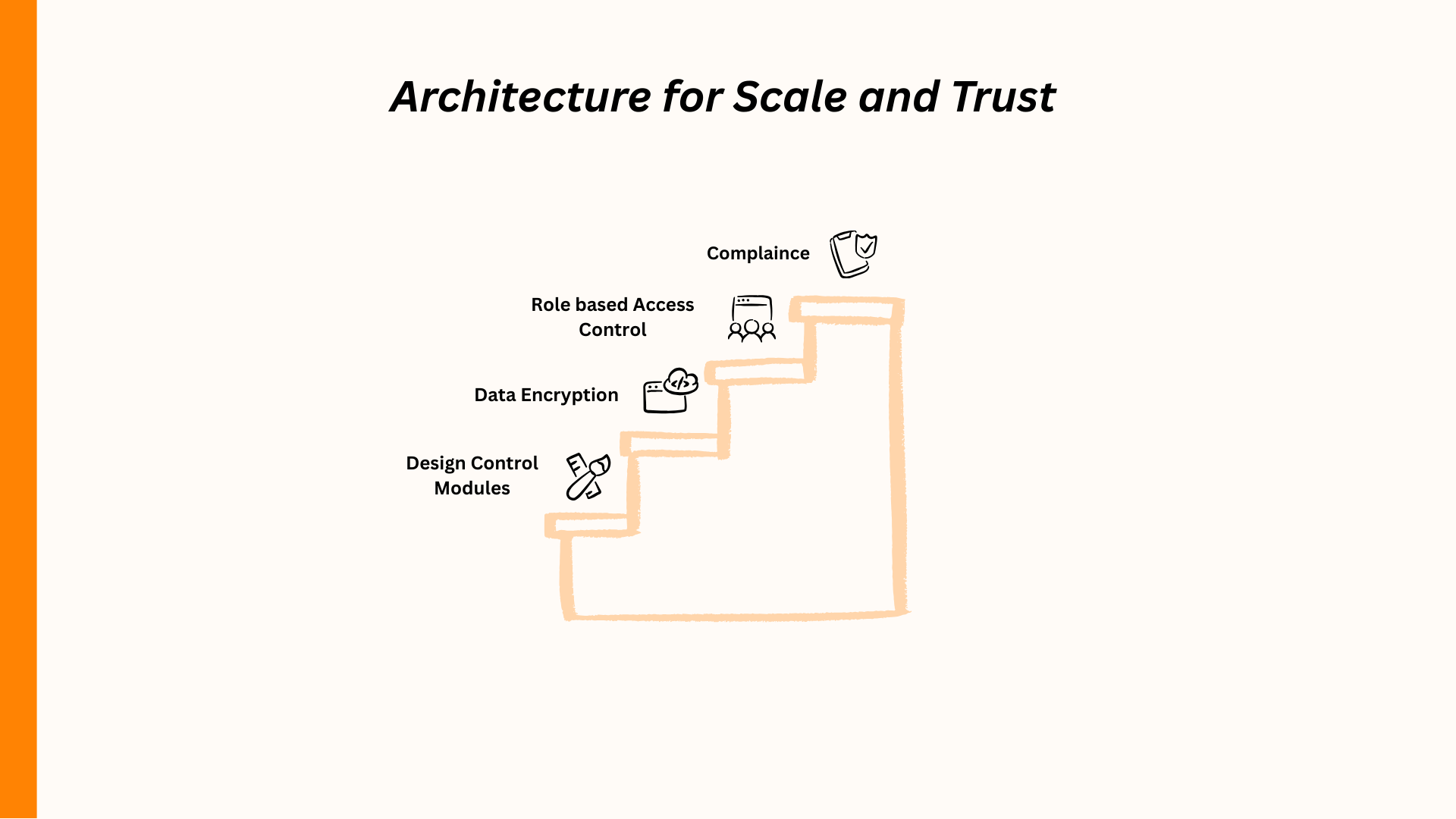
A properly designed architecture makes the software stable as the data and the users grow. New features can be added later and do not interfere with performance due to proper planning.
The phase is aimed at establishing a sound base that is favourable towards long-term development.
User Interface Design and Experience
Good design is concerned with clarity and ease of usage. It has a simple interface, which enables the teams to do it more quickly and with less training.
In the case of real estate teams, this will imply fast access to leads, property information, follow-ups and performance information. without causing any confusion.
Wireframing and Workflow Mapping
Wireframes are made before the development process starts, so that they can indicate how the system will be used by the user. This assists in visualizing layouts, navigation and task flow.
Feedback at this stage prevents the final product from being a far-fetched outcome of the business expectations.
Development and Testing
Software Development and System Integration
After approvals are received for the design, development starts. The features are created in stages, which guarantees accuracy and reliability.
At this point, the software can be linked to the websites, enquiry forms, communication tools, and internal systems to establish a cohesive working mentality.
Data Access and Data Security
Real estate software contains personal customer and transaction information. Information is safeguarded with adequate security measures.
Role-based access ensures that team members only see the information that is pertinent to their duties, which enhances safety and clarity.
Testing, Quality Check and Refinements
The system is also well tested before launch. All concerns are addressed to maintain a smooth day-to-day running.
This step minimises risks and prepares the software to be used in the real world.
Launch and Beyond
Deployment and Go-Live Preparation
Implementing the software is a process that includes last-minute checks, data preparation, and performance audits. This guarantees that the system will be reliable from the very beginning.
Continuous Improvement and Post-Launch Support
Real estate businesses change according to market dynamics. Continued support guarantees that the software remains applicable to evolving needs.
New updates and additions ensure that the platform remains efficient and in line with the growth of the business.
Cost and Value Perspective
Average Cost of Building Custom Real Estate Software
Custom real estate software pricing is based on features, integrations, user count, and scalability.
Although the initial investments in custom solutions are more expensive, they eliminate manual labour, enhance efficiency, and yield better returns in the long term.
Why Custom Software Provides Long-Term Value?
Custom software is a long-term business asset. It enhances visibility, minimizes errors and promotes enhanced decision making. It also helps reduce errors by organizing information in a structured and reliable way. When data is accurate and easy to access, teams can respond faster, avoid delays, and maintain better control over daily activities. Over time, this level of control leads to more informed and confident decision-making.
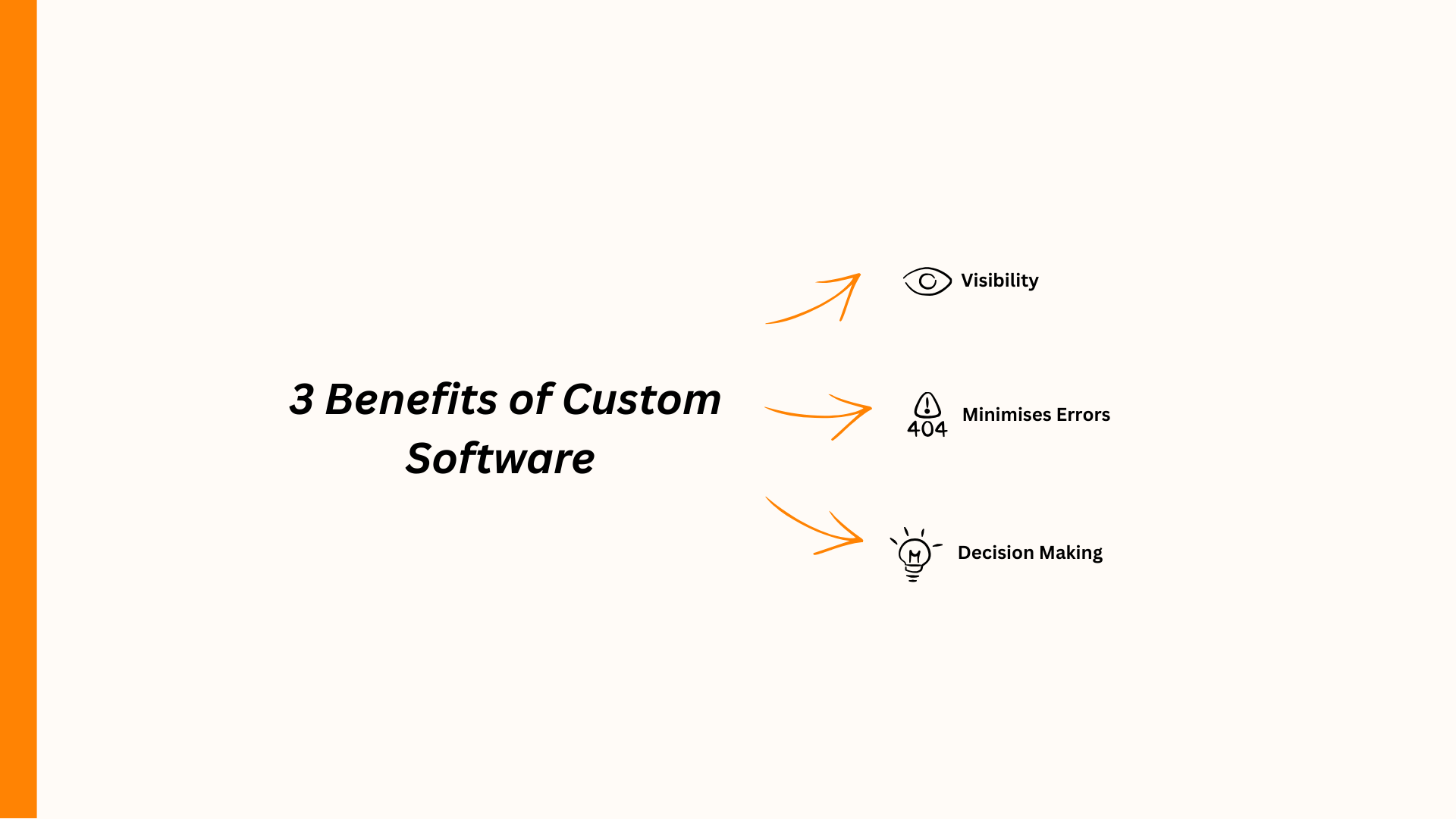
While the initial cost of development may seem high, the long-term benefits often outweigh it. Improved efficiency, reduced manual work, and better use of resources contribute to ongoing cost savings. In addition, custom software can grow alongside the business, adapting to new requirements without the need for constant replacements.
In the long-term, the value of enhanced efficiency and control is often more than the initial cost of development.
The Development of Scalable Real Estate Software Solutions by Quixta
At Quixta, we specialize in developing software that is useful in the actual running of a business. We start with the workflow, challenges and growth objectives.
We deliver:
- Completely tailor-made real estate software
- Secure and scalable system design
- Easy and convenient user interfaces
- Continuous support and enhancement
All the solutions aim to enable real estate businesses to operate efficiently and expand confidently.
Conclusion
Custom real estate programs have become the norm in businesses that desire to expand sustainably. It adds order, clarity, and manageability to complicated activities.
The real value lies in how well the solution is planned and built. When businesses clearly understand their needs and work with the right development partner, the result is a system that supports both current operations and future growth. Over time, this leads to better control, stronger performance, and more confident decision-making.
In a competitive market, having the right systems in place can make a meaningful difference. Custom software provides that foundation, helping real estate businesses stay organized, responsive, and prepared for what lies ahead. Thoughtful planning and the right development partner make custom software a powerful solution for a business's long-term success in the real estate market.
FAQs
Blog by Anand Ashok
Director, Quixta