

Anand Ashok
March 13, 2026


Anand Ashok
March 13, 2026
Imagine you’re handling a logistics operation with multiple stakeholders, tight
delivery deadlines, and carrier coordination, but suddenly you get some news that the delivery missed its
pickup. You realize that this is not a one-off incident, but has become a pattern. With faster delivery
expectations, rising fuel costs, supply chain disruptions, and data fragmentation, legacy systems are
struggling to keep up. That’s where logistics software development becomes a strategic investment,
rather than an upgrade.
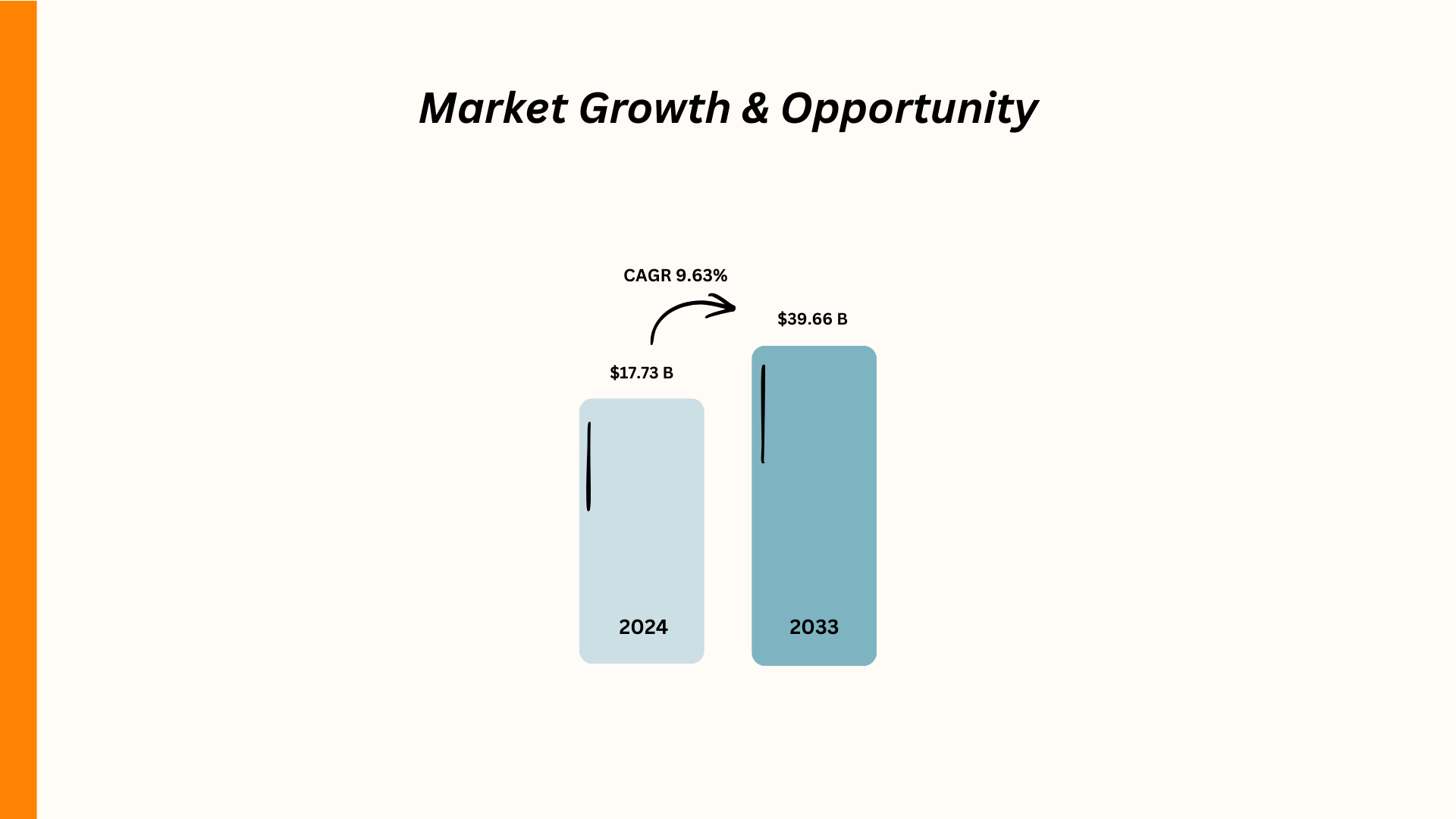
According to Straits
Research, the global logistics software market is projected to reach $39.66
billion by 2033, with a CAGR of 9.63%. Businesses are investing in logistics software development to build
smarter, faster, and more connected systems from the ground up, but there are more reasons to
explore.
In this guide, we will understand the nuances of logistics software development, its
relevance in the logistics industry, and how it can help your business.
To begin with, logistics software development is the process of building digital
solutions to manage, optimize, and control logistics operations like transportation, warehousing, inventory,
fleet operations, and supply chain workflows.
Logistics software development process involves building custom platforms and
integrating third-party systems, with the goal of improving visibility across the supply chain, reducing
operational costs, automating workflows, and enabling real-time tracking of shipments.
The end goal of any logistics system is to optimize the operation. As such, different
logistics software focuses on specific aspects of logistics to solve a problem. The following are some of
the most common logistics software types:
As global logistics gets more sophisticated, businesses need to catch up by bringing
their logistics operations under control. There’s a growing pressure on logistics companies to do more
with less time, less budget, and minimal room for error. In this section, we will explore how logistics
software development can help businesses meet this growing expectation:
Logistics software development supports route optimization, where teams can
operate on reliable and risk-free supply routes for logistics. It can plan the route and provide real-time
visibility so you can make immediate adjustments to your fleets, reducing the overall costs.
The growing demand for fast delivery and real-time tracking can be met with
logistics software development. It can provide customers, as well as logistics teams, with live updates and
instant communication when something changes.
Logistics software allows businesses to deliver on the promise of one-day
deliveries or next-day deliveries. It also provides quick updates and real-time tracking of their order.
As the business grows, legacy systems struggle to handle large order volumes or
global logistics complexities. Logistics software development allows you to automate manual processes and
deliver more with less inventory by accurately predicting order demand spikes, thereby improving overall
logistics operational efficiency.
A modern logistics software development consists of multiple modules or components
that all cater to specific logistics needs, but work together to make a comprehensive functioning logistics
solution. Let’s understand the key components of logistics software development:
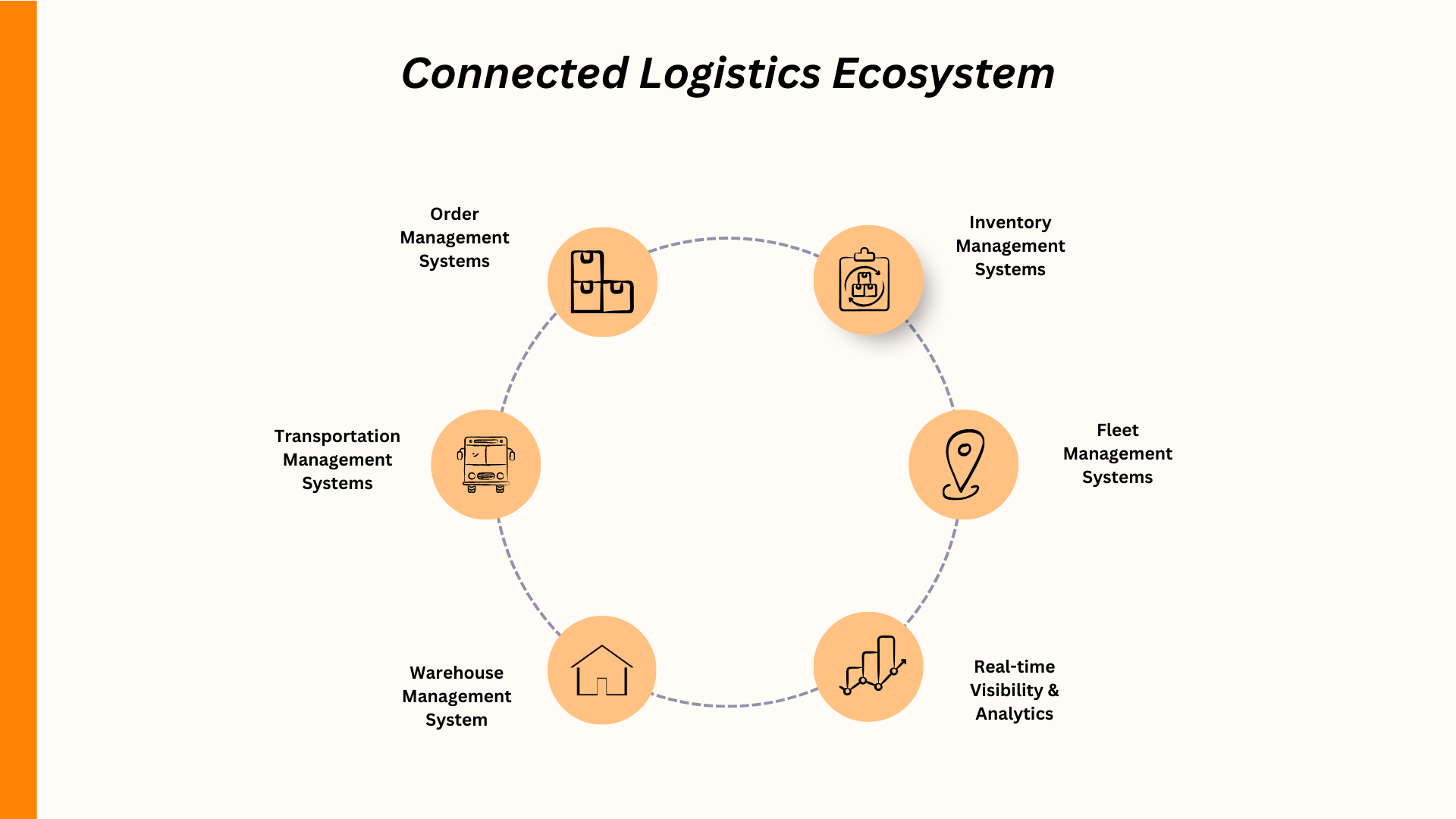
The order management system is at the core of logistics operations, as it captures
orders from multiple sources, such as e-commerce platforms, ERP systems, marketplaces, and routes them
through fulfillment workflows. The system supports order validation, status updates, returns processing, and
multi-warehouse routing, thereby optimizing and centralizing the initial phase of a logistic operation,
which is order. Without a strong OMS, operations become fragmented and error-prone.
This critical component of logistics software development helps track inventory stock
levels, analyzes sales and order demands, and identifies when the inventory needs to be restocked. It
provides real-time updates, reducing the possibility of running out of stock or buying too much inventory.
For example, an e-commerce company operating across multiple fulfillment centers
needs to know exactly where each SKU sits at any moment. If inventory isn’t synced in real time,
customers may place orders for items that aren’t actually available.
The transportation management module of a logistics software handles route planning
and shipment tracking. It calculates optimal routes, assigns carriers, consolidates shipments, and tracks
deliveries. Modern TMS platforms use real-time traffic data, fuel costs, and delivery windows to optimize
routes and reduce operational costs.
Fleet management modules track vehicles, drivers, fuel usage, and maintenance
schedules. Using GPS and other advanced sensors, companies can monitor vehicle location, driver
behavior, idle time, and engine health. This data helps reduce fuel consumption, prevent breakdowns, and
improve delivery timelines. For instance, a logistics company with 100+ fleets can use telematics data to
identify inefficient driving patterns, such as excessive idling or harsh braking. Using these insights, you
can reduce fuel costs and maintenance expenses.
A warehouse management system manages and controls the inventory stock. Its job is to
oversee stock, ensure faster order fulfillment, keep track of incoming and outgoing stock, oversee stock
locations, and provide accurate inventory tracking. Essentially, it handles all the activities associated
with warehouse management, like storage, picking, packing, and dispatch.
Real-time visibility provides end-to-end tracking across shipments, vehicles, and
inventory, with the help of GPS, API integrations, and cloud-based dashboards. This helps businesses and
customers to monitor delivery status, estimated arrival times, and potential delays.
These real-time insights are transferred into the analytics module, which tracks key
performance indicators like delivery time, cost per shipment, warehouse efficiency, and fleet utilization.
Through analytics dashboards, it provides automated and comprehensive reports that help decision makers
identify inefficiencies and optimize their logistics operations.
In the previous section, we talked about the important modules that make logistics
software work. The key functionalities of each module work together to optimize the logistics operations for
your business. A custom logistics software development involves unifying these modules through carefully
structured stages to create a personalized logistics solution that solves your unique business problem.
The following are the core stages of the logistics software development
process:
Start by outlining and defining your goals. Identify the core logistics problems that
you’re trying to solve with this software, and then map workflows around those problems. This will
guide you through the development process. Be sure to involve operations teams, IT, logistics teams, and
other stakeholders to give everyone better visibility into the development process.
After you’ve defined your objectives and workflows, the next step is to analyze
competitors, existing tools, and industry benchmarks to avoid rebuilding an already existing solution.
Understand the technical integrations required to build the logistics software, because this informs your
architecture decisions, integration needs, and scalability expectations.
Once the software requirements are clear, the next step is to design the system
architecture. This involved defining the core modules like order management, route optimization, tracking,
and analytics. Prioritize must-have features for the first release and leave advanced capabilities for later
iterations to avoid delays.
This stage focuses on designing a clean, responsive, and easy-to-navigate interface
for dispatchers, warehouse staff, and drivers. Create prototypes for dashboards that showcase critical data
quickly and in a simple way. Ensure the design focuses on software usability and adoption.
Following the design stage, the front-end and back-end parts are developed. This
involves integrating with existing systems such as ERP, CRM, payment gateways, and third-party carrier APIs
to ensure all the modules work in sync to provide accurate data in real-time.
This stage involves testing the logistics software that goes beyond basic
functionality. The software must be able to handle high-order volumes, concurrent users, and real-time data
updates without lag, by simulating peak scenarios like holiday sales or warehouse surges.
Once software testing is complete, the logistics software is deployed on a secure,
cloud-based environment. Use phased rollouts and monitor performance metrics, error rates, and user feedback
closely, because early monitoring helps catch issues before they affect large-scale operations.
Post-launch, the focus shifts to optimization. Use analytics to identify
inefficiencies in routing, inventory turnover, or delivery times. Add advanced features like predictive
analytics, AI-based route optimization, or automation workflows as the business grows.
Now that you’ve understood the intricacies of logistics software development,
let’s explore the estimated cost beyond this process and what factors affect its development.
As with any other software development, the cost depends on complexity, features,
tech stack, and team size. In the following points, we will explain how each factor decides the overall cost
of developing a logistics software:
The more modules you build, the higher the cost. Advanced features like real-time
optimization, automation, and predictive analytics significantly increase development time and
budget.
Logistics software requires some critical integrations like ERP systems,
e-commerce platforms, GPS tracking, payment tools, and other third-party systems. However, complex
integrations often require maintenance and increase the overall cost of the project.
Similarly, cloud infrastructure, AI/ML models, IoT tracking, and data analytics
tools raise initial costs but improve long-term efficiency and scalability. Simpler stacks reduce cost but
limit flexibility.
Development rates vary by location. Choosing a US/EU team for your logistics
software development can be more costly than selecting an offshore team.
| Software type | Scope and use case | Estimated cost (USD) | Timeline |
| Basic logistics MVP | Shipment tracking, dashboards, basic reporting | $30,000 – $60,000 | 3–4 months |
| Mid-level logistics platform | Route planning, integrations, alerts, analytics | $60,000 – $150,000 | 4–8 months |
| Advanced logistics system | Real-time tracking, automation, mobile apps | $150,000 – $300,000 | 6–12 months |
| Enterprise logistics suite | Multi-tenant architecture, AI, IoT, ERP integrations | $250,000 – $800,000+ | 8–18 months |
| Basic TMS integration plugin | Connects existing systems via API | $5,000 – $20,000 | 1–2 months |
| Cloud-based mid-tier TMS | Modular logistics ecosystem with analytics | $80,000 – $200,000 | 5–9 months |
| Enterprise custom TMS | Large-scale logistics operations | $250,000 – $500,000+ | 9–18 months |
| Component | Estimated cost (USD) |
| UI/UX design | $5,000 – $15,000 |
| Backend development | $10,000 – $50,000 |
| Admin/control panel | $8,000 – $20,000 |
| Integrations (ERP, CRM, APIs) | $10,000 – $40,000 |
| Security implementation | $5,000 – $15,000 |
| Testing and QA | $5,000 – $20,000 |
| Real-time tracking feature | $8,000 – $15,000 |
| Warehouse module | $20,000 – $40,000 |
| AI/ML features | $20,000 – $50,000+ |
| Annual maintenance | 15–20% of dev cost |
To put it simply, businesses that are building custom logistics software in 2026
should have a realistic budget of around $60,000 to $300,000+, depending on complexity, integrations, and
scale. Legacy systems can cost less, but if you want an enterprise-level logistics system with AI
integration, it can exceed $500,000.
The best approach is to start with a focused MVP, validate workflows, then scale into
a full logistics ecosystem once ROI is proven and the business grows.
Logistics software development is shaped by the innovation happening in the logistics
industry. The following are some of the key trends that are shaping how logistics software is
developed:
AI is becoming a central part of logistics software development. It can analyze
traffic patterns, weather, fuel costs, and delivery windows to recommend optimal routes and schedules in
real time. AI can also forecast demand spikes and shipment delays before they happen, keeping the logistics
team well informed and equipped with the best course of action.
Warehouse robotics, automated picking systems, and smart sorting tools are being
integrated directly into logistics platforms. Logistics software can directly coordinate with robotic
systems, automated conveyor belts, and humans in real-time. This allows for increased operational speed and
accuracy.
Cloud-enabled architecture is embedded into logistics software to store and provide
real-time access to data. It also enables integration across devices and multiple locations, allowing your
operations to scale and grow without rebuilding the data infrastructure.
Modern logistics software development has to constantly meet technological innovation
and consumer demand for quicker and more reliable shipments. This requires adopting integrations and
processes that allow you to get real-time visibility into your operations, automate manual workflows, and
improve how your fleet is managed. Legacy systems will always struggle to meet these expectations, while
ready-made logistics software will be limited in its functional capabilities. The only real solution is to
build a custom logistics solution that is tailored to your business needs and can optimize your operations
without breaking the bank.
However, choosing the right logistics software development company to build your solution is
also a daunting task that requires thorough research and understanding of the services market. That’s
why we’ve created a dedicated guide to help you choose the right logistics software development
company .