
TLDR
- A white label partnership costs approximately ₹7.5 lakh (9,000)peryearcomparedwith₹18.4lakh(22,000) for an in-house designer-and-developer team, based on the illustrative estimates in this guide. Actual figures depend on project volume, provider pricing, and internal management costs.
- In-house hiring makes financial sense when the agency has a steady pipeline of website projects throughout the year and can keep employees consistently utilised. Underutilised capacity is the largest hidden cost of permanent hiring.
- White label web design suits agencies with irregular project demand, seasonal workloads, or a need to add web design capabilities without building a dedicated department.
- A hybrid model lets agencies keep an internal team for strategy, project management, and quality assurance while using a white label partner for production capacity during demand spikes.
- When comparing costs, include internal project management, QA, revisions, and communication time alongside the provider's invoice. The partner fee alone does not represent the true delivery cost.
For agencies with fluctuating project demand, white label web design typically costs less than hiring an in-house team. In the cost comparison below, a white label partnership costs approximately ₹7.5 lakh (9,000)annually compared with₹18.4lakh(22,000) for an in-house designer-and-developer team. The actual difference depends on project volume, provider pricing, internal management hours, and how consistently the agency can keep employees billable.
This guide focuses specifically on the financial comparison between the two models. For a broader look at how white labelling works, partner selection criteria, quality control, and common margin mistakes, see the companion guide: The complete guide to white label web design.
Understanding White Label Web Design and In-House Hiring
White-label web design and in-house hiring let agencies deliver website projects, but they differ in how they manage work, allocate resources, and handle costs.
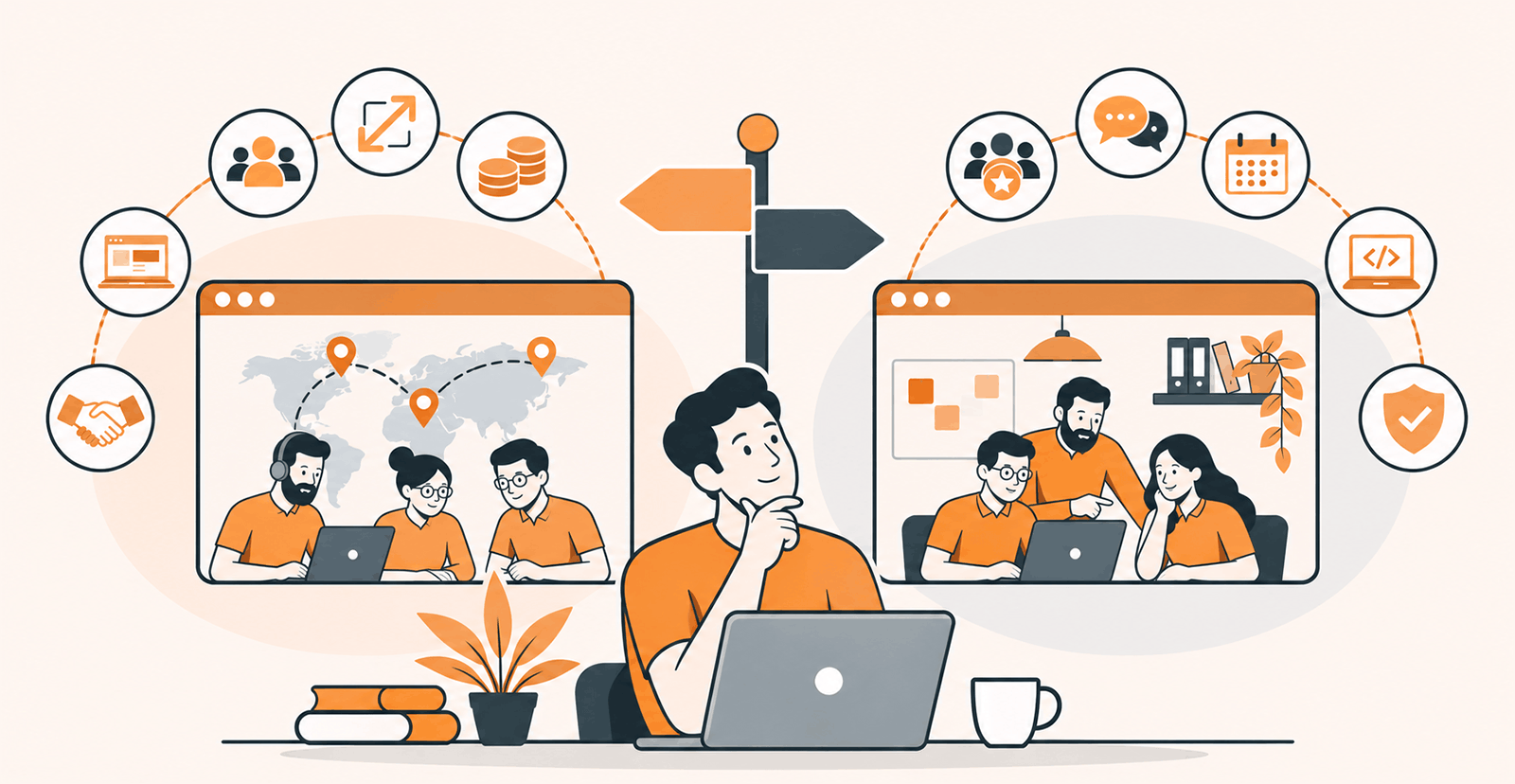
White-label web design involves partnering with an external provider that delivers design and development services under the agency's brand. The agency retains control over client relationships, pricing, and service presentation, while the provider handles the agreed production tasks.
Key characteristics of white-label web design include:
- External expertise: Access to experienced designers and developers without recruiting a permanent team.
- Flexible capacity: Ability to scale resources according to project requirements and workload.
- Lower upfront investment: Reduced need for recruitment, employee benefits, equipment, and training.
- Brand ownership: Completed work is delivered under the agency's brand, subject to the partnership agreement.
- Variable costs: Project-based arrangements let agencies align more of their delivery spend with client demand.
In-house hiring involves directly employing designers, developers, and other specialists. These employees work within the agency's internal processes, giving management greater control over daily operations and resource allocation.
Key characteristics of in-house hiring include:
- Direct supervision: Greater control over workflows, priorities, and quality assurance.
- Dedicated resources: Employees are available for internal collaboration and ongoing projects.
- Consistent communication: Easier day-to-day coordination between designers, developers, and other departments.
- Higher initial investment: Recruitment, salaries, benefits, software, equipment, and training contribute to operating costs.
- Fixed financial commitments: Payroll and other employment expenses continue even when project demand declines.
The real cost of hiring an in-house web design team
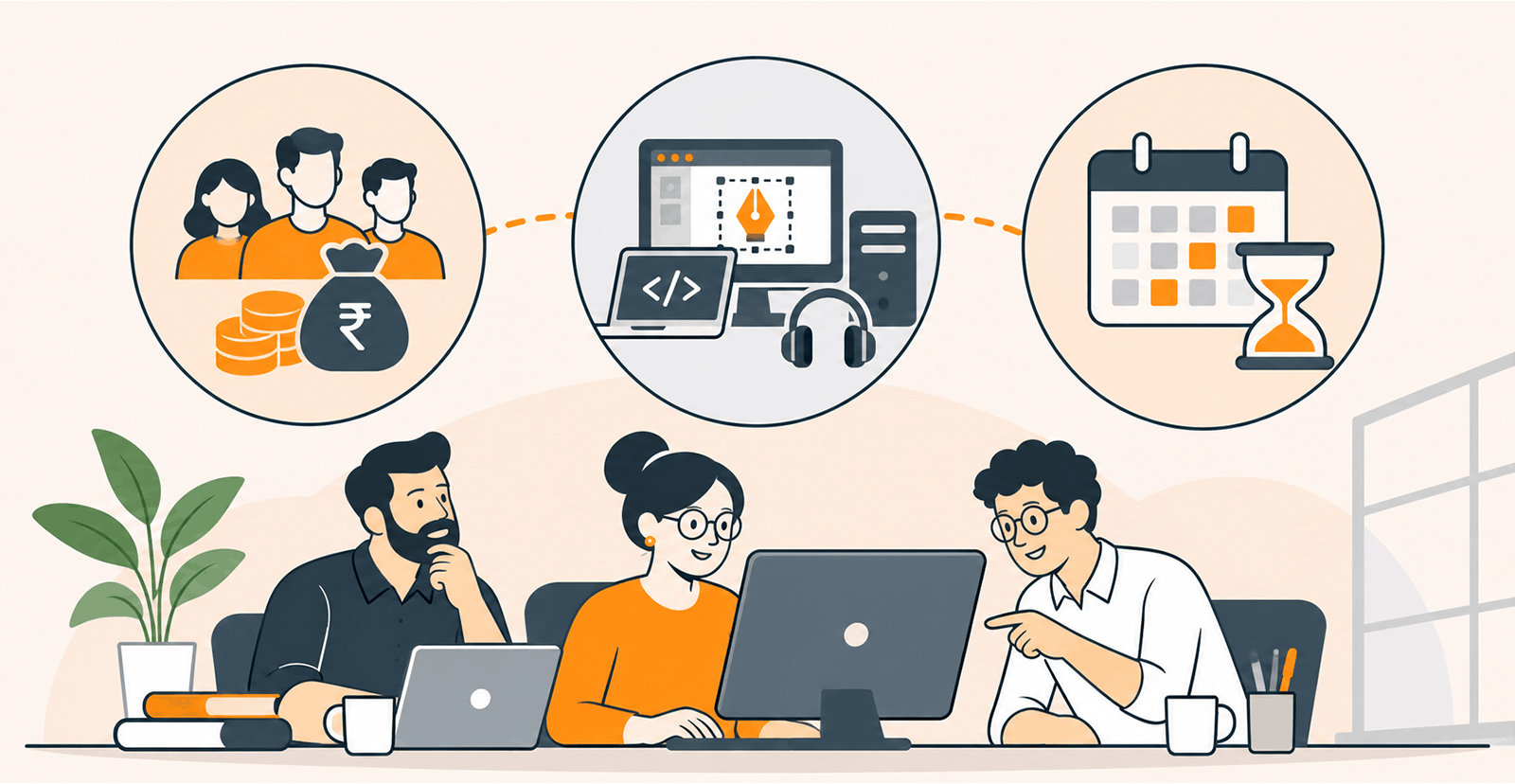
Hiring an in-house team costs more than the salaries listed in job postings. To understand the actual financial commitment, agencies must account for recruitment, employee benefits, equipment, software, training, and management time.
Salaries and employee benefits
Depending on the services offered, an agency may need a UI/UX designer, a web designer, and a developer. Each additional role increases the agency's fixed monthly expenditure. Employer contributions, paid leave, bonuses, insurance, and other applicable benefits add to the total. For an agency hiring a designer and a developer in India, combined annual salaries could range from ₹10 lakh to ₹20 lakh ($12,000 to $24,000) or more. In the US, the same two roles can cost $80,000 to $160,000+ annually before benefits and overhead.
Software and equipment
Designers and developers require suitable computers, monitors, design applications, development tools, testing environments, and project management software. Agencies may also need cloud services, collaboration platforms, security tools, and equipment upgrades. These expenses grow as the team expands.
Underutilised capacity
One of the most overlooked expenses is paying employees when billable work is insufficient. Salaries continue regardless of whether clients have approved new projects. If demand fluctuates throughout the year, the effective cost per website can rise considerably. An in-house designer earning ₹6 lakh (7,200)annuallywhoisproductiveonbillableworkforonly8monthseffectivelycoststheagency₹75,000(900) per productive month rather than ₹50,000 ($600).
The Real Cost of White Label Web Design Services
White-label web design changes how agencies pay for delivery capacity. Instead of employing every specialist directly, agencies buy services from an external provider and incorporate them into their own client offerings. However, outsourcing costs depend on the provider's pricing structure, project complexity, and the level of support included.
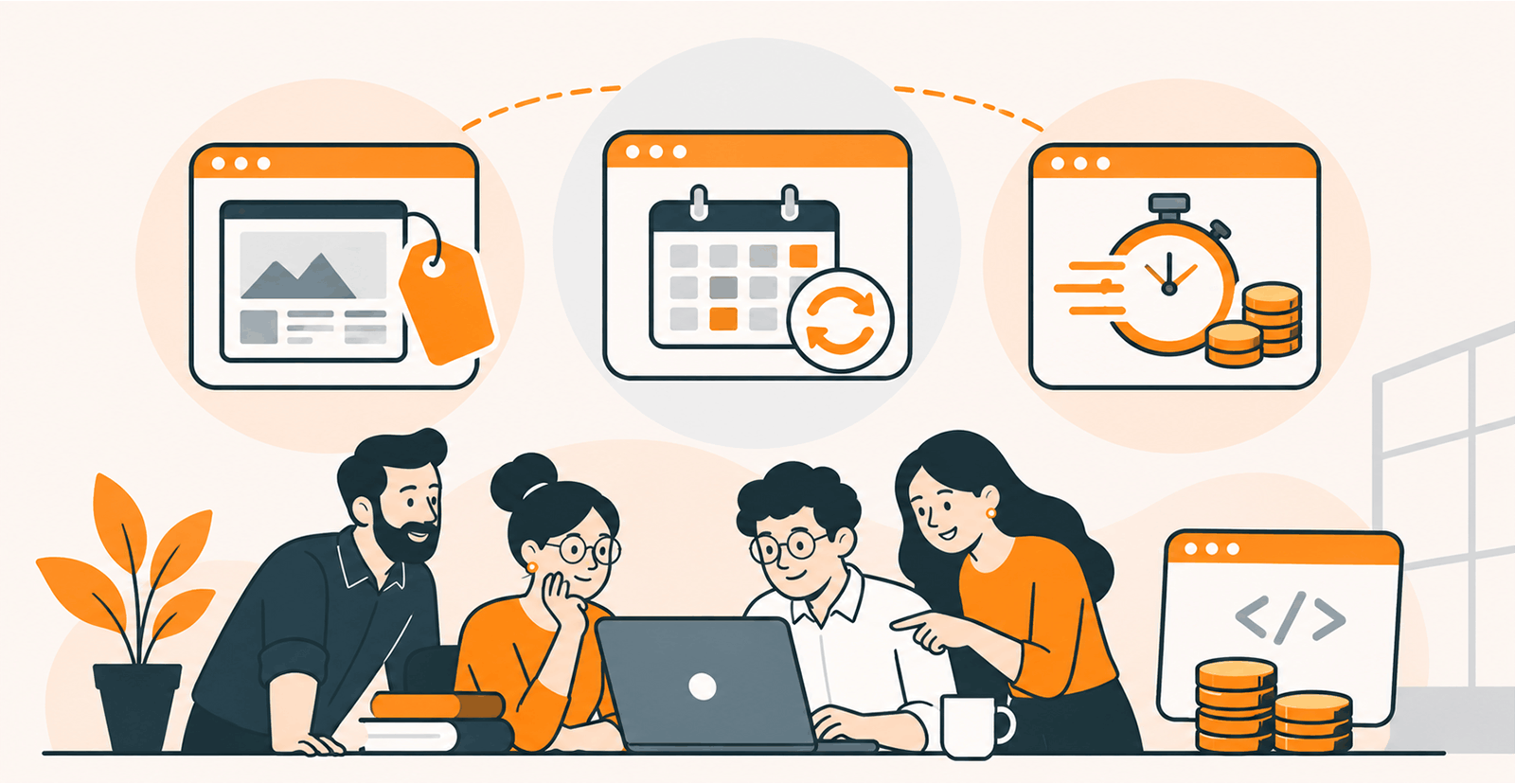
1. Per-project pricing
Under this model, the provider charges a fixed fee for a defined deliverable, such as a business website, landing page, or WordPress website. This makes budgeting easier because the agency can estimate delivery expenses before accepting a project. The agreement should clearly define the scope, number of pages, integrations, revision limits, and delivery timeline.
2. Monthly retainers
Agencies with recurring website needs may prefer a monthly arrangement that provides access to a set amount of development capacity. A retainer can improve budget predictability, although the agency should check whether unused capacity carries forward and how additional work is billed.
3. Hourly pricing
Some providers charge according to the time required to complete a project. This can suit ongoing development, troubleshooting, or tasks with uncertain requirements. However, agencies need clear estimates and reporting to avoid unexpected expenditure.
White Label Web Design vs In-House Hiring: A Side-by-Side Cost Comparison
A fair comparison requires agencies to calculate each model's total annual cost. In-house hiring includes salaries, employee benefits, recruitment, and equipment, while white label web design typically combines provider fees with additional coordination and quality-assurance costs.
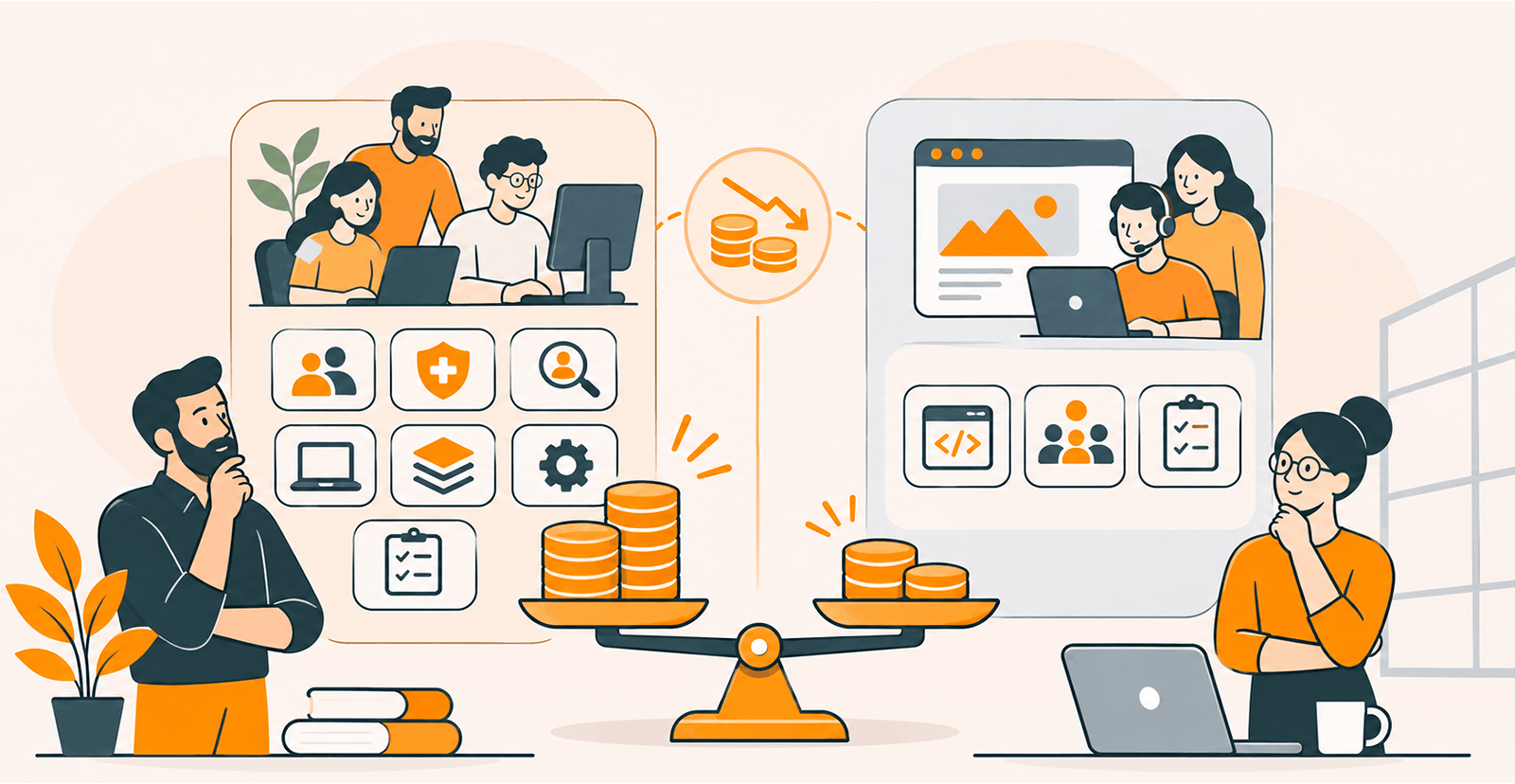
The following table compares annual costs for a two-person delivery setup (one designer, one developer) based on Indian market rates.
Annual cost factor | In-house team (INR) | In-house team (USD) | White label partner (INR) | White label partner (USD) |
Designer's salary / provider fees | ₹6,00,000 | $7,200 | ₹3,00,000 | $3,600 |
Developer's salary / provider fees | ₹8,00,000 | $9,600 | ₹3,00,000 | $3,600 |
Benefits and employer contributions | ₹1,40,000 | $1,680 | Included in provider fees | Included |
Recruitment and onboarding | ₹60,000 | $720 | ₹20,000 | $240 |
Software and tools | ₹60,000 | $600 | ₹20,000 | $240 |
Equipment and maintenance | ₹80,000 | $960 | ₹10,000 | $120 |
Internal project management and QA | ₹1,00,000 | $1,200 | ₹1,00,000 | $1,200 |
Total annual cost | ₹18,40,000 | $22,000 | ₹7,50,000 | $9,000 |
Note: The costs mentioned above are illustrative estimates and may vary depending on project complexity, team size, location, and service provider pricing. Calculate actual expenses based on your agency's requirements and workload.
What the cost difference actually means for agency margins
The ₹10.9 lakh ($13,000) annual difference between the two models is not automatically profit. It represents the margin your agency retains after production costs, but only if internal coordination does not consume the savings.
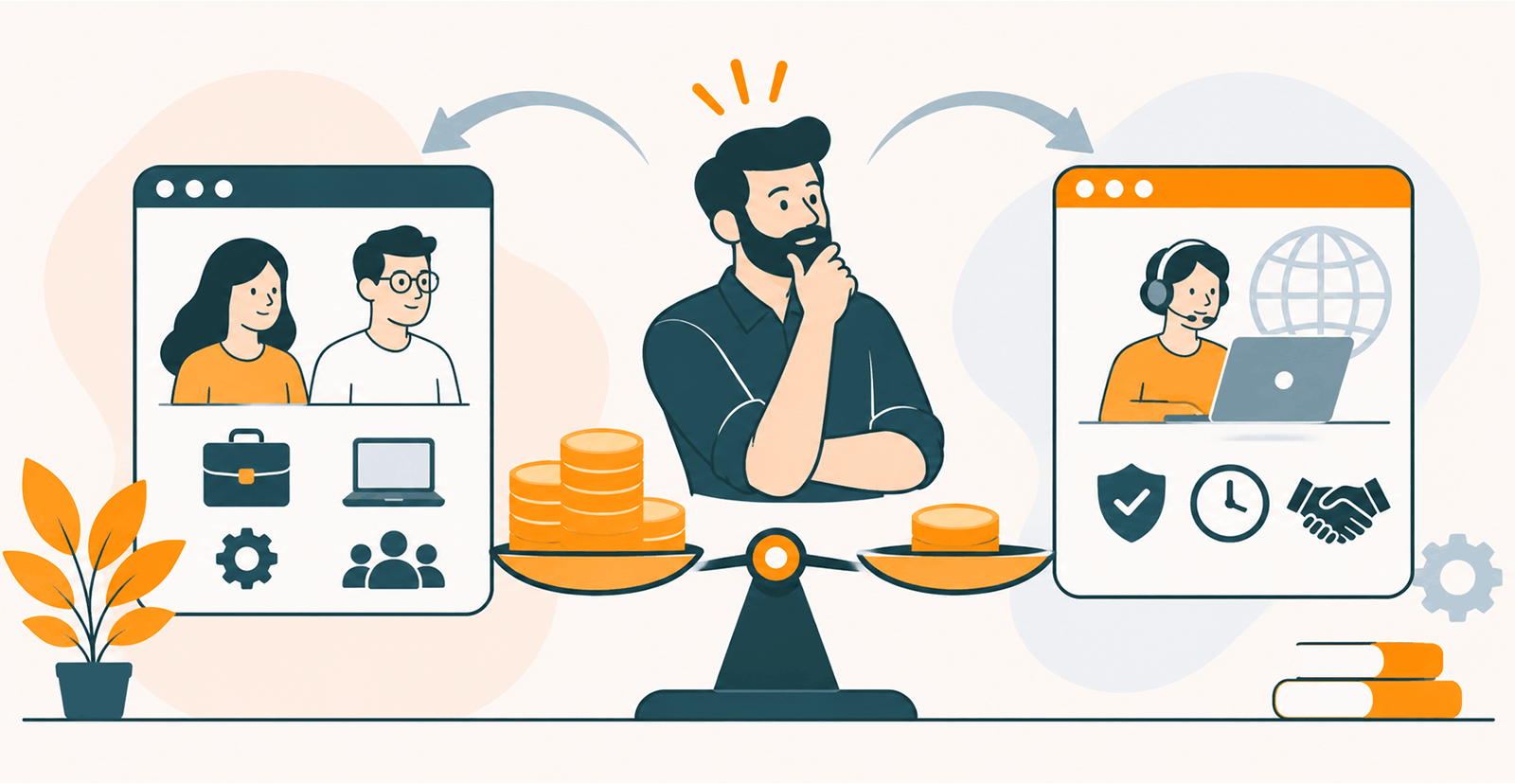
Where in-house costs accumulate beyond salaries
- Recruitment gaps. A designer leaving mid-project creates a capacity gap and a recruitment cost (typically ₹50,000 to ₹1,50,000 / $600 to $1,800 depending on the role and hiring method).
- Training and ramp-up. A new hire may need 4 to 8 weeks before reaching full productivity. During that period, the agency carries salary without equivalent output.
- Underutilisation. If the agency bills only 70% of available designer hours, the effective hourly cost rises by 43%. A ₹50,000 (600)monthlysalaryat70%utilisationeffectivelycosts₹71,400(860) per productive month.
Where white label costs can exceed expectations
- Revision cycles. If the provider's quote includes two revision rounds but the client requests five, the additional rounds may be billed separately or consume internal management time.
- Internal coordination. Briefing the partner, reviewing deliverables, consolidating client feedback, and conducting QA all require internal hours. If those hours are not tracked, the agency's reported margin will be overstated.
- Scope creep. A fixed-fee project that grows by 30% in scope can turn a profitable engagement into a break-even delivery if the additional work is not repriced.
How to calculate the true delivery cost
Use this formula for every project, regardless of the model:
Gross profit margin = (Client price - Total delivery cost) / Client price x 100
For example: An agency charges ₹5,00,000 (6,000)forawebsite.Thewhitelabelpartnercharges₹2,00,000(2,400). Internal project management, QA, and revisions add ₹60,000 (720).Thetotaldeliverycostis₹2,60,000(3,120), giving a gross profit of ₹2,40,000 ($2,880) and a margin of 48%.
The same website built in-house with a designer and developer at ₹1,80,000 (2,160)inallocatedsalarycost,plus₹40,000(480) in software and overhead, totals ₹2,20,000 (2,640).Thegrossprofitis₹2,80,000(3,360), or 56%, but only if those employees are fully utilised. If they sit idle for two weeks between projects, the effective delivery cost rises.
When should an agency choose in-house hiring or white label web design?
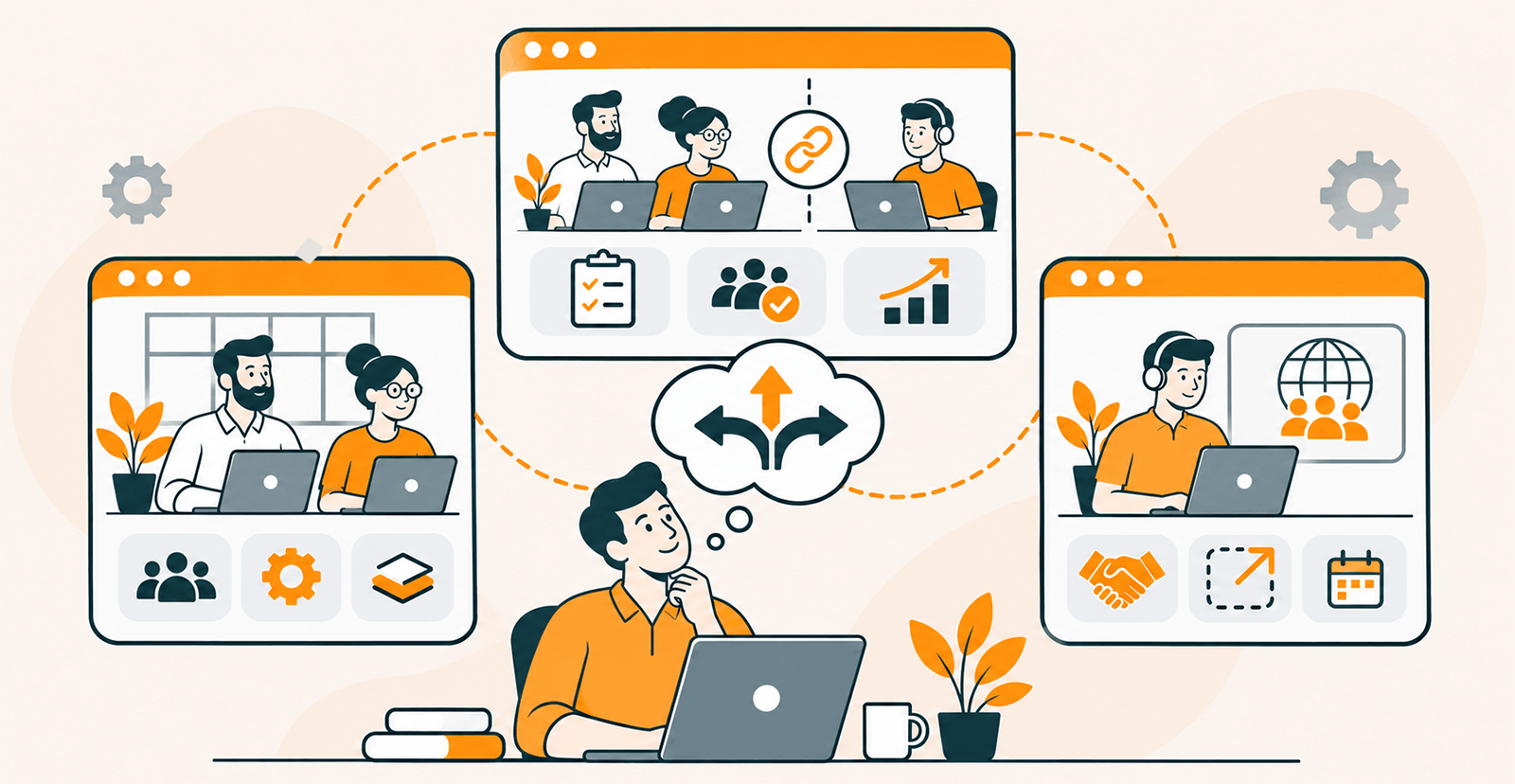
When in-house hiring makes sense
Hiring an internal team is a sensible investment for agencies with a steady stream of website projects throughout the year. When designers and developers stay consistently occupied, agencies can spread salaries across multiple projects, lowering average delivery costs.
An in-house team may also be preferable when projects require frequent collaboration, specialised technical knowledge, or close control over development processes. Agencies building complex digital products or managing long-term technical engagements benefit from retaining expertise internally.
When white label web design makes sense
White label partnerships suit agencies that receive website enquiries irregularly or want to introduce web design services without establishing a dedicated department. They are particularly useful for smaller agencies that need professional development capabilities but cannot justify the cost of employing multiple specialists.
Outsourcing also helps established agencies handle sudden demand spikes, deliver projects outside their core expertise (such as Webflow or Shopify builds when the team primarily works in WordPress), and avoid turning away clients when internal resources are stretched.
Why a hybrid model can work
Agencies do not need to choose one approach exclusively. They can keep an internal team for client strategy, project management, and quality assurance while using a white label partner for production execution.
This arrangement gives greater control over client relationships while keeping production capacity flexible. As demand grows, the agency can review project volumes and delivery costs to determine whether additional permanent hires are financially justified.
Why Choose Quixta as Your White Label Development Partner?
Quixta is a web design and development company founded in 2016 in Bengaluru, India, with 480+ projects delivered across 27+ countries for 410+ clients. For agencies evaluating the cost comparison above, here is what Quixta offers as a white label partner:
- Project-based pricing with no minimum volume. Agencies engage Quixta per project, aligning delivery costs with client demand. No retainer commitments or volume thresholds.
- Multi-platform delivery. Production covers WordPress, Webflow, Shopify, Next.js, React, and Laravel, so agencies can use a single partner across platform-specific projects.
- Structured delivery process. Each project follows a defined workflow (requirement discovery, design, development, testing, deployment, post-launch support), reducing the internal coordination overhead that erodes white label margins.
- Full-service production. Services cover UI/UX design, responsive development, CMS implementation, SEO, and web applications, giving agencies access to a complete production team without hiring one.
- White label ready. Quixta works behind the scenes under the agency's brand. The agency retains client relationships, pricing, and final delivery control.
Conclusion
The financial case for white label web design versus in-house hiring depends on how consistently an agency can keep its team utilised. When project demand is steady and employees stay productive, an in-house team can deliver strong margins. When demand fluctuates, white label partnerships convert fixed payroll into variable project costs and protect the agency from carrying underutilised capacity.
For agencies looking for a white label partner with multi-platform capabilities, structured delivery, and project-based pricing, Quixta provides the production support needed to scale website revenue without scaling fixed overhead.
Start scaling your agency's website delivery
Whether your agency needs overflow capacity for busy quarters or a long-term production partner, Quixta gives you the design and development support to deliver more websites without expanding your permanent team.
FAQs
White label web design can cost less because agencies avoid many recruitment, employment, and equipment expenses. In the illustrative comparison above, a white label partnership costs approximately ₹7.5 lakh (9,000)annuallycomparedwith₹18.4lakh(22,000) for an in-house team. Actual savings depend on project volume, provider pricing, and internal management costs.
The cost depends on team size, experience, and location. In the comparison above, annual expenses for a designer-and-developer team in India total ₹18.4 lakh ($22,000), including salaries, benefits, recruitment, software, equipment, and project management. US-based agencies hiring locally can expect significantly higher figures, often $80,000 to $160,000+ for the same two roles before overhead.
In-house hiring involves more than salaries and benefits. Agencies must budget for recruitment (₹50,000 to ₹1,50,000 / $600 to $1,800 per role), onboarding, software subscriptions, equipment, and training. Management time and underutilised capacity can increase the effective cost per website. These expenses continue even when project demand declines.
Although white label partnerships reduce fixed staffing costs, agencies still need to manage projects internally. Expenses include preparing briefs, coordinating feedback, reviewing deliverables, and conducting quality assurance (estimated at ₹1,00,000 / $1,200 annually in the comparison above). Providers may also charge extra for urgent work, extensive revisions, or requirements outside the agreed scope.
An in-house team makes sense when the agency has a consistent pipeline of website projects and can keep employees productive for at least 80% of available hours. Dedicated employees support close collaboration, direct supervision, and specialised technical work. If utilisation drops below 70%, the effective cost per website rises significantly.
Yes. A hybrid model lets agencies keep an internal team for client relationships, strategy, and quality assurance while outsourcing production to a white label partner during demand spikes or for platform-specific projects. Agencies can adjust the balance as demand changes and use project data to determine when permanent hiring is financially justified.