


TLDR
- The top healthcare website design agencies for HIPAA-compliant sites in 2026 are Quixta, Medical Web Experts, O360, 10Turtle, Qrolic Health, Healthcare Web Designs, MedResponsive, DoctorLogic, Forefront Web, and iHealthSpot, each with different strengths across custom design, compliance, WordPress, SEO, and healthcare technology.
- HIPAA compliance is not a blanket requirement for every healthcare website. It depends on whether the site processes protected health information (PHI) and whether the organization is a covered entity or business associate.
- Before hiring an agency, clarify what patient information the website will collect, how it will be transmitted and stored, which vendors need a Business Associate Agreement (BAA), and how ongoing security will be maintained.
- WordPress is a practical choice for healthcare organizations that need to manage doctor profiles, service pages, blogs, and FAQs without developer involvement, but it requires secure configuration, careful plugin selection, and regular maintenance.
- Compare agencies based on their healthcare experience, approach to PHI, project scope, and post-launch support rather than choosing the lowest bid.
The best healthcare website design agencies for HIPAA-compliant sites in 2026 include Quixta, Medical Web Experts, O360, 10Turtle, Qrolic Health, Healthcare Web Designs, MedResponsive, DoctorLogic, Forefront Web, and iHealthSpot. These agencies were selected based on their healthcare website experience, approach to protected health information, WordPress and custom development capabilities, patient-focused design, and search visibility services.
Healthcare website design differs from standard business web design. According to Tebra's 2025 Patient Perspectives survey, 56% of patients begin their search for a new provider on Google, and 77% read online reviews before choosing. At the same time, healthcare organizations face growing data-security risks: according to HIPAA Journal's analysis of HHS OCR data, 805 healthcare data breaches affecting 500 or more individuals were reported in 2025.
A healthcare website may need to safeguard patient information, accept patient forms or appointment requests, meet accessibility standards, load quickly on mobile devices, and be easy for patients to find through search. Selecting the right agency means evaluating healthcare experience, security practices, patient-focused design, and whether the agency understands how HIPAA's requirements apply to the specific information the website will handle.
Which Are The Best Healthcare Website Design Agencies For HIPAA-compliant Sites in 2026?
1. Quixta
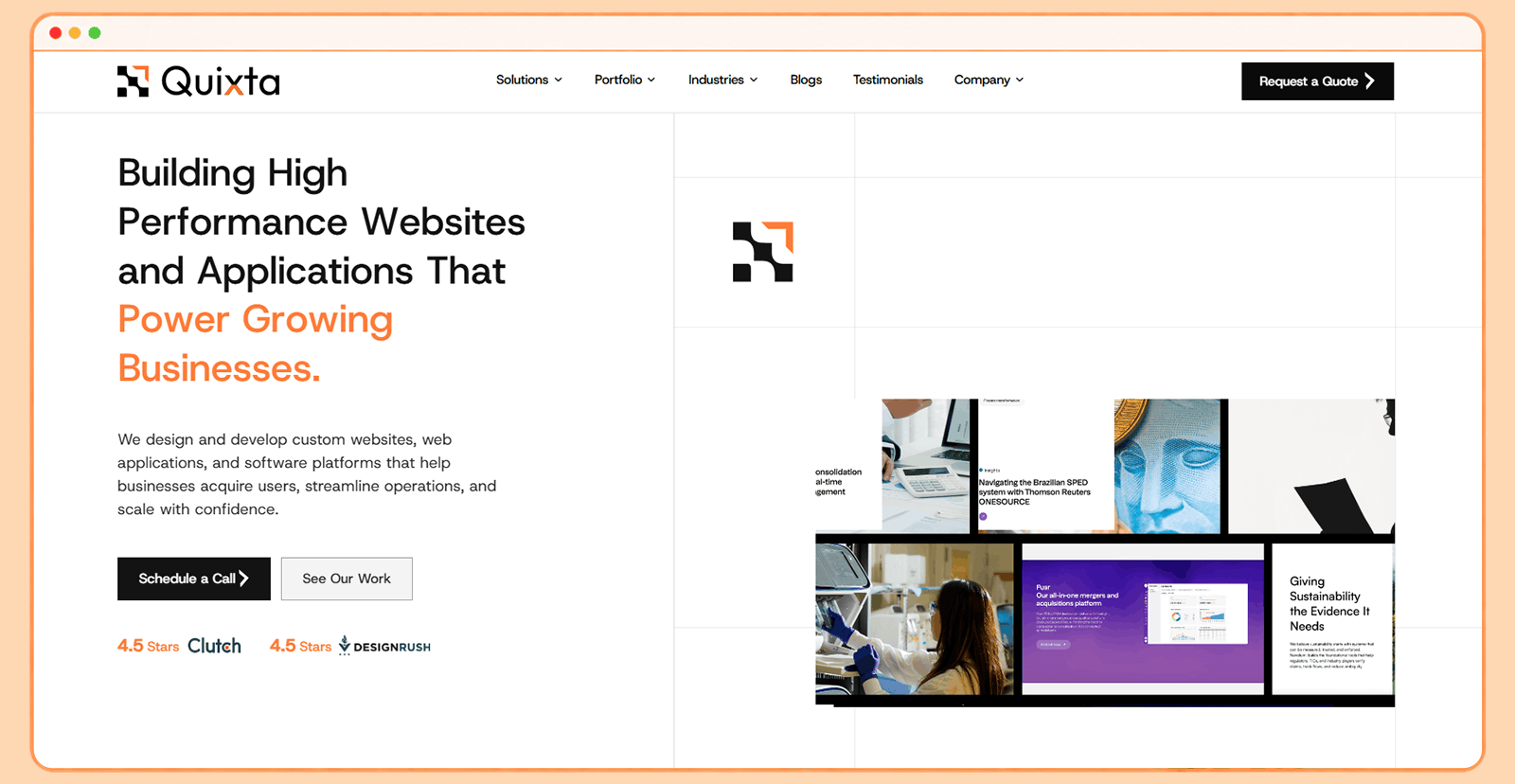
Quixta is a website design and development company that works across healthcare and other industries. Its healthcare work includes websites and digital platforms for hospitals, clinics, and health technology businesses. Quixta takes a custom approach rather than relying on standard templates, and its technology capabilities include WordPress, Webflow, React, Next.js, Node.js, and Laravel, allowing the team to choose an approach based on the requirements of the project.
For healthcare organizations that need WordPress, this approach can be particularly useful. WordPress provides an easy-to-manage content system while Quixta customizes the design, page structure, integrations, and functionality around the organization's requirements. Quixta's healthcare work also extends beyond basic website development. Its healthcare development services cover patient-focused experiences, appointment systems, healthcare integrations, dashboards, SEO, and secure digital platforms.
Key details
- Location: Bengaluru, India
- Founded: 2016
- Team size: 28+
- Core services: Website design, website development, UI/UX, web applications, SEO
- Technologies: WordPress, Webflow, React, Next.js, Node.js, Laravel
- Industries: Healthcare, real estate, retail, construction, technology, and others
Why choose Quixta?
- Custom WordPress development. Build a healthcare website around the organization's brand, content structure, and patient journey rather than starting with a generic template.
- Healthcare-focused website development. Create websites for hospitals, clinics, healthcare businesses, and health technology companies.
- Patient-focused design. Organize services, provider information, appointment options, and educational content around what patients need to find.
- SEO expertise. Combine website development with search optimization so patients can discover relevant services and locations.
- Flexible technology. Use WordPress where it makes sense, or move to technologies such as React, Next.js, or other solutions when the project requires greater functionality.
- Healthcare integrations. Support connections with appointment systems, healthcare software, patient dashboards, and other required systems.
Prominent Works:
Best for: Healthcare organizations, clinics, hospitals, and healthtech businesses looking for a custom website with strong design, WordPress capabilities, SEO, and room for future growth.
2. Medical Web Experts
Medical Web Experts is a healthcare-focused digital development company with over 20 years of experience in the industry. It offers healthcare website design, responsive websites, HIPAA-compliant hosting, patient portals, scheduling systems, healthcare software, and other digital solutions. The company has focused exclusively on healthcare since 2003 and is employee-owned.
Key details
- Location: Dallas, TX, USA
- Founded: 2003
- Team size: 35 to 45
- Core services: Healthcare website design, HIPAA-compliant hosting, patient portals, scheduling systems, healthcare software, internet marketing
- Technologies: Custom healthcare platforms
- Industries: Healthcare only
Why choose Medical Web Experts?
- Long-term healthcare experience. The company has focused exclusively on healthcare since 2003.
- Complex healthcare projects. Suitable for organizations that need more than a conventional marketing website.
- Patient portals. Supports digital experiences that continue beyond a patient's physical visit.
- Healthcare software. Can build custom systems around specific organizational requirements.
- Security focus. Its website highlights HIPAA, SOC 2, NIST CSF, and other security practices.
Best for: Hospitals, healthcare organizations, medical groups, and organizations needing patient portals, healthcare software, or complex digital platforms.
3. O360
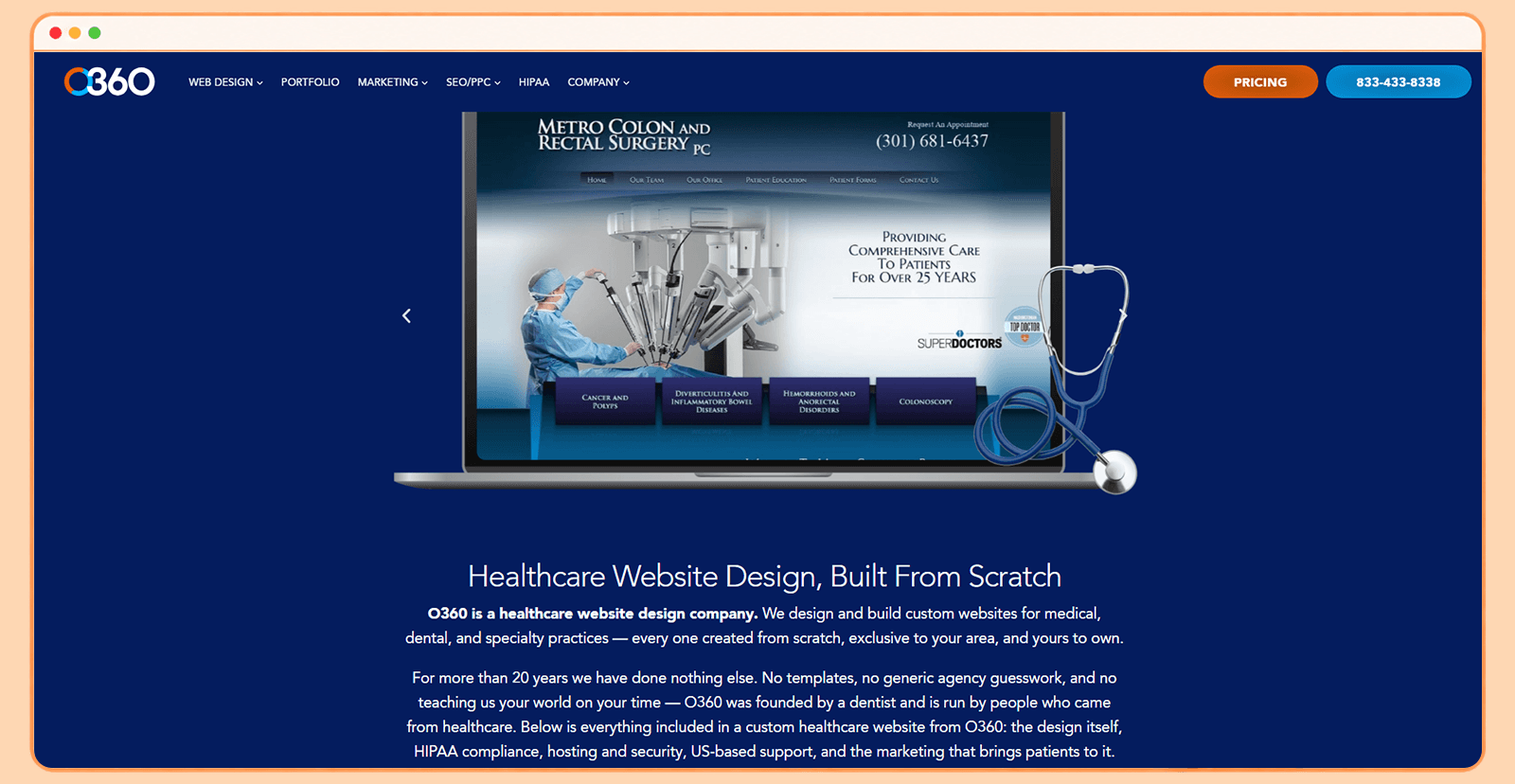
O360 specializes in healthcare website design and marketing. The company has served 500+ clients across 40+ healthcare specialties and has more than 20 years of experience. O360's healthcare websites include HIPAA-compliant functionality, responsive design, SEO, hosting, and security. Its focus on specific healthcare specialties means it brings familiarity with how different types of practices present their services to patients.
Key details
- Location: Santa Ana, CA, USA (also offices in TX and NY)
- Founded: 2003 (as Dentistry21, rebranded to O360 in 2013)
- Team size: 12+
- Core services: Custom healthcare website design, SEO, PPC, social media, reputation management, HIPAA-compliant hosting
- Technologies: WordPress, custom web development
- Industries: Healthcare only (medical and dental practices across 40+ specialties)
Why choose O360?
- Healthcare-only focus. Works specifically with medical and dental practices.
- Custom designs. Creates websites from scratch instead of relying on generic templates.
- Specialty-specific experience. Has experience across more than 40 healthcare specialties.
- HIPAA-focused features. Offers HIPAA-compliant forms, email, hosting, and security options.
- SEO and marketing. Provides SEO, local search, paid advertising, social media, and reputation management.
Best for: Doctors, dentists, specialist practices, and healthcare providers looking for a highly customized website with specialty-specific experience.
4. 10Turtle
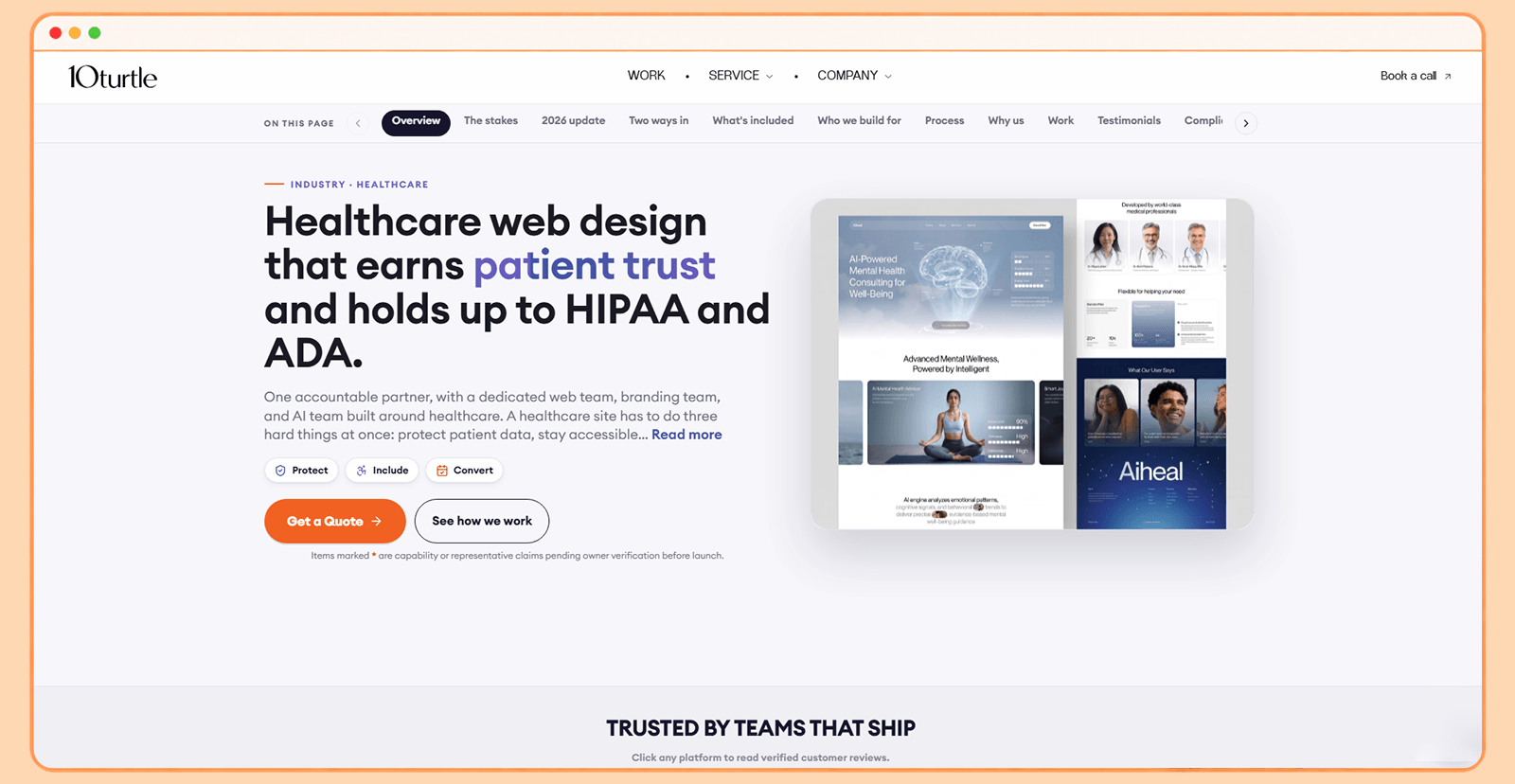
10Turtle designs healthcare websites with compliance and accessibility as integral parts of the development process. The company's healthcare websites can include HIPAA-secured handling of protected health information, Business Associate Agreements, encryption, access controls, and audit logging.
It serves larger healthcare systems as well as smaller clinics. This can be a practical choice for organizations that want to address security and accessibility from the start of the project rather than treating them as afterthoughts.
Key details
- Location: Surat, India (also teams in USA, Canada, UAE)
- Founded: 2024
- Team size: 50+
- Core services: Web development, mobile app development, brand identity, SaaS, AI automation, SEO
- Technologies: React, Next.js, Shopify, Webflow, WordPress, Figma
- Industries: Healthcare, eCommerce, advertising, hospitality, technology, and others
Why choose 10Turtle?
- Healthcare-focused development. Builds websites specifically around healthcare patient journeys.
- Accessibility. Works toward WCAG 2.1/2.2 AA requirements.
- Security considerations. Designs privacy and security into the website rather than treating them as an afterthought.
- Website redesign. Suitable for healthcare organizations with outdated websites that need modernization.
- SEO-safe migration. Focuses on preserving search visibility when an existing website is rebuilt.
Best for: Healthcare organizations prioritizing privacy, accessibility, and compliance alongside patient conversion.
5. Qrolic Health
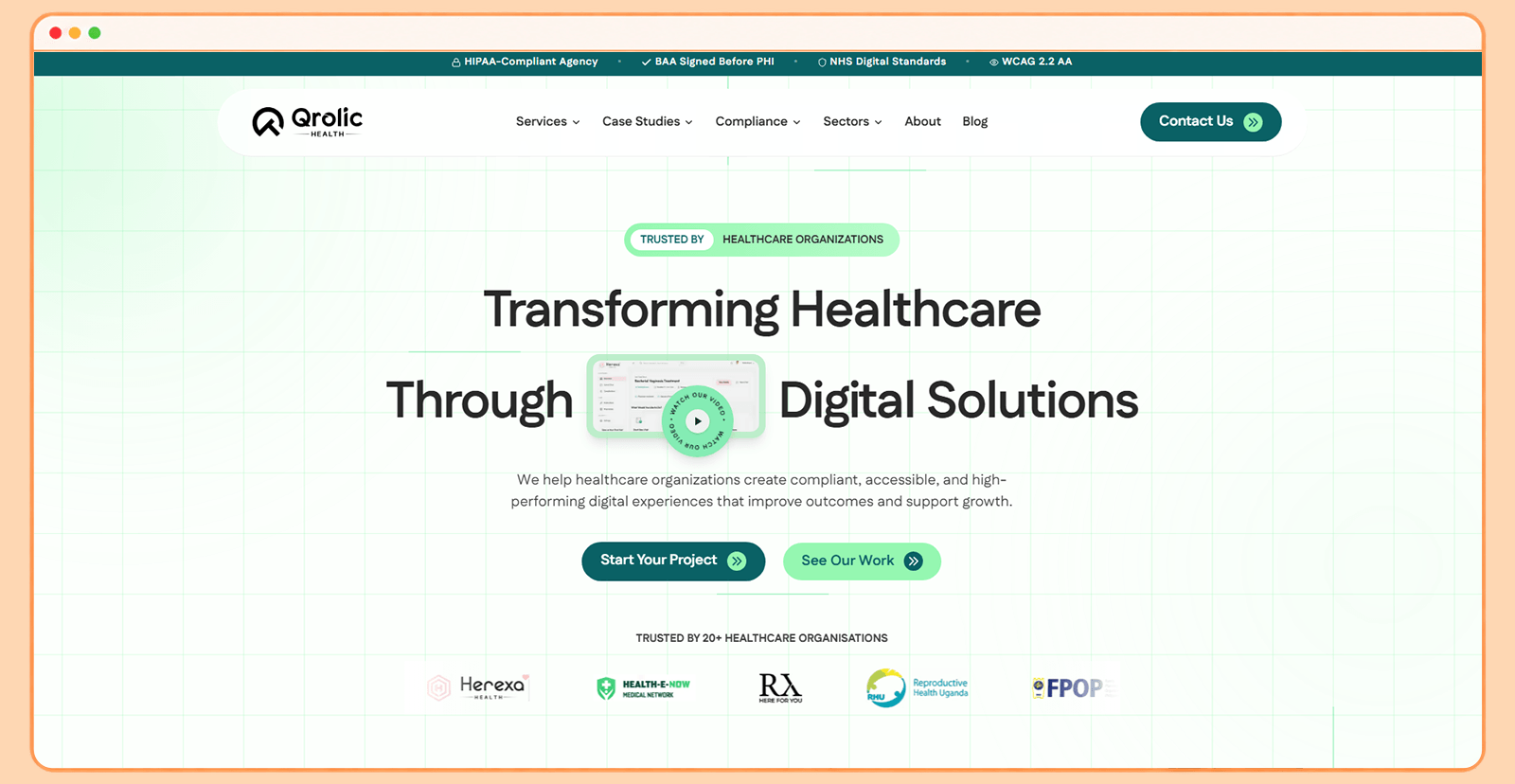
Qrolic Health provides healthcare website design as part of a broader set of digital services. It offers HIPAA-compliant website development, patient portals, telehealth platforms, healthcare SEO, and other healthcare technology solutions. Its services are designed for US organizations needing HIPAA compliance as well as UK health organizations needing NHS and UK GDPR compliance.
Key details
- Location: India
- Founded: 2025
- Team size: 10 to 49
- Core services: Healthcare web development, web design, UX/UI, IT strategy consulting, API development, HIPAA-compliant architecture
- Technologies: Custom healthcare web development
- Industries: Healthcare only (clinics, hospitals, pharmacies, health NGOs)
Why choose Qrolic Health?
- Healthcare-only focus. Works exclusively with healthcare organizations.
- WordPress development. Experience with WordPress websites and multi-site healthcare platforms.
- Patient portals. Supports patient-facing digital experiences beyond standard websites.
- Telehealth development. Can extend a website into a broader virtual-care platform.
- Healthcare integrations. Supports connections with EHRs, patient portals, telehealth systems, and healthcare software.
Best for: Healthcare organizations, telehealth providers, and businesses requiring websites alongside wider digital healthcare solutions.
6. Healthcare Web Designs
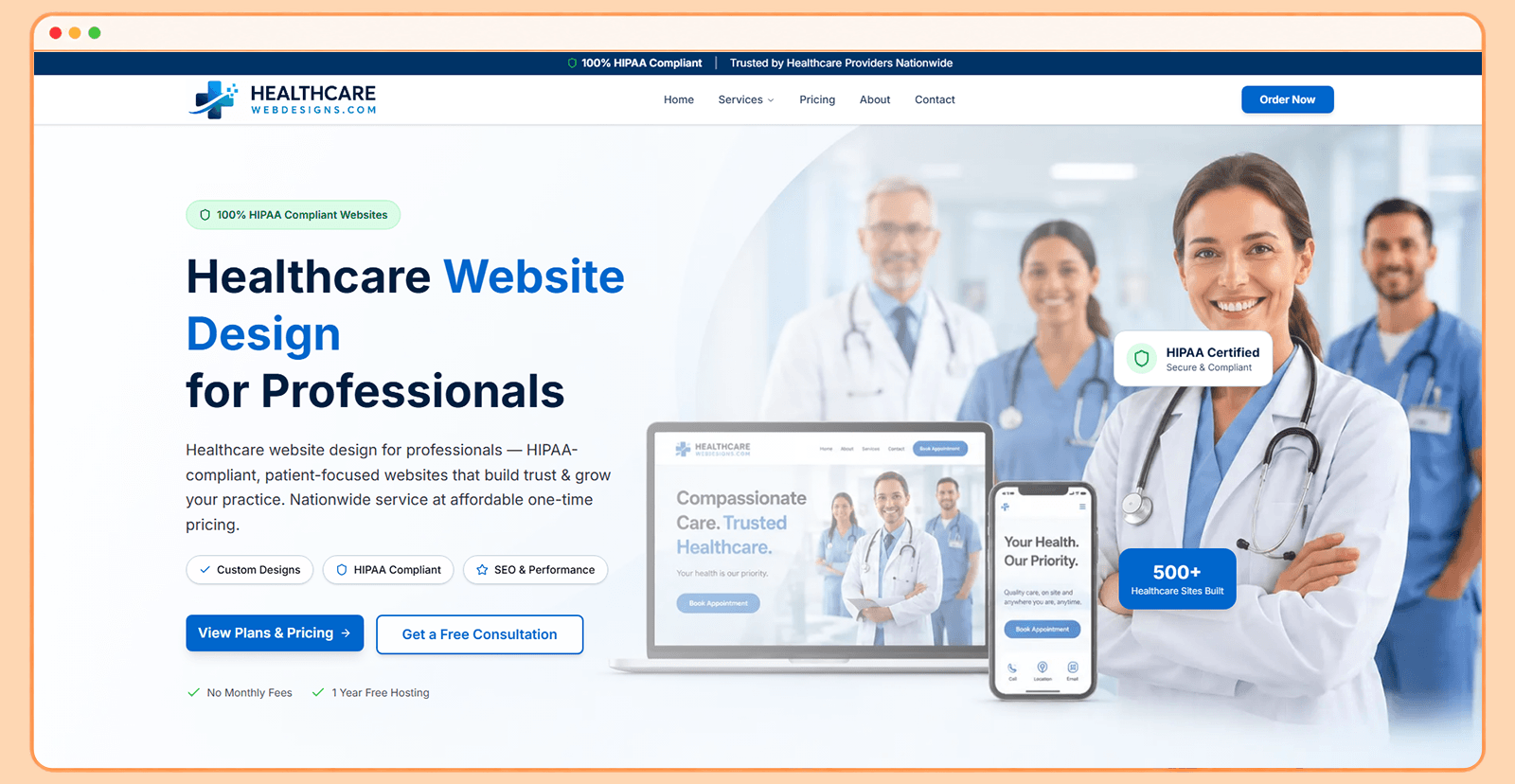
Healthcare Web Designs s a website design company that provides web design services for healthcare professionals. The company offers HIPAA-compliant websites, secure contact forms, compliant hosting, online booking, patient portals, mobile-first design, and healthcare SEO.
Key details
- Location: USA
- Core services: HIPAA-compliant website design, secure contact forms, online booking, patient portals, mobile-first design, healthcare SEO
- Technologies: Custom healthcare web development
- Industries: Healthcare only
Why choose Healthcare Web Designs?
- Healthcare-specific experience. Focuses exclusively on healthcare professionals and organizations.
- Practice-friendly approach. Suitable for smaller practices that do not need an enterprise-level digital platform.
- Patient-focused design. Builds websites around services, provider information, booking, and patient communication.
- Online booking. Supports appointment scheduling as part of healthcare websites.
- Mobile-first design. Websites are designed to work across smartphones, tablets, and desktops.
Best for: Independent healthcare providers and smaller practices that need a professional website with healthcare-specific security features.
7. MedResponsive
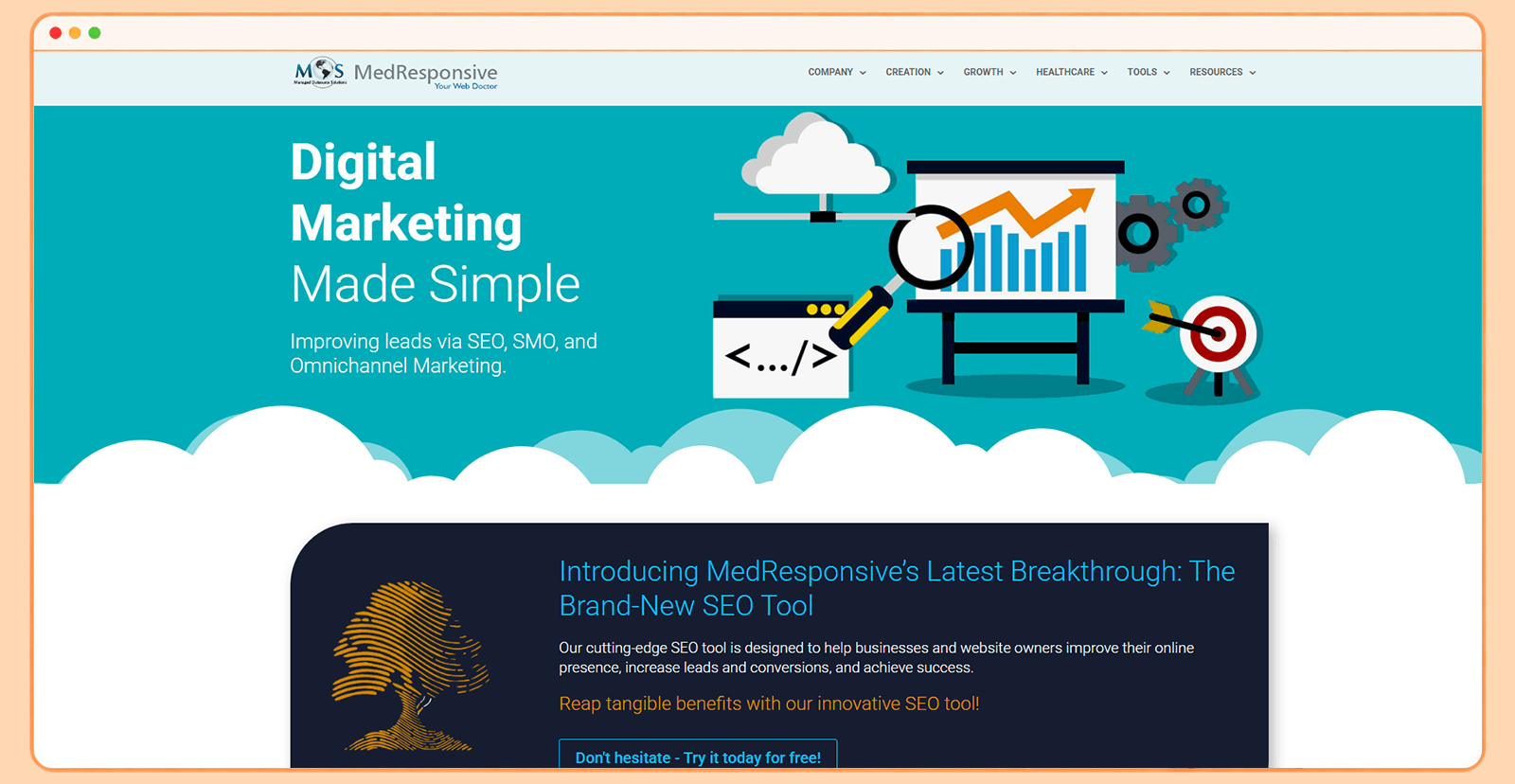
MedResponsive combines healthcare website development with integrations such as electronic health records, telemedicine systems, patient portals, and healthcare APIs. Its healthcare website development services include mobile-optimized websites, HIPAA-compliant infrastructure, online scheduling, and telemedicine and EHR integrations.
Key details
- Location: Tulsa, OK, USA
- Founded: 2002
- Team size: 50 to 99
- Core services: Web design, web development, mobile and software development, SEO, PPC, social media marketing, digital branding
- Technologies: WordPress, custom web development
- Industries: Healthcare
Why choose MedResponsive?
- Healthcare website expertise. Builds websites specifically for medical practices, hospitals, and healthcare organizations.
- EHR integrations. Supports connections with electronic health record systems.
- Telemedicine. Can extend website functionality into virtual healthcare services.
- Appointment scheduling. Supports digital appointment and patient engagement features.
- Healthcare SEO. Combines website development with search optimization.
Best for: Medical practices and healthcare organizations requiring integrations, patient portals, or telemedicine functionality.
8. DoctorLogic
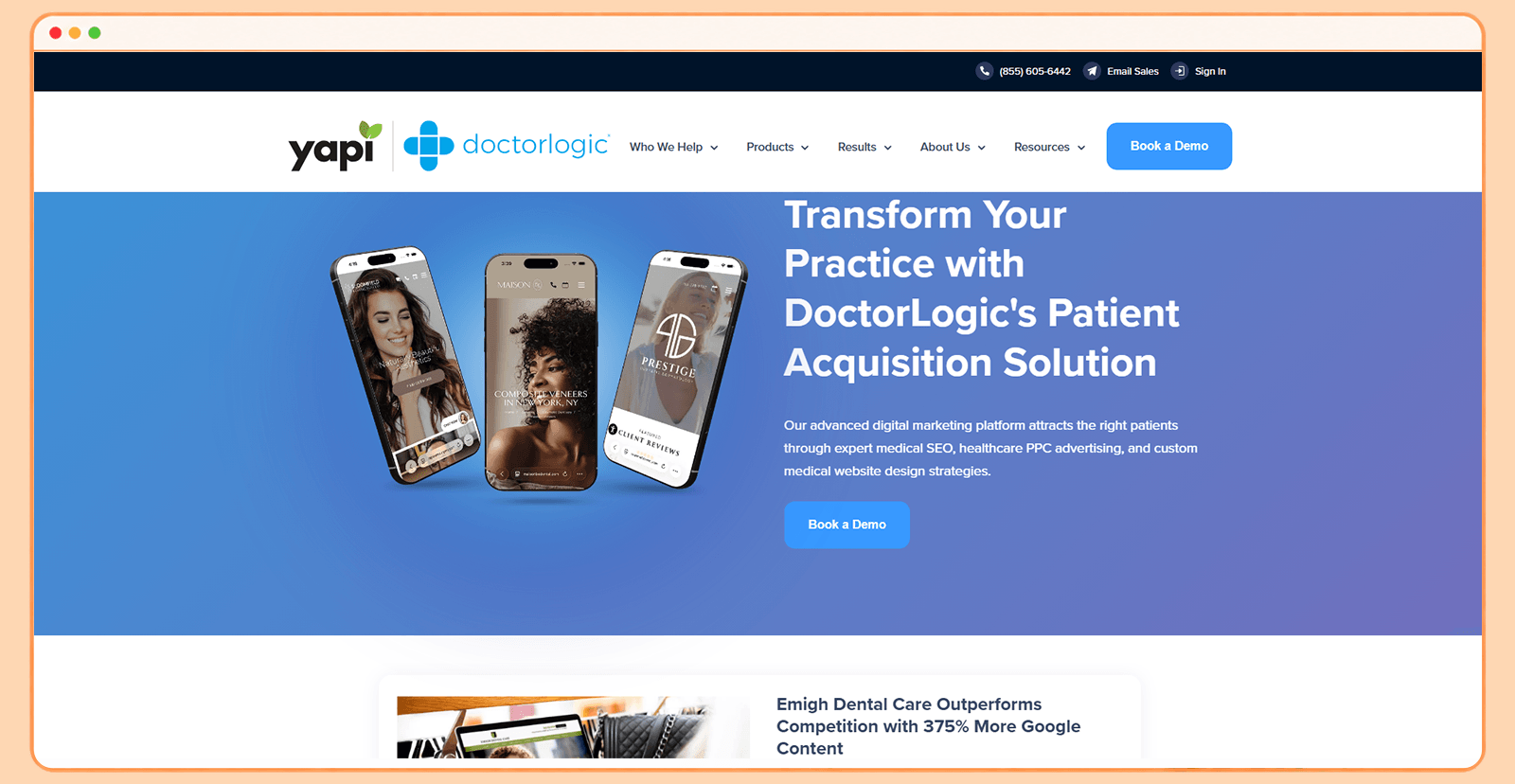
DoctorLogic takes a growth-oriented approach to healthcare websites. Its platform offers HIPAA-compliant digital marketing services for healthcare practices and serves practices across various specialties. The company combines website development directly with patient acquisition tools, making it a fit for practices that view their website primarily as a growth channel.
Key details
- Location: Plano, TX, USA
- Founded: 2013
- Team size: 25 to 50
- Core services: Healthcare website marketing platform, SEO, PPC, reputation management, lead generation, patient acquisition
- Technologies: Proprietary platform, WordPress
- Industries: Healthcare only (medical and dental practices)
Why choose DoctorLogic?
- Healthcare marketing focus. Website development is closely connected with patient acquisition.
- Healthcare SEO. Helps practices improve search visibility and attract potential patients.
- Lead generation. Designs websites around inquiries and appointment opportunities.
- Reputation management. Combines websites with reviews and reputation-building tools.
- Healthcare-specific experience. Works with medical and dental practices across different specialties.
Best for: Medical practices focused on patient acquisition, online visibility, and ongoing digital marketing.
9. Forefront Web
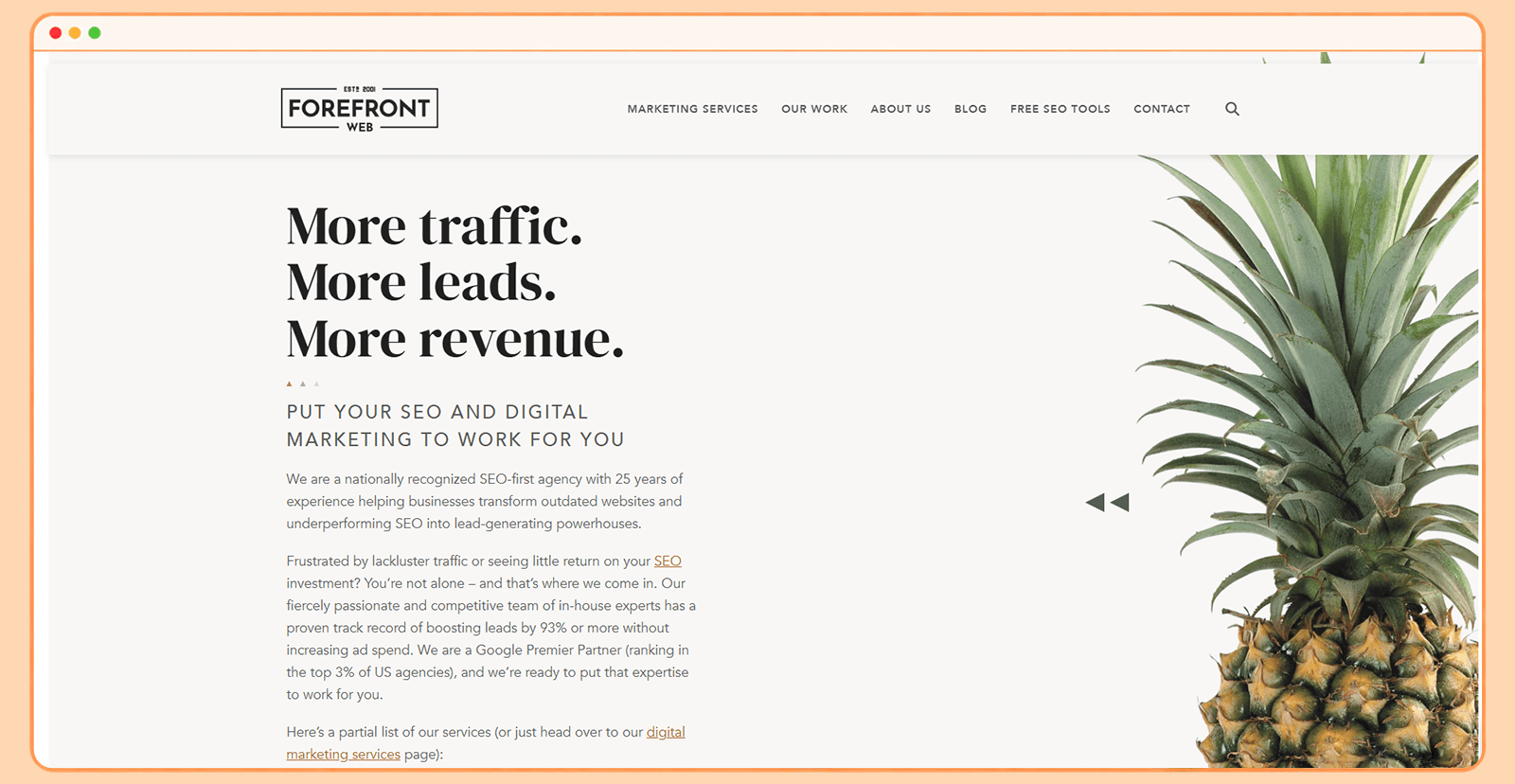
Forefront Web is a web design and digital strategy agency based in Dublin, Ohio. The company has been in operation since 2001 and holds a 5.0/5 Clutch rating. Its services combine WordPress website design with SEO, Google Ads, content marketing, and digital strategy. Forefront Web serves healthcare practices, dental offices, and other professional service businesses.
For healthcare organizations that rely on local patient searches, Forefront Web's combination of WordPress design and local SEO can help practices appear in the searches patients use when looking for nearby providers, services, or specialists. The company also provides ongoing support for website updates, performance, and search visibility.
Key details
- Location: Dublin, OH, USA
- Founded: 2001
- Team size: 10 to 49
- Core services: SEO, web design, digital strategy, Google Ads, social media, content marketing, branding
- Technologies: WordPress, Adobe Experience Manager, Shopify
- Industries: Healthcare, dental, education, manufacturing, business services, real estate, and others
Why choose Forefront Web?
- Healthcare and dental experience. Has worked with medical and dental practices as part of its client portfolio.
- WordPress expertise. WordPress is its primary development platform, covering custom design and functionality.
- SEO-first approach. Website design is combined with search optimization from the start of the project.
- Local search focus. Helps healthcare practices appear in the local searches patients use to find providers.
- Ongoing support. Provides continued website management, performance monitoring, and search visibility services after launch.
Best for: Healthcare practices and dental offices that need a design-focused WordPress website with strong local SEO and ongoing digital support.
10. iHealthSpot
iHealthSpot is a healthcare website design and marketing agency founded in 2005. The company focuses specifically on independent medical practices and physician groups, combining website design with practice marketing services including SEO, PPC, social media, and reputation management. Its websites include HIPAA-compliant forms and secure hosting.
For smaller practices that need a professional healthcare website without an enterprise-level budget, iHealthSpot offers a healthcare-specific approach with built-in marketing tools. The company's two decades of healthcare focus mean it understands the typical needs of independent providers, from doctor profiles and service pages to appointment requests and patient communication.
Key details
- Location: Greenacres, FL, USA
- Founded: 2005
- Team size: 10 to 49
- Core services: Healthcare website design, SEO, PPC, social media, logo design, HIPAA-compliant forms
- Technologies: Custom healthcare web development
- Industries: Healthcare only (medical practices)
Why choose iHealthSpot?
- Healthcare-only focus. Works exclusively with independent medical practices and physician groups.
- Practice marketing. Website design is combined with SEO, PPC, social media, and reputation management.
- HIPAA-compliant forms. Provides secure contact and intake forms designed for healthcare use.
- Affordable packages. Services are structured for independent practices and smaller healthcare organizations.
- Long track record. The company has been operating in healthcare website design since 2005.
Best for: Independent healthcare practices and physician groups that need an affordable, healthcare-specific website with built-in marketing services.
Side-by-Side Comparison of the Best Healthcare Website Design Agencies
Agency | Primary strength | Best for | WordPress | Healthcare focus |
Quixta | Custom websites, WordPress, SEO, and healthcare software | Healthcare organizations seeking flexible and scalable digital solutions | Strong | Strong |
Medical Web Experts | Healthcare software and complex digital platforms | Hospitals and healthcare organizations with complex requirements | Project-dependent | Very strong |
O360 | Custom healthcare websites and marketing | Medical and dental practices | Strong | Very strong |
10Turtle | Accessibility, security, and website redevelopment | Healthcare organizations redesigning existing websites | Supported | Strong |
Qrolic Health | Healthcare websites, portals, and digital platforms | Hospitals, clinics, and healthtech companies | Strong | Very strong |
Healthcare Web Designs | Affordable healthcare website packages | Smaller practices and independent providers | Project-dependent | Strong |
MedResponsive | Website development and healthcare integrations | Organizations needing EHR or telemedicine integrations | Supported | Strong |
DoctorLogic | Healthcare websites and patient acquisition | Medical practices focused on growth | Supported | Very strong |
Forefront Web | WordPress design and local SEO | Healthcare practices needing local search visibility | Strong | Moderate |
iHealthSpot | Healthcare website design and practice marketing | Independent practices and physician groups | Project-dependent | Strong |
What Should You Look For In a HIPAA-compliant Healthcare Website Design Agency?
When evaluating agencies, do not simply accept the term "HIPAA-compliant" at face value. HIPAA compliance does not apply to the entire website. The U.S. Department of Health and Human Services does not certify or endorse private products or organizations as HIPAA-compliant. Compliance depends on the way protected health information is gathered, transferred, stored, and the processes associated with it. Before hiring an agency, consider the following:

Experience with healthcare websites
Look for an agency that has completed healthcare projects before. Healthcare websites have different requirements from standard business websites, particularly when they include appointment requests, patient forms, portals, or other features involving health information.
A clear approach to protected health information
Ask the agency what information the site will collect and where it will go. If an agency, hosting provider, or other service provider creates, receives, maintains, or transmits electronic protected health information on behalf of a covered entity, HIPAA's business-associate requirements may apply.
Business Associate Agreements
A written Business Associate Agreement (BAA) is required if a vendor qualifies as a business associate. HHS states that covered entities must have an appropriate written arrangement with business associates that requires them to safeguard protected health information.
Secure forms and appointment systems
Contact forms, appointment requests, and intake forms can raise privacy issues involving health information. The agency should be able to explain how information is transmitted, stored, and accessed rather than simply adding a generic form to the website.
Accessibility
A healthcare website should be accessible to people with varying abilities. Key components include clear navigation, readable text, appropriate contrast, keyboard access, and assistive technology compatibility.
Mobile performance
Patients increasingly use their phones to find healthcare providers, compare services, and make appointments. A healthcare website should perform well on smaller screen sizes, with vital details and booking facilities readily accessible.
Healthcare SEO
A secure website that no potential patients can find is not effective. The agency should be familiar with search, local search, service pages, location pages, and medically appropriate content.
Ongoing security and maintenance
Compliance should not be verified only on the day of launch. When new plugins, analytics, forms, integrations, and third-party services are added to websites, they can change how information is collected or shared. The agency should have a process to review these changes and maintain security over time.
Does Every Healthcare Website Need to Be HIPAA-Compliant?
No. HIPAA-specific protections are not required for all healthcare websites. Whether they apply depends on whether the organization is subject to HIPAA and whether protected health information is being processed via the website or associated systems.

HHS explains that HIPAA applies to covered entities and business associates. Several of the electronic transactions that a healthcare provider makes in the normal course of business can bring them under HIPAA, and vendors that work with a healthcare provider to receive and transmit protected health information may also be subject to obligations.
For example, a simple website listing the clinic's hours, services, location, and general educational information would not require the same compliance as a website that captures patient details via an online intake form.
This distinction matters when choosing an agency. Rather than asking, "Is your website HIPAA-compliant?" ask:
- What patient information will the website collect?
- Who will receive that information?
- Will any third-party services have access to it?
- Which vendors will be required to sign a Business Associate Agreement?
- How will the information be encrypted and protected?
- What will the access controls be?
- What will the criteria be for reviewing new integrations?
How Can You Choose the Right Healthcare Website Design Agency?
The right agency depends on your organization's needs, the complexity of your website, and whether the site will handle protected health information.

For healthcare organizations looking for a custom website with strong design, WordPress capabilities, SEO, and room for growth, Quixta provides flexible technology and healthcare development experience. Other agencies on this list bring their own strengths: some focus on HIPAA-compliant hosting and complex digital platforms, others on specialty-specific website design, healthcare integrations, practice marketing, or accessibility-first development.
The final decision should be based on the real project needs, not on the agency's marketing statements. Ask for relevant case studies, understand exactly what information the website will handle, clarify who is responsible for compliance, and confirm contractual requirements such as Business Associate Agreements where applicable.
Conclusion
Building a healthcare website that patients trust and that handles their information responsibly requires more than a good-looking design. The agency you choose should understand how patients search for and evaluate healthcare providers, how to structure a site around the patient journey, and when HIPAA's requirements apply to the information the website collects.
Not every healthcare website needs the same level of compliance. A basic informational site and a patient portal with intake forms are fundamentally different projects, and the right agency will help you determine what applies to yours rather than defaulting to a generic claim of "HIPAA compliance."
For organizations that need a custom healthcare website with strong design, WordPress flexibility, SEO, and the ability to scale into more complex healthcare technology, Quixta offers a research-led approach that starts with understanding the organization's goals before building the site. Other agencies on this list bring strengths in areas such as HIPAA-compliant hosting, specialty-specific website design, healthcare integrations, practice marketing, and accessibility-focused development. The right choice depends on your project scope, technical requirements, and the type of patient experience you want to deliver.
Looking to build a healthcare website that patients can trust?
For a custom healthcare website with patient-focused design, WordPress capabilities, SEO, healthcare integrations, and long-term support, Quixta can help you plan and build a website around your healthcare organization's objectives.
FAQs
A healthcare website may need to manage personal health data, secure booking or intake processes, and meet privacy and accessibility standards that do not apply to most business websites. The design should also enable easy access for patients to important information. Depending on the organization and the services provided, the website may be subject to HIPAA requirements if it processes protected health information.
No. HIPAA rules depend on the type of organization and whether protected health information is being processed. A simple informational website has different requirements from a website that collects and stores patient information. Before determining the appropriate safeguards, a healthcare provider should assess what data is being processed on the website through a professional evaluation.
Ask whether the agency has experience with healthcare websites and whether it can explain how patient information will be collected, transmitted, stored, and accessed. Other questions to ask include: What hosting will be used? How secure is the system? What about third-party services? What about access controls? What about ongoing maintenance? What about Business Associate Agreements? If the agency claims HIPAA compliance, ask for specific details rather than relying on the label alone.
When a covered entity uses a business associate, a Business Associate Agreement (BAA) must be in place. The agreement establishes requirements for safeguarding protected health information and sets out permitted uses and disclosures. Whether a BAA is needed depends on the services the website agency provides and whether it handles protected health information on your behalf.
Security should be reviewed on an ongoing basis, not only at the time of launch. New forms, analytics tools, plugins, integrations, and other changes can affect how information is collected or transmitted. HHS's Security Rule guidance emphasizes periodic evaluation of security safeguards and updating documentation when changes in the technology or security environment create new risks.
Essential features include clear service pages, provider profiles, online appointment booking, mobile-friendly design, accessible navigation, location pages, educational content, search optimization, secure forms where required, and easy content management. The specific features depend on the type of healthcare organization and its patient engagement goals.
WordPress websites depend on regular updates to the core platform, themes, plugins, security measures, and integrations. Healthcare organizations should also review changes to forms, analytics, and third-party services because these can affect how information is collected or shared. Ongoing maintenance is not optional for healthcare websites that handle any form of patient data.
A healthcare website can improve patient acquisition by making services easier to discover, providing useful information, building trust through provider profiles and reviews, improving local search visibility, making appointment booking straightforward, and creating a clear path from a patient's question to the appropriate service.
Yes. Depending on the project, websites can integrate with appointment systems, EHRs, patient portals, telemedicine platforms, payment systems, and other healthcare software. The appropriate integration depends on the organization's requirements and the systems it already uses.
Quixta combines custom website design and development with WordPress, SEO, healthcare website experience, and broader software development capabilities. This allows healthcare organizations to build a website that is designed for patients today and can also support additional functionality as the organization grows. Quixta's technology flexibility means the team can recommend WordPress, React, Next.js, or other solutions based on the project's specific requirements.