
.png)
TLDR
- The top healthcare website design companies in Bangalore include Quixta, Yellowchalk, Aalpha Information Systems, Lollypop Design Studio, Specbee, Webyansh, Parallel, Aufait UX, GoProtoz, and Appening.
- Healthcare website design in Bangalore costs between INR 40K and INR 10 Lakh+, depending on organization type, integrations, and content requirements.
- When selecting an agency, prioritize healthcare industry experience, patient-centered UX, accessibility (WCAG 2.2), HIPAA and privacy awareness, and healthcare SEO/AEO capabilities.
- Agencies on this list serve different project types: private practices, multi-specialty clinics, hospitals, telemedicine platforms, and healthtech products.
The best healthcare website design companies in Bangalore combine patient-centered UX, healthcare-specific development, accessibility, privacy awareness, and SEO into websites built for hospitals, clinics, and healthtech businesses. Finding the right agency is harder than it looks, especially when companies appear equally capable on paper. A visually polished website is not enough when patients struggle to find services, book appointments, understand medical information, or navigate on mobile. Healthcare organizations also need to consider accessibility, privacy, security, SEO, and integrations without compromising usability. That makes agency selection a business decision, not simply a design decision.
This guide evaluates 10 healthcare website design companies in Bangalore based on healthcare experience, UX capabilities, portfolio quality, technical expertise, client ratings on Clutch and DesignRush, and suitability for different types of healthcare projects.
Quick Comparison Table
Company | Clutch Rating | DesignRush Rating | Best For |
Quixta | 4.9/5 | 4.8/5 | Healthcare businesses seeking conversion-focused, modern websites |
Yellowchalk | 4.6/5 | 4.8/5 | Healthcare brands prioritizing UX, visual design, and brand experience |
Aalpha Information Systems India Pvt. Ltd. | 4.8/5 | 5.0/5 | Hospitals and healthcare organizations needing design plus custom development |
Lollypop Design Studio | 4.6/5 | 5.0/5 | Enterprise healthcare organizations requiring research-led UX and product design |
Specbee | 4.7/5 | -- | Healthcare organizations needing scalable, content-rich websites |
Webyansh | 4.9/5 | 4.8/5 | Healthcare businesses seeking custom web design and development |
Parallel | 4.8/5 | 4.4/5 | Healthcare startups and digital health products requiring strong product UX |
Aufait UX | 4.9/5 | 4.7/5 | Healthcare products involving EHR, telemedicine, dashboards, and complex workflows |
GoProtoz | 4.9/5 | 4.7/5 | Telemedicine, healthcare platforms, and clinician-focused UX/UI |
Appening | 4.8/5 | 4.9/5 | Healthcare startups building telehealth and patient-provider platforms |
Top 10 Healthcare Website Design Companies in Bangalore
Choosing a healthcare website design company in Bangalore requires looking beyond visual design. Patient experience, accessibility, healthcare-specific functionality, security, SEO, and integrations can all influence the website’s effectiveness. That’s why we have listed the companies that stand out in 2026 based on their healthcare capabilities, design expertise, technical services, client experience, and presence in the Bengaluru market.
1. Quixta
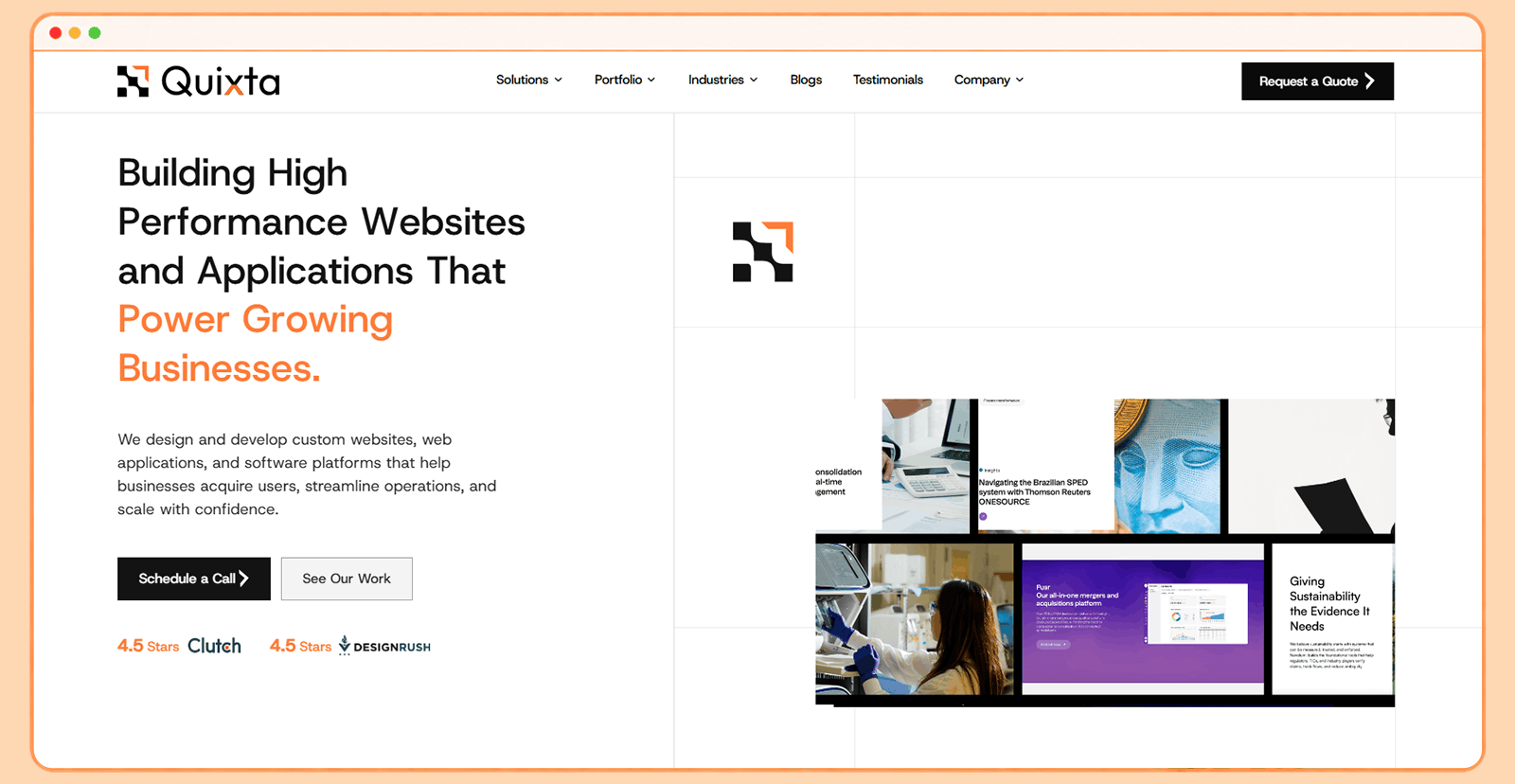
Quixta is built around a business-first approach to digital products, including healthcare websites. After 10+ years, it has grown from a one-person operation into a digital studio with 480+ projects and clients across 27+ countries. Its healthcare website development service combines patient-focused UX with custom engineering, SEO, healthcare integrations, and scalable architecture. What makes Quixta relevant for healthcare organizations is that its capabilities extend beyond the public-facing website into healthcare software, allowing clients to work with one technology partner as their digital requirements become more sophisticated.
Key highlights:
- Founded: 2016
- Employee size: 28+
- Top clients: Unmind Health, Niwaas Long-Term Care, Direct Ear Care, Bliss Care
- Core services: Custom web development, website design, UI/UX strategy, landing page development, conversion optimization
- Clutch ratings: 4.9/5
- DesignRush ratings: 4.8/5
Why choose Quixta?
- Healthcare website: Quixta works beyond conventional healthcare websites, with capabilities spanning healthcare software, patient workflows, billing, communication, analytics, appointments, and integrations. This means they approach a website project with an understanding of the broader technology ecosystem it may eventually need to connect with.
- Healthcare search architecture: Quixta optimizes service, provider, and location pages not only for conventional SEO and local search but also for AI search experiences. The emphasis is on creating a website structure that clearly communicates what the organization offers, which provider delivers it, and where patients can access it.
- Appointment-first UX: Quixta designs the website around the actions patients actually want to take. Appointment CTAs are positioned across service, provider, and location pages, so a patient who has already decided to seek care does not have to return to the homepage or navigate through multiple pages to book.
- Multi-location architecture: For hospitals and healthcare groups with several facilities, Quixta connects locations, doctors, specialties, hours, directions, and scheduling within one website structure.
- Patient self-service: The agency deliberately moves frequently requested information onto the website itself. Preparation instructions, office hours, treatment information, FAQs, and patient resources surface when patients need them, reducing avoidable calls to the front desk.
- Accessibility-first design: Accessibility is addressed at the interface level through considerations like keyboard navigation, readable text, color contrast, component labeling, and content structure.
Best for: Hospitals, multi-specialty centers, clinics, dental groups, diagnostic centers, mental health providers, and digital healthcare businesses that need a website built around patient discovery, trust, and appointment conversion.
Past work:
2. Yellowchalk
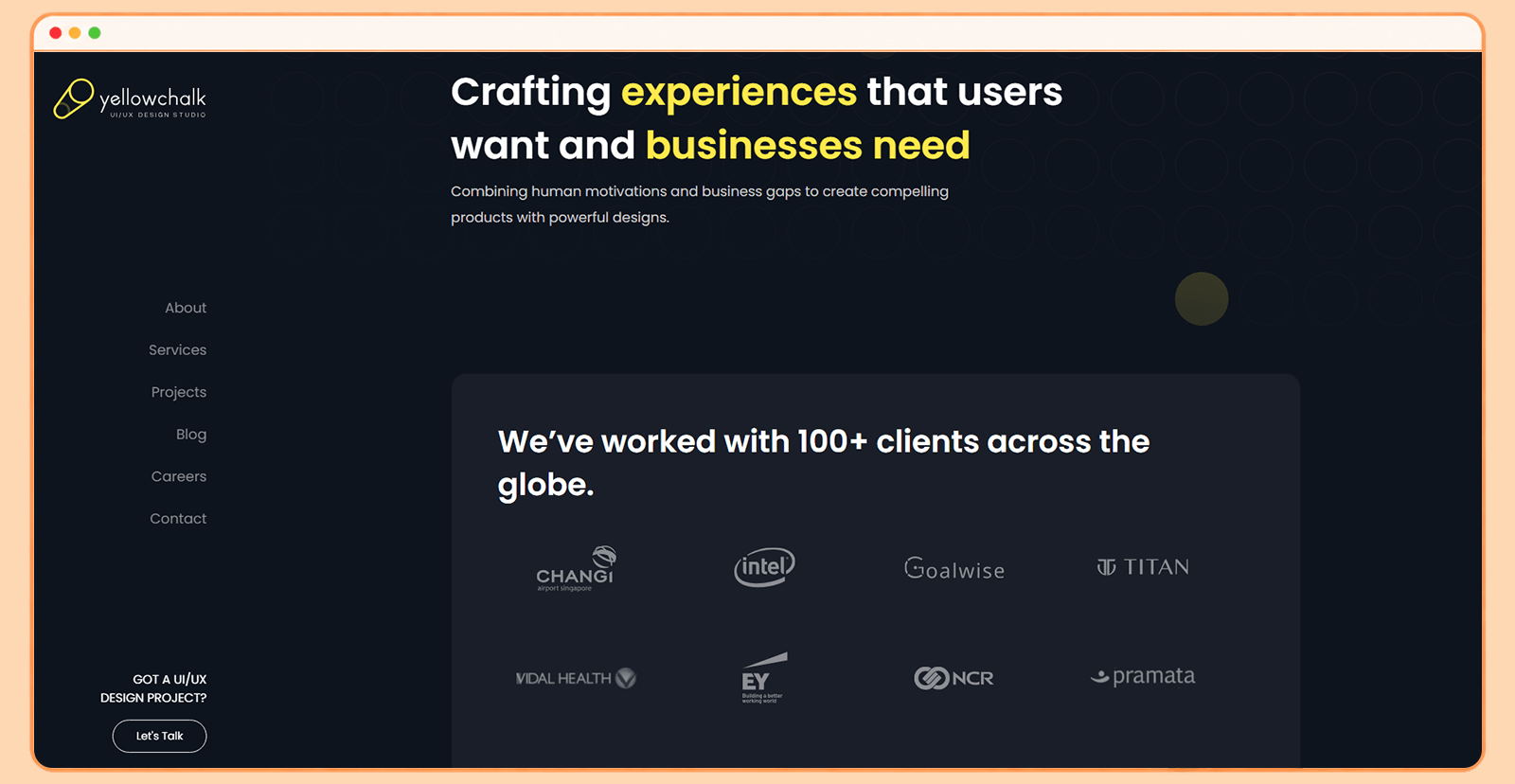
Founded in 2015, Yellowchalk is a Bengaluru-based design and technology studio that brings a strong UX-led approach to healthcare website development. Rather than starting with visual design, its process begins with research, competitive analysis, interviews, user testing, and journey mapping to understand how people interact with a healthcare service. Its healthcare experience includes Vidal Health, where Yellowchalk redesigned fragmented healthcare services into a simpler, unified digital experience.
Key highlights:
- Founded in: 2015
- Employee size: Under 49
- Top clients: Elda Health, Vidal Health, Sukshm, Appachhi, Blue Lake Fund
- Core services: Persona development, user journey mapping, wireframing, design systems, visual design, AI/ML, web development
- Clutch Ratings: 4.6/5
- DesignRush ratings: 4.8/5
Why choose Yellowchalk?
- Its Discover-Define-Design-Develop process creates a clear progression from understanding the problem to defining goals and metrics, validating design decisions through research, and finally bringing the experience to life through development
- Yellowchalk demonstrates its strength by simplifying complicated healthcare ecosystems. It identifies where multiple applications can create friction for both users and the technical team, and then helps consolidate those services in a unified experience
- Its healthcare design philosophy emphasizes clear language and reduced cognitive load. It removes unnecessary complexity from content and interactions so users can understand available services and make decisions with less hesitation
- Yellowchalk also brings development capabilities in-house, covering healthcare web development alongside mobile apps, AI/ML, enterprise mobility, cloud infrastructure, reporting, and visualization
- With 100+ clients across the globe, Yellowchalk combines its healthcare UX experience with broader exposure to fintech, enterprise, education, logistics, e-commerce, and other digital products. This gives its healthcare design team experience applying research-led design to different types of user and business problems
Best for:
Healthcare organizations and healthtech companies that want a research-led website experience focused on simplifying complex healthcare journeys and improving patient usability
3. Aalpha Information Systems India Pvt. Ltd.
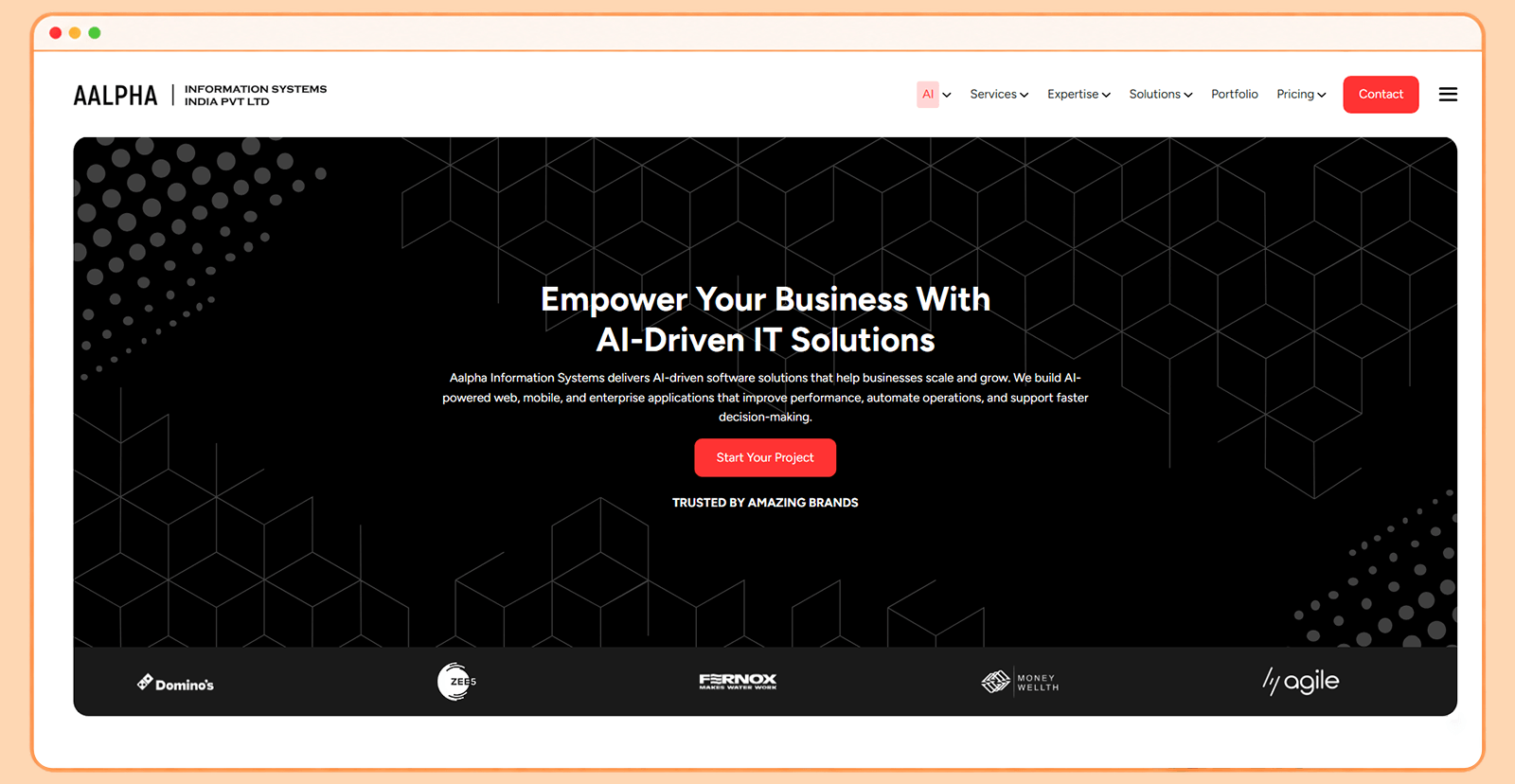
With 15+ years of experience, Aalpha Information Systems has built web design solutions for startups, SMEs, and enterprises across industries, including healthcare. The company’s web design practice reflects its focus on performance alongside visual design. For healthcare organizations, Aalpha specifically designs HIPAA-compliant websites, patient portals, hospital websites, and telemedicine platforms, with attention to accessibility, secure patient interactions, and appointment scheduling.
Key highlights:
- Founded in: 2008
- Employee size: 50-99
- Top clients: Moneywellth, AgileHRO, University Intelligence, Visabud, Zumy
- Core services: UI/UX design, SEO, website design, eCommerce web design, landing page design, healthcare web design
- Clutch ratings: 4.8/5
- DesignRush ratings: 5.0/5
Why choose Aalpha?
- Aalpha designs HIPAA-compliant healthcare websites, patient portals, and telemedicine platforms, ensuring organizations can maintain patient privacy and secure interactions throughout
- Its website design strategies account for patient accessibility, with WCAG and ADA considerations, like screen-reader compatibility, alt text, and high-contrast interfaces, allowing organizations to serve patients with varying accessibility needs
- Aalpha designs around healthcare-specific patient journeys, including appointment scheduling and patient interactions, rather than treating the website purely as a marketing presence
- The agency also incorporates SEO into healthcare website architecture, including fast-loading pages, structured navigation, schema markup, and mobile responsiveness. This helps healthcare organizations build websites designed for both patients and organic search visibility
- Aalpha's healthcare technology capabilities include HL7, FHIR, HIPAA, and GDPR-oriented development, which gives healthcare organizations a partner capable of considering interoperability, privacy, and compliance when the website is part of a larger digital health environment
Best for:
Healthcare organizations, diagnostics companies, hospitals, and healthtech businesses looking for a healthcare website partner that can combine UX design, accessibility, SEO, development, and deeper healthcare technology capabilities
4. Lollypop Design Studio
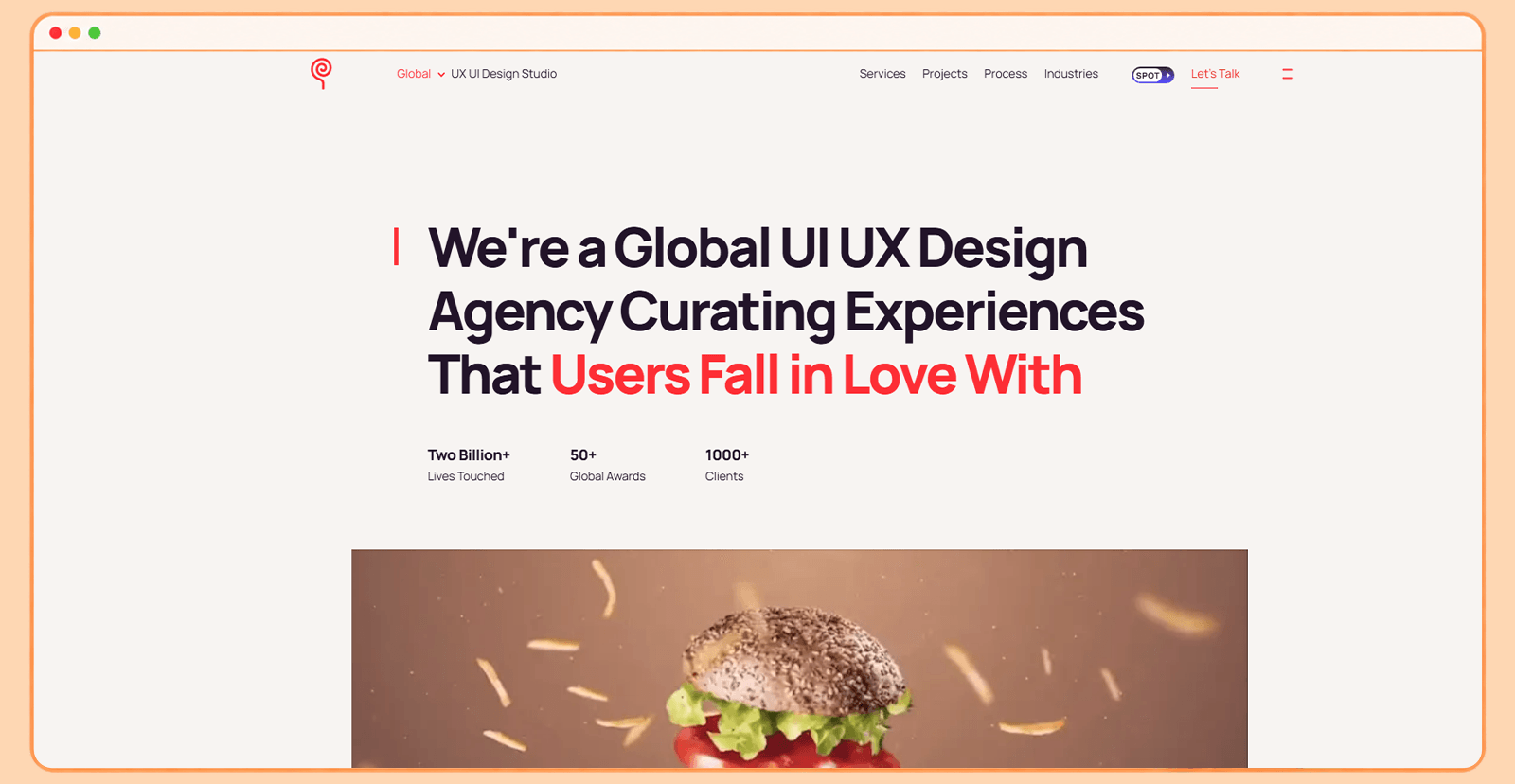
Since 2013, Lollypop Design Studio has been offering healthcare design services to clients across the world. The agency brings together design research, strategy, technology, and healthcare domain expertise into every project. Its healthcare portfolio spans medical wearables, e-patient records, HMIS, telehealth, queue management, and AI-powered health solutions. This breadth gives Lollypop a strong foundation for healthcare web design, particularly for organizations that want to turn complex medical services and information into intuitive digital experiences.
Key highlights:
- Founded in: 2013
- Team size: 49-90
- Top clients: Mega We Care, Tattva Health, Sense-I, Noorahealth, Mission Bio, SIMITICS
- Core services: Digital branding, CMS integration, custom website designs, UX design, digital prototyping
- Clutch ratings: 4.6/5
- DesignRush ratings: 5.0/5
Why choose Lollypop Design Studio?
- Its healthcare design process begins with qualitative research into patient and clinical pain points. This includes understanding where existing healthcare processes break down before translating those findings into immersive digital experiences
- Lollypop explicitly designs for both patients and doctors, which matters for healthcare websites serving multiple audiences. Its approach considers the different information needs, behaviors, and workflows of patients, physicians, and other healthcare stakeholders
- The studio has experience simplifying complex healthcare information through organized structures, intuitive navigation, and clearer interactions
- If your website needs to connect users with digital care services, patient-facing platforms, or health information, the agency’s experience with telehealth and e-patient records will become relevant
- Lollypop also brings healthcare domain mentorship and multidisciplinary support into its design approach, improving patient journeys and creating accessible experiences across multiple user groups
Best for:
Hospitals, healthtech companies, and healthcare organizations that need research-driven website and digital experience design for complex patient and doctor journeys, particularly when the project involves telehealth, medical information, patient records, connected devices, or AI-enabled healthcare experiences
5. Specbee
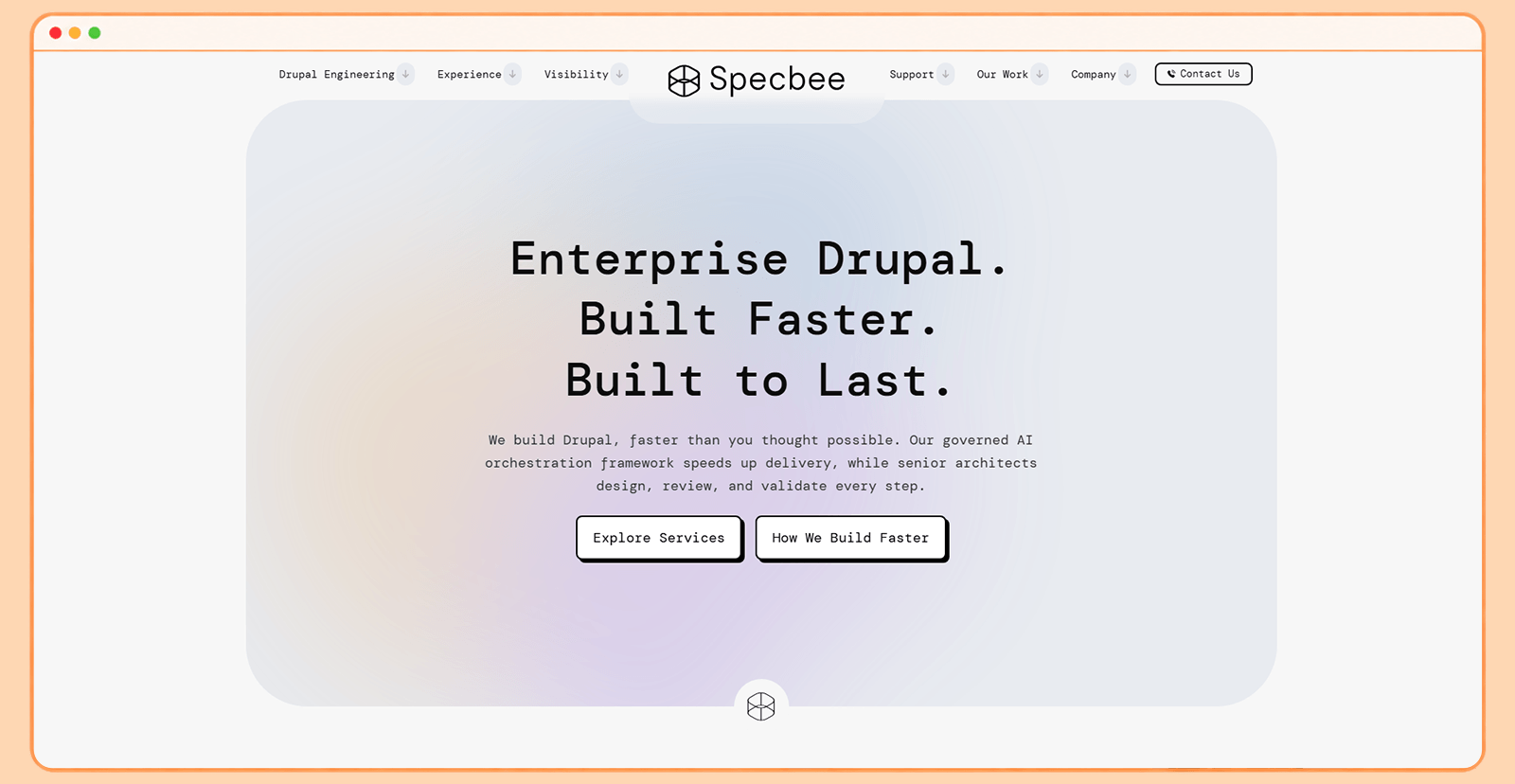
Founded in 2015, Specbee is a Drupal-focused digital agency with a 75+ person team across Atlanta, New York, London, and Bangalore. Rather than positioning Drupal as simply a CMS, it builds and modernizes enterprise Drupal platforms where performance, security, accessibility, and scalability are critical. Its dedicated healthcare practice focuses on patient portals, provider directories, appointment scheduling, multi-facility websites, and regulated healthcare content.
Key highlights:
- Founded in: 2015
- Team size: 50-99
- Top clients: Altru Health System, Kingman Regional Medical Centre, Aster Hospitals
- Core services: Drupal development, migration and upgrade, Digital Experience Platform, Drupal SEO, AI solutions, Drupal support and maintenance
- Clutch ratings: 4.7/5
Why choose Specbee?
- Specbee approaches healthcare website design around the patient experience and data security together, rather than treating compliance as something that can be retrofitted later. Its healthcare practice specifically addresses HIPAA, data security, accessibility, and patient-facing functionality
- For Aster Hospitals, Specbee unified 8 hospital websites into one Drupal platform, with shared components and unified search across hospitals and services
- Its healthcare work incorporates WCAG accessibility into the platform and design approach. The Altru Health System engagement, for example, focused on accessibility alongside UX redesign, SEO, and ongoing Drupal support
- Specbee can also modernize an existing healthcare website without treating redesign and migration as separate problems. Its healthcare offering includes Drupal 7 and legacy migrations, platform upgrades, architecture rebuilding, and replatforming
- The agency also uses AI for practical healthcare search and content discovery, including provider search and content tagging. The goal is to keep patients reaching relevant information without having to navigate through layers of complex healthcare content
Best for:
Hospitals, health systems, and healthcare organizations that need a scalable Drupal website with strong patient UX, accessibility, security, multisite governance, and long-term platform support
6. Webyansh
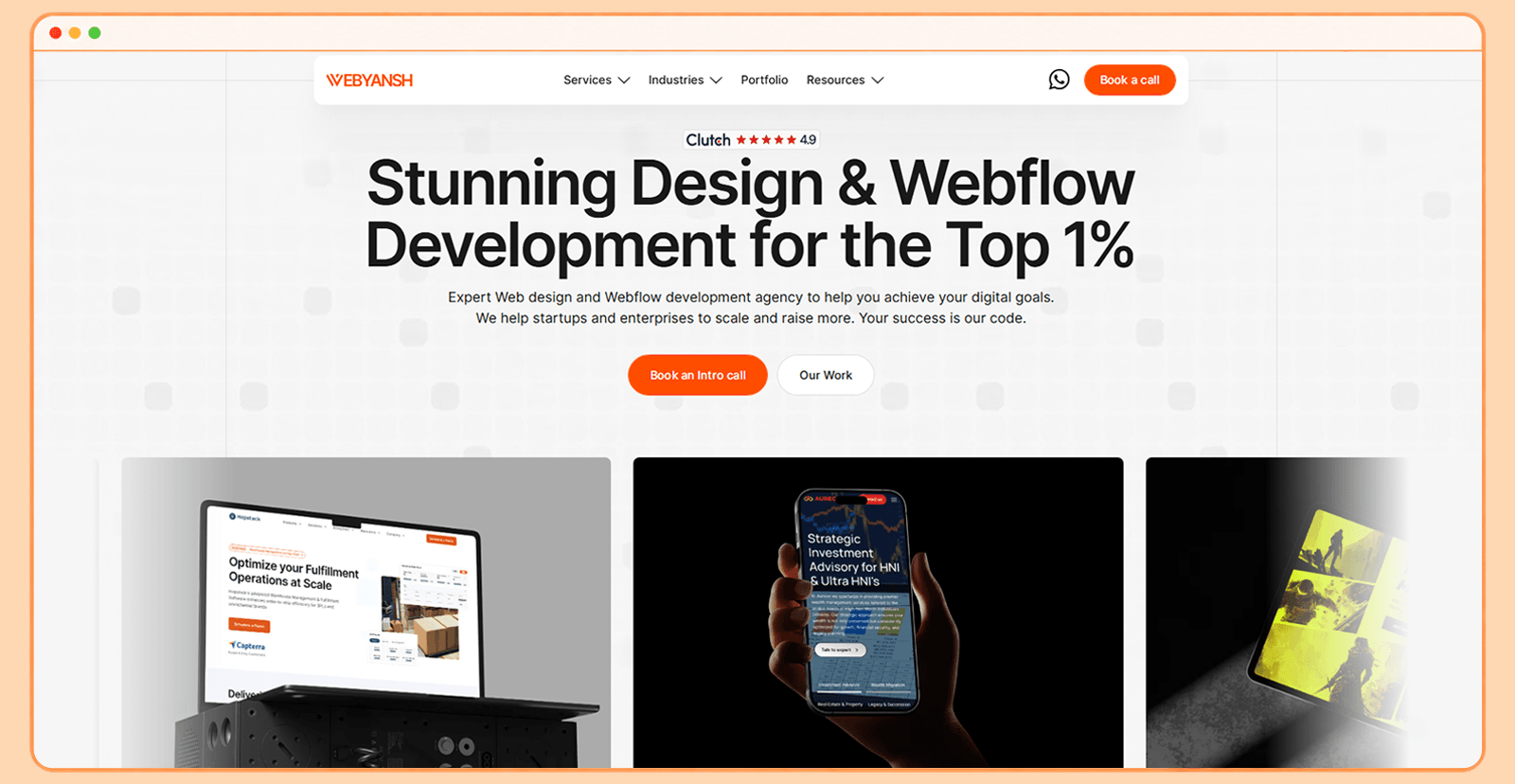
Being a UI/UX design and Webflow development company in Bangalore, Webyansh specializes in building high-performing websites for both startups and enterprises. Its dedicated healthcare practice spans hospitals, medical practices, dental clinics, telehealth, and longevity businesses. Its healthcare portfolio includes projects for startups and medical practices, with documented improvements in conversion rates and user enrollment across several engagements.
Key highlights:
- Founded in: 2024
- Team size: Under 49 employees
- Top clients: Action Health Hub, Project Seratonin, Futurense Technologies, Propel
- Core services: Medical practice Webflow development, custom website design, healthcare SEO, healthcare growth marketing, Webflow migration
- Clutch ratings: 4.9/5
- DesignRush ratings: 4.8/5
Why choose Webyansh?
- Its healthcare work is strongly Webflow-focused, making it a relevant choice for organizations that want a modern healthcare website with a manageable CMS and streamlined publishing workflow
- The agency explicitly addresses HIPAA compliance and secure healthcare websites, making privacy and patient data protection part of its healthcare positioning
- Its healthcare-specific offering goes beyond traditional SEO into Healthcare GEO, with performance optimization designed to improve visibility across Google and emerging AI-driven search experiences
- Webyansh combines website design with conversion optimization, including A/B testing, CTA optimization, heatmaps, and landing page optimization
- The agency also handles migration from Wix, WordPress, and Squarespace to Webflow, which will be helpful for healthcare organizations looking to modernize an existing website without starting their digital presence from scratch
Best for:
Healthcare startups, longevity brands, medical practices, and healthtech companies looking for a conversion-focused Webflow website that combines healthcare UX, HIPAA-conscious design, SEO/GEO, and ongoing optimization
7. Parallel
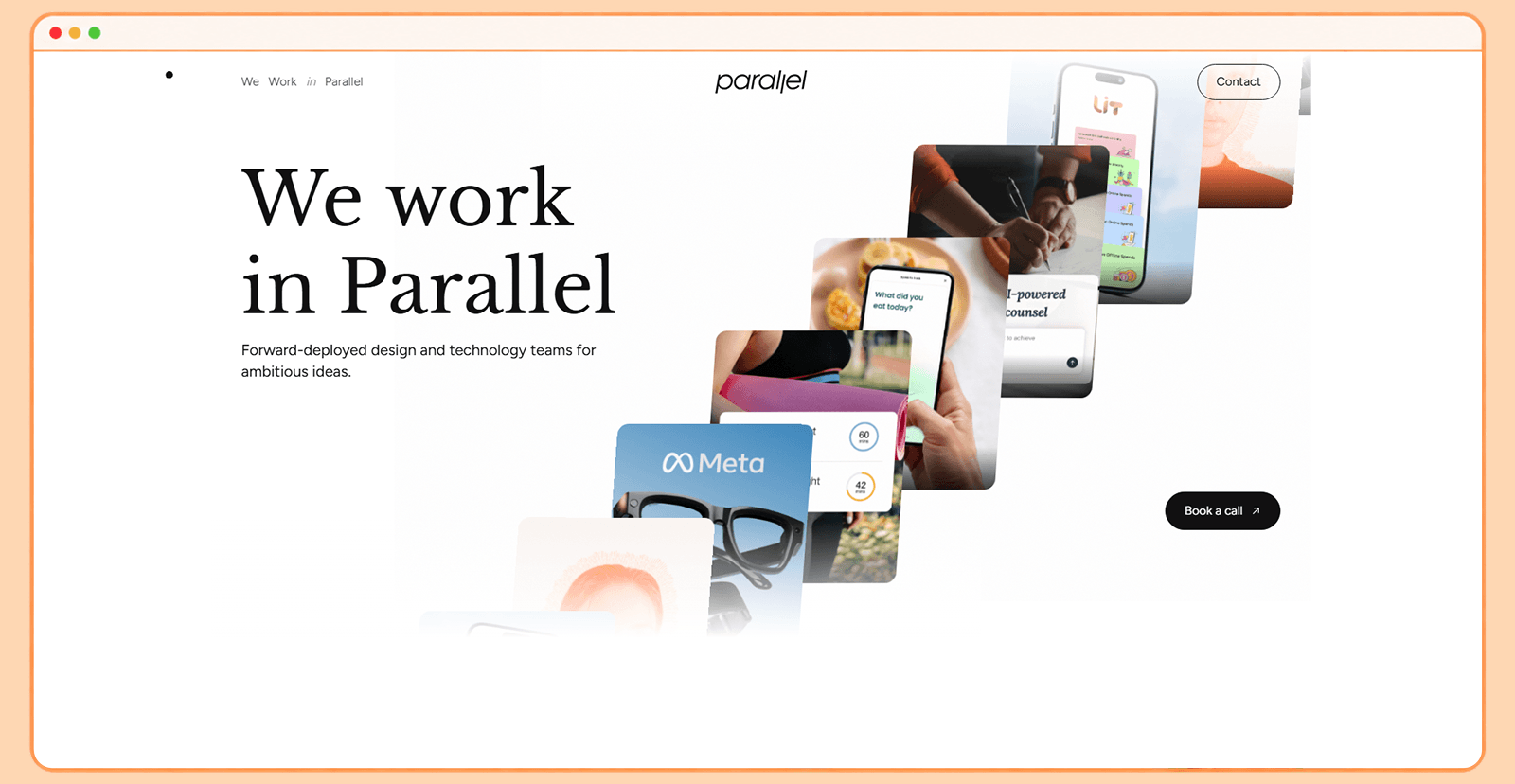
Parallel is a Bengaluru-based product design and UX company whose services span UX design, user research, website design, AI-first experiences, and product innovation. For healthcare organizations, it combines research and product design capabilities with dedicated healthcare expertise, designing patient and clinician experiences around real workflows, accessibility, and adoption.
Key highlights:
- Founded in: 2014
- Team size: Under 49
- Top clients: Healthify, Lume Health, CoWin
- Core services: UI/UX design, UX audit, user research, website redesign
- Clutch ratings: 4.8/5
- DesignRush ratings: 4.4/5
Why choose Parallel?
- Parallel’s healthcare design process starts with patients, caregivers, clinicians, and stakeholders, using interviews and research to understand the barriers that affect adoption before designing the experience
- It designs for different levels of digital literacy, an important consideration for healthcare websites serving patients across age groups and varying degrees of technological familiarity
- Its healthcare capabilities extend into patient onboarding, telehealth interfaces, clinical dashboards, remote monitoring, medication management, and caregiver flows
- Parallel treats accessibility and usability as measurable design requirements, including WCAG and Section 508 considerations and usability testing with patients and healthcare staff
- The team also addresses HIPAA and GDPR context during discovery, allowing compliance considerations to influence information architecture and experience decisions
Best for:
Healthtech companies, hospitals, and healthcare organizations with complex patient or clinician journeys that need research-led UX and website design, particularly when the website connects with telehealth, patient portals, clinical workflows, or broader digital healthcare products
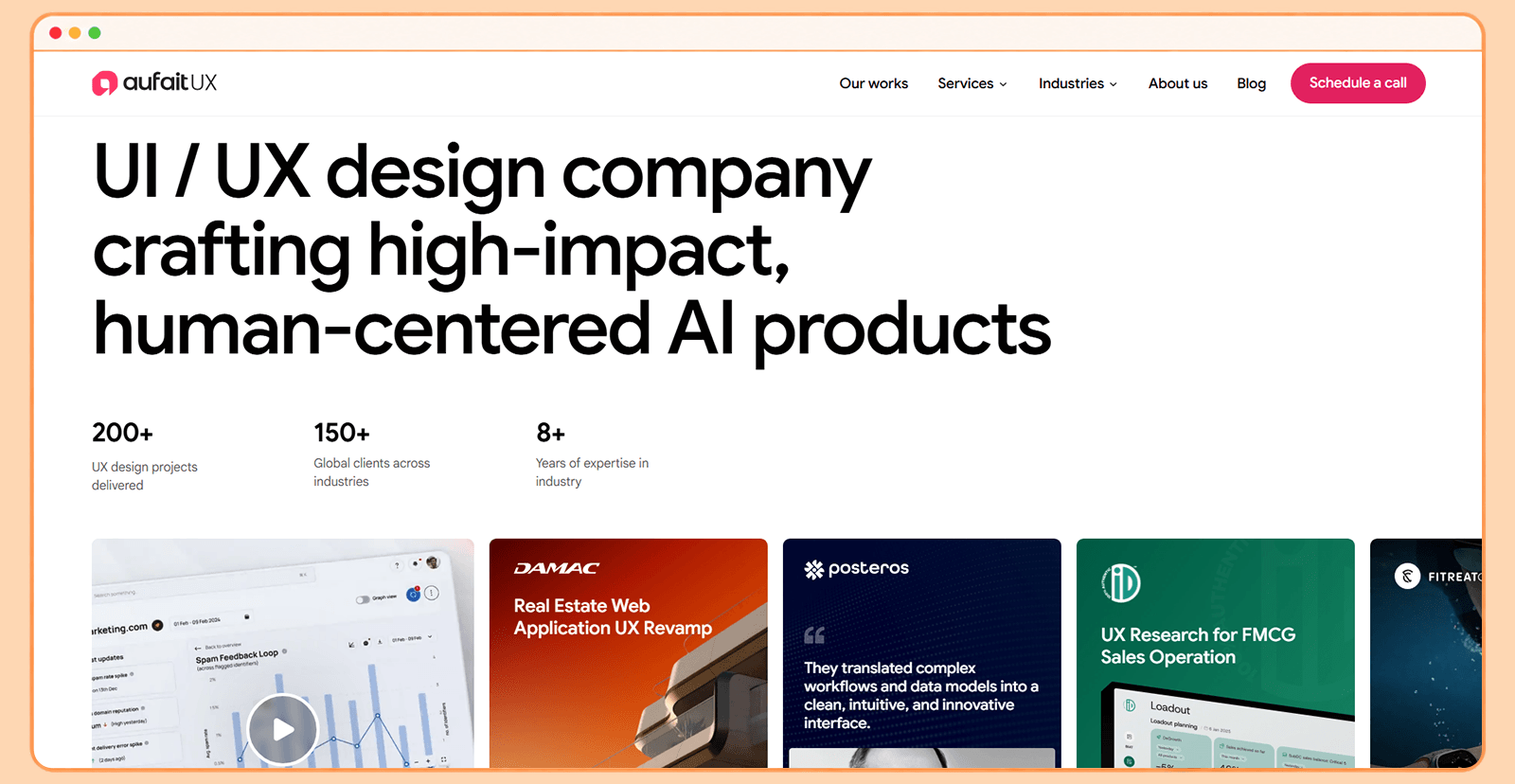
8. Aufait UX
Aufait UX is a healthcare-focused UX design company with a dedicated practice for digital health, wellness, and life sciences products. From EHR/EMR integrations to telemedicine platforms, remote patient monitoring, medical HMIs, insurance portals, and connected devices, its healthcare portfolio covers quite diverse fields. Its showcased work includes continuous patient monitoring for DRINN, specialist access through Second Opinion, and digital health experiences designed around patient engagement and clinical decision-making.
Key highlights:
- Founded in: 2017
- Employee strength: Under 49
- Top clients: Posteros, Fitreat Couple, Pebbles, DRINN, Second Opinion
- Core services: UX design, usability testing, UX auditing, dashboard design, HMI design services
- Clutch ratings: 4.9/5
- DesignRush ratings: 4.7/5
Why choose Aufait UX?
- Its approach to EHR and clinical operations focuses on reducing screen time, removing workflow friction, and helping clinicians complete critical tasks with fewer errors
- Aufait UX explicitly maps interactions between patients, clinicians, caregivers, and support staff, allowing healthcare organizations to serve several audiences with a single, unified digital experience
- Rather than simply displaying healthcare data, the company designs dashboards around risk alerts, real-time insights, and information prioritization so clinicians can identify what requires attention first
- Its Second Opinion project demonstrates experience designing digital journeys that connect users with specialists across 10+ medical specialties, with an emphasis on structured guidance, reduced uncertainty, and secure data flow
- The company stages its UX healthcare process around HIPAA, GDPR, FDA usability guidance, IEC 62366, and WCAG, while also addressing consent, auditability, role-based access, and privacy within user flows
Best for:
Hospitals, healthtech companies, medical-device businesses, digital health platforms, and healthcare enterprises building EHR interfaces, telemedicine experiences, remote-monitoring products, clinical dashboards, or patient-facing platforms
9. GoProtoz
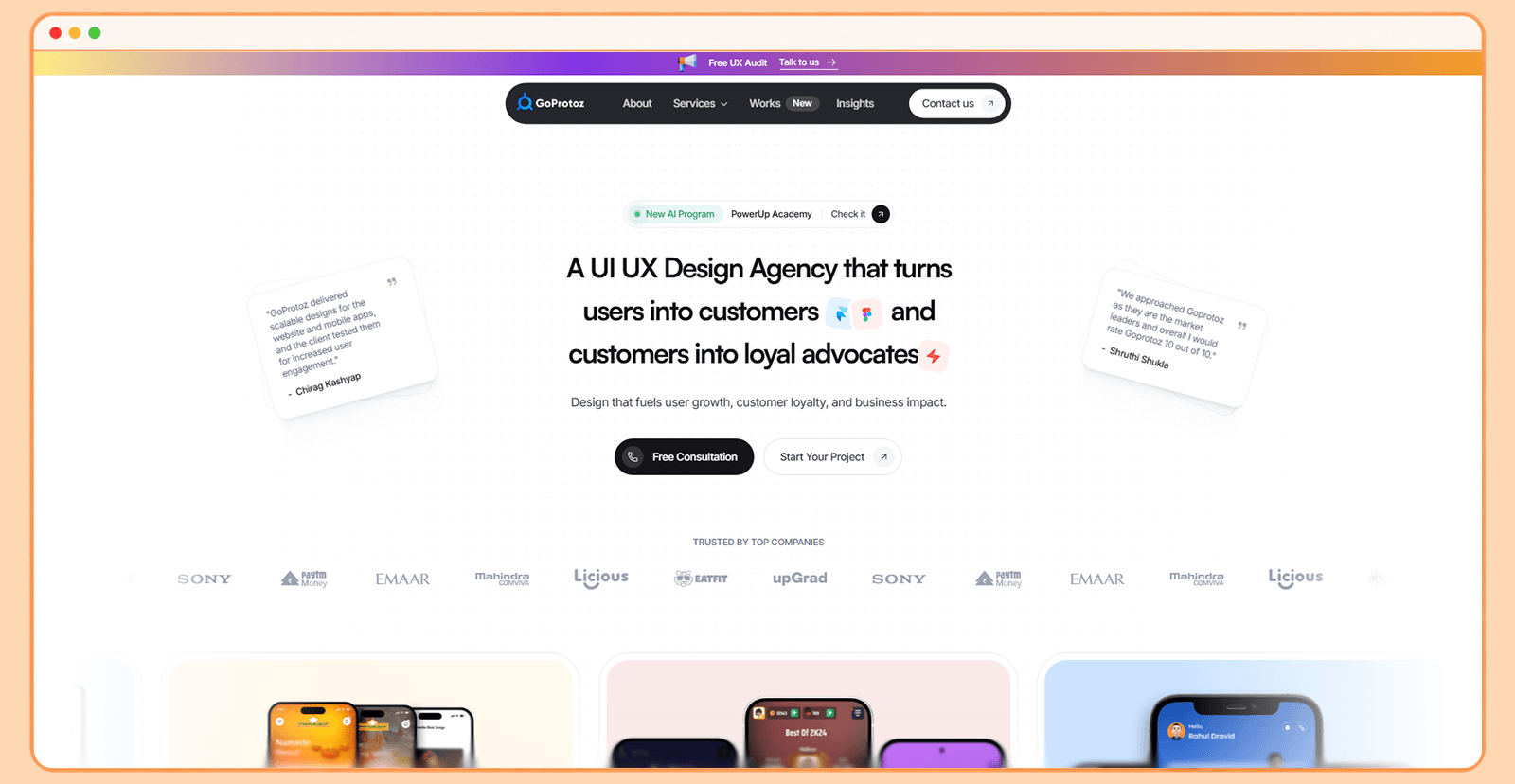
GoProtoz is a Bengaluru-based UI/UX design company with 500+ projects delivered globally and a diverse team of in-house designers and developers. Its healthcare practice covers 100+ healthcare projects, working with physicians, imaging specialists, and hospital administrators across digital health use cases. Rather than treating healthcare UX as a standard website design project, GoProtoz focuses on the workflows behind the experience.
Key highlights:
- Founded in: 2015
- Employee strength: 50-99
- Top clients: ICICI Bank, KonfigAI, Simba Card, Effigo, SarvaGram
- Core services: UI/UX design, UX strategy, UX research, UX audit, web design, mobile app
- Clutch ratings: 4.9/5
- DesignRush ratings: 4.7/5
Why choose GoProtoz?
- Its healthcare UX approach examines how clinicians actually complete their work, including the sequence of actions they perform, the information they need at each stage, and the functions they use most frequently
- For EHR and healthcare management interfaces, GoProtoz addresses workflows involving patient intake, consent forms, appointments, assessments, diagnoses, treatment plans, progress notes, and discharge summaries
- It’s experienced in designing customized dashboards and home screens for clinicians so that healthcare professionals can easily access frequently used information and functions
- Its healthcare design strategy specifically addresses information overload and excessive navigation, with an emphasis on reducing unnecessary clicks and placing frequently used functions where clinicians can reach them quickly
- Its approach to healthcare communication focuses on making medical information easier to understand through clear language, readable typography, appropriate visual hierarchy, and icons supported by text labels
Best for:
Healthcare organizations that need workflow-focused UX for EHRs, patient portals, telehealth platforms, clinical dashboards, or complex healthcare websites where information architecture and usability matter as much as visual design.
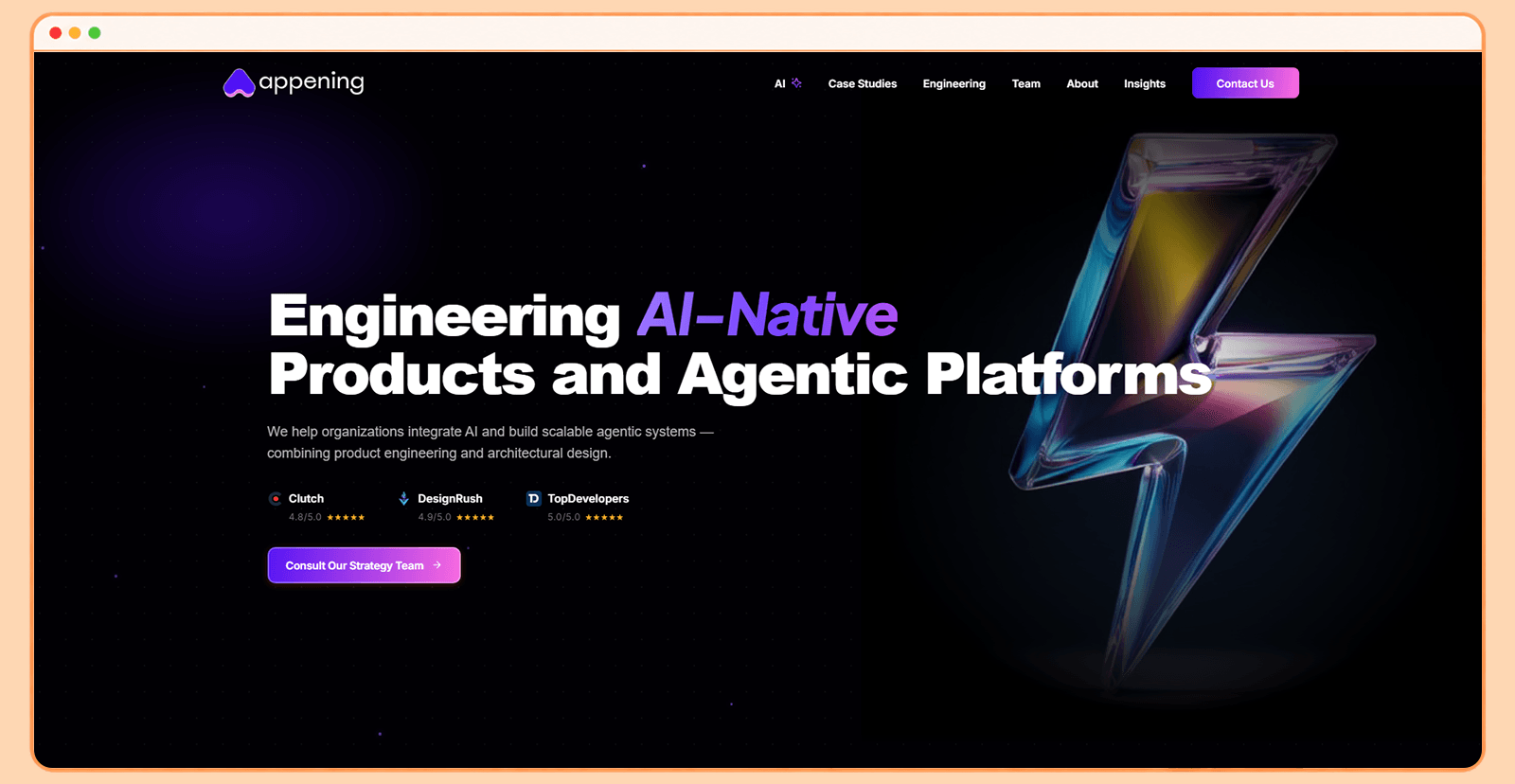
10. Appening
Founded in 2017, Appening has delivered 60+ projects and raised $100M+ through its clients across the world. Its portfolio includes Hutano, a multi-platform healthcare and telehealth solution that lets patients choose between office, onsite, and telemedicine visits while providers manage schedules, profiles, and EMR information from a unified dashboard. Appening combines UX research, journey mapping, prototyping, usability testing, and UI design with development, making it suitable for healthcare projects where the website needs to connect closely with the underlying product.
Key highlights:
- Founded in: 2017
- Employee strength: Under 49
- Top clients: Hutano, Tryloop, Resumod, Helloverify Certifier, Boxhero
- Core services: Redesigning, Concept to Creation, UI/UX design, mobile website design
- Clutch reviews: 4.8/5
- DesignRush ratings: 4.9/5
Why choose Appening?
- Rather than jumping directly into visual design, Appening develops personas, maps user journeys, prioritizes features, and creates low-fidelity wireframes before moving into the interface design stage
- Appening uses clickable prototypes and usability testing with target users before finalizing designs, which proves to be extremely useful for healthcare interfaces where navigation, comprehension, and task completion can matter more than visual appeal alone
- Its healthcare experience extends beyond a brochure-style hospital website into telehealth and EMR-connected workflows
- Its redesign process focuses on identifying usability and functionality problems before rebuilding the experience, helping you to deal with outdated digital platforms
Best for:
Healthcare startups, telehealth companies, hospitals, and digital health businesses that need UX/UI design connected to patient-provider workflows, telemedicine, EMR-enabled platforms, or a broader healthcare product.
How Did We Rank These Agencies?
- Healthcare industry experience: We considered whether the agency has demonstrated experience designing websites or digital products for hospitals, clinics, healthtech companies, telemedicine providers, or other healthcare organizations
- UI/UX and patient experience expertise: We evaluated how well each agency approaches patient journeys, appointment booking, healthcare information architecture, provider directory, accessibility, and other healthcare-specific user experience requirements
- Technical and integration capabilities: Agencies were assessed on their ability to support requirements like CMS development, EHR/EMR integrations, patient portals, APIs, third-party systems, multilingual functionality, and scalable web infrastructure
- Portfolio quality and relevance: We looked beyond the number of projects and assessed whether the agency’s portfolio demonstrates relevant healthcare work, strong visual execution, responsive design, usability, and the ability to handle different levels of project complexity
- Client ratings and reviews: We considered the agencies’ ratings on Clutch and DesignRush as third-party indicators of client satisfaction, while also considering review volume and the relevance of the reviewed projects
- Overall value for healthcare businesses: Finally, we considered the balance between design quality, healthcare expertise, technical capabilities, scalability, reputation, and suitability for different healthcare organizations rather than ranking agencies solely by pricing or ratings
How to Choose the Right Healthcare Website Design Company in Bangalore?
Choosing the right healthcare website design company in Bangalore means evaluating more than visual design and pricing. Look for proven healthcare experience, compliance knowledge, accessibility expertise, integration capabilities, search expertise, and reliable post-launch support. The right agency should understand both patient needs and healthcare business objectives.

1. Check their healthcare-specific portfolio
Review healthcare projects similar to yours, including hospitals, clinics, healthtech platforms, or medical practices. Look beyond aesthetics and assess whether previous websites handle provider discovery, appointment booking, treatment information, locations, patient resources, and other healthcare-specific journeys effectively.
2. Verify HIPAA, Privacy, and Security Capabilities
If your website handles protected health information, verify the agency’s healthcare security experience before hiring. Ask how it approaches HIPAA requirements, secure forms, access controls, third-party services, and integrations. Also clarify which compliance responsibilities belong to the agency, your organization, and external technology providers.
3. Assess Accessibility and WCAG Expertise
Healthcare websites must accommodate users with different abilities. Evaluate whether the agency understands WCAG requirements, keyboard navigation, screen readers, color contrast, accessible forms, focus state, semantic markup, and readable content. Ask whether accessibility is incorporated throughout design and development rather than treated as a final pre-launch checklist.
4. Look at Their Healthcare SEO and AEO Capabilities
Your website needs visibility across traditional search engines and AI-powered discovery. Look for agencies that can structure service, condition, provider, specialty, and location pages properly. They should also understand healthcare SEO, structured data, internal linking, E-E-A-T, and AEO strategies that help search engines and AI systems interpret the website’s content.
5. Evaluate Cost Against Long-Term Business Value
Compare agencies based on total cost of ownership, not their initial quotation alone. Examine what each proposal includes for UX research, design, development, integrations, content migration, SEO, accessibility, testing, maintenance, and support. After this, assess potential returns through appointment conversions, qualified leads, patient self-service, and improved search visibility.
What Is the Cost of Healthcare Website Design in Bangalore?
Healthcare website design in Bangalore costs between INR 40K and INR 10 Lakh+, depending on the type of healthcare organization and the website's complexity. A basic website for an individual doctor or small clinic can stay below INR 1 Lakh, while hospital websites, multi-location healthcare networks, and platforms with patient portals or integrations will need significantly higher investments. Here is a brief cost breakdown depending on the type of healthcare website:

Website Type | Estimated Cost |
Doctor/Single-Clinic Website | INR 40K - 80K |
Professional Medical Practice Website | INR 80K - 1.5 Lakh |
Multi-Specialty Clinic Website | INR 1.5 - 3 Lakh |
Hospital Website | INR 3 - 6 Lakh |
Multi-Location Hospital Website | INR 6 - 10 Lakh+ |
Healthcare Website with Patient Portal | INR 5 - 15 Lakh+ |
Enterprise Healthcare Platform | INR 15 - 35 Lakh+ |
These are estimated 2026 costs for healthcare website design and development in the Bangalore market. Actual costs depend on website size, custom UI/UX, number of pages, appointment booking, patient portals, EHR/EMR integrations, compliance, and accessibility requirements.
Detailed Comparison Table For The Best Healthcare Website Design Companies In Bangalore
Company Name | Best For | Core Strength | Ideal Use Case | Clutch Rating | DesignRush Rating |
Quixta | Healthcare businesses seeking strategic website design with strong development capabilities | Custom web design, UX/UI, web development, and conversion-focused digital experiences | Hospitals, clinics, healthcare brands and healthcare businesses that need a modern, scalable website focused on patient acquisition | 4.9/5 | 4.8/5 |
Yellowchalk | Healthcare brands prioritizing UX, visual design and brand experience | UI/UX design, product design, brand identity and digital experiences; its client portfolio includes healthcare organizations such as Vidal Health | Healthcare companies redesigning their website or building patient-facing experiences where usability and visual identity matter | 4.6/5 | 4.8/5 |
Aalpha Information Systems India Pvt. Ltd. | Healthcare organizations needing design alongside full-cycle software development | Web/mobile development, UI/UX, custom software and technology integration | Hospitals, clinics and healthcare businesses requiring websites connected to portals, applications, APIs or other custom functionality | 4.8/5 | 5.0/5 |
Lollypop Design Studio | Enterprise healthcare organizations requiring research-led experience design | UX research, product design, UI/UX, usability and complex digital product experiences | Large healthcare websites, patient journeys, healthcare platforms and enterprise digital transformation projects | 4.6/5 | 5.0/5 |
Specbee | Healthcare organizations looking for content-rich, scalable websites | Drupal, CMS development, web design, digital experience and enterprise web development | Hospitals, healthcare institutions and organizations managing large volumes of medical, service and educational content | 4.7/5 | — |
Webyansh | Healthcare businesses looking for customized website and digital product development | UI/UX design, web development, mobile development and custom digital solutions | Healthcare websites, patient-facing portals and businesses that need design and development under one partner | 4.9/5 | 4.8/5 |
Parallel | Healthcare businesses seeking design-led digital products | UI/UX, product design, web/mobile experiences and digital strategy | Healthcare startups, digital health products and patient-facing platforms requiring intuitive product experiences | 4.8/5 | 4.4/5 |
Aufait UX | Healthcare products where patient experience and clinical workflows are central | Healthcare UX, user research, information architecture, dashboards and usability | EHR interfaces, telemedicine platforms, patient portals, remote monitoring products and healthcare dashboards | 4.9/5 | 4.7/5 |
GoProtoz | Healthcare organizations needing workflow-focused UX for clinical and patient interfaces | UI/UX design, UX strategy, UX research, UX audit, and healthcare workflow design | EHR systems, patient portals, telehealth platforms, clinical dashboards, and healthcare websites where information architecture matters | 4.9/5 | 4.7/5 |
Appening | Healthcare startups building telehealth and patient-provider platforms | UX research, journey mapping, prototyping, usability testing, UI design, and development | Telehealth companies, hospitals, and digital health businesses needing UX/UI connected to patient-provider workflows and EMR-enabled platforms | 4.8/5 | 4.9/5 |
Conclusion
Choosing the right healthcare website design company in Bangalore comes down to matching your project's requirements with an agency's actual capabilities. A small clinic website with appointment booking and local SEO needs a different partner than a multi-location hospital platform with EHR integrations, patient portals, and multilingual content. Healthcare website design in Bangalore typically costs between INR 40K and INR 10L+, depending on functionality, integrations, compliance, and scale. US-market pricing for comparable projects is significantly higher. The priority should be choosing an agency that can balance patient experience, healthcare SEO, accessibility, security, and business outcomes rather than selecting the lowest quote.
Ready to Build a Healthcare Website That Works for Patients and Your Business?
Quixta designs and builds healthcare websites with patient-centered UX, appointment-first architecture, provider directories, healthcare SEO, accessibility, and scalable development for practices, clinics, and hospitals. If your healthcare organization is planning a new website or a redesign, talk to Quixta about your project.
FAQs
Prioritize healthcare industry experience, patient-centered UX, accessibility compliance (WCAG 2.2), privacy and HIPAA awareness, healthcare SEO capabilities, and post-launch support. Review the agency's healthcare portfolio for relevant work such as hospitals, clinics, patient portals, telemedicine, and provider directories. Also evaluate its ability to handle EHR/EMR integrations, multilingual content, and ongoing maintenance. Ask who will work on the project, what the design and development process includes, how testing will be conducted, and what post-launch support is included.
A strong healthcare portfolio should demonstrate projects involving hospitals, clinics, healthtech platforms, medical practices, telemedicine, or patient-facing services. Examine how the website handles provider discovery, appointment booking, treatment information, locations, patient education, and different user journeys. The portfolio should also demonstrate responsive design, accessibility, clear information architecture, and conversion-focused experiences. Case studies showing measurable improvements in engagement, conversions, usability, or patient acquisition provide stronger evidence than screenshots alone.
Ask the company to explain how HIPAA and privacy requirements influence its design, development, integrations, and data-handling practices. A capable agency should understand protected health information (PHI), secure forms, access controls, authentication, encryption, audit considerations, Business Associate Agreements (BAAs), and third-party services that may process patient data. Clarify whether the website will collect PHI and who will be responsible for compliance. If the project involves patient portals, EHRs, or telehealth, confirm how security responsibilities will be divided between your organization, the agency, hosting provider, and integrated platforms.
Healthcare website design in Bangalore costs between INR 40K and INR 10 Lakh+, while highly customized healthcare platforms can exceed INR 35 Lakh. A basic clinic website will cost less compared to a hospital website with hundreds of pages, appointment systems, provider directories, or integrations. Actual pricing depends on the website size, custom UX, functionality, integrations, multilingual requirements, accessibility, content migration, SEO, security, and maintenance. Compare quotations based on the complete project scope rather than selecting an agency solely by its initial price.
A small clinic website typically takes 4 to 8 weeks from discovery through launch. A multi-specialty clinic or mid-sized healthcare website may take 8 to 16 weeks. Hospital or multi-location platforms with integrations, patient portals, and large-scale content can take 16 to 24+ weeks. Timelines depend on design complexity, content volume, integrations, stakeholder review cycles, and the organization's approval process. Large provider databases, EHR/EMR integrations, multilingual requirements, custom functionality, and compliance reviews can extend the development schedule.
Choose based on healthcare expertise, communication, technical capability, and total project value rather than location alone. A Bangalore-based agency can offer easier collaboration, overlapping working hours, and access to India's large technology talent pool. An offshore agency can offer broader specialist access or different pricing structures. For either option, verify healthcare experience, security practices, portfolio quality, project management, communication processes, and post-launch support. The best choice is the team that can reliably meet your clinical, technical, compliance, UX, and business requirements.
Clutch and DesignRush ratings provide useful third-party insights, but they should not be the sole deciding factor. Look beyond the overall score and examine review volume, project descriptions, client feedback, and healthcare-specific experience. A high rating based on a small number of reviews provides less evidence than a consistently strong rating supported by many relevant projects. Also verify that the ratings belong to the agency itself and distinguish genuine directory ratings from Google reviews displayed on an agency profile.
Post-launch support should cover security updates, bug fixes, performance monitoring, accessibility improvements, backups, content updates, analytics, SEO, maintenance, and technical troubleshooting. Healthcare organizations may also need new provider profiles, treatment pages, locations, appointment functionality, integrations, and compliance-related updates as their operations expand. Ask whether support is included in the original contract or will be billed separately. A useful maintenance agreement should clearly define response times, update frequency, included hours, emergency support, security responsibilities, and the process for requesting new functionality.
Healthcare SEO and AEO are critical because patients discover providers, treatments, and healthcare services through both search engines and AI-powered platforms. The agency should know how to structure service, condition, specialty, provider, and location pages, implement relevant schema markup (MedicalOrganization, Physician, FAQPage), improve page speed, build internal links, and create trustworthy healthcare content. AEO adds another layer by structuring information around direct questions and entities that AI systems can interpret. These capabilities should be incorporated into the website architecture during development, not added afterward.
A healthcare website improves patient acquisition by reducing friction between search, information discovery, trust-building, and appointment booking. This starts with clear service and provider pages, prominent calls to action, simple appointment forms, location-specific information, credible provider credentials, and mobile-friendly experiences. Fast loading speed and accessible interfaces also reduce abandonment. Agencies can further improve conversion rates through analytics, heatmaps, A/B testing, CTA optimization, and landing-page improvements. The goal is to make the next patient action obvious and easy at every step.